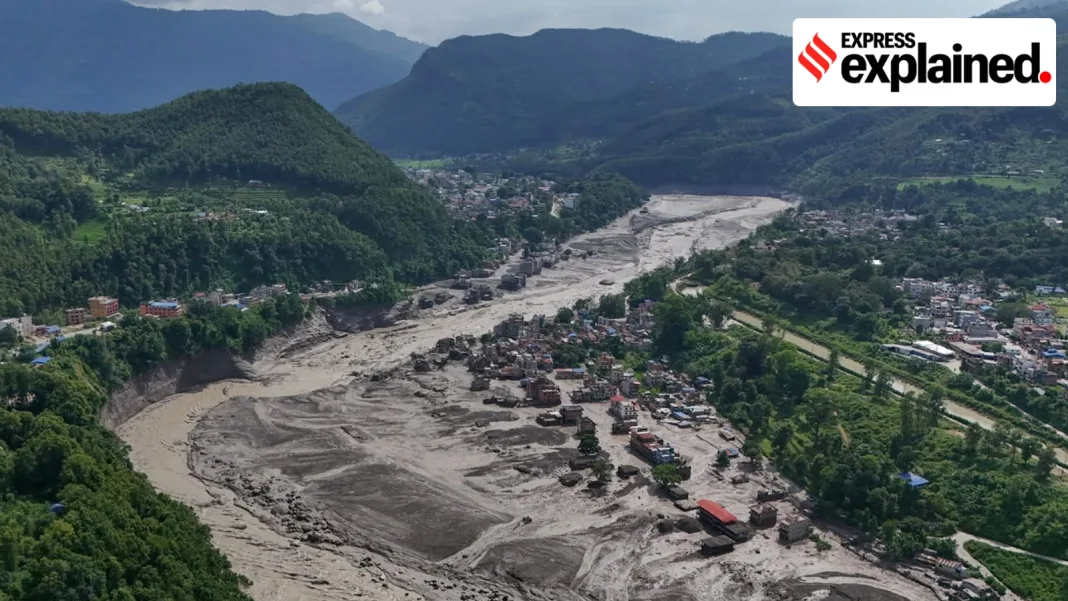
Damaged houses stand precariously near the swollen, debris-choked banks of the Trishuli River after flash floods in Nepal's Nuwakot district on Wednesday, Aug. 26, 2026. (AP Photo/Niranjan Shrestha)
The key points are temporarily unavailable. You can still read the full Story below.
Main Points
Flash floods that struck Nepal in late August damaged several hydropower plants and disrupted the evacuation of electricity, yet the country continued to export power to India. According to data released by the Nepal Electricity Authority (NEA), between 27 August and 27 October 2025 Nepal exported about 1,262 million units (MU) of electricity to India. This volume represented roughly one‑third of the total electricity Nepal exported to India during the 2025‑26 financial year. The continued exports came despite concerns among Indian officials that the floods would impair Nepal’s ability to supply power. The 14‑MW Devighat hydropower plant, which exports electricity to India, was among the facilities damaged. In September, the Union Ministry of Power approved the Nepal government’s request for early imports of electricity from India, citing “significant damage to hydropower infrastructure in Nepal, reducing its domestic power generation capacity and creating an additional requirement for electricity.” NEA spokesperson Achyut Babu Ghimire explained that Nepal’s ability to sustain exports was due to a seasonal surplus of generation during the monsoon. “We have a surplus of electricity during the monsoon, which is why we were able to continue supplying power to India,” Ghimire told The Indian Express. He added that Nepal had applied to Indian authorities for approval to export electricity from additional power projects within a week of the floods on 26 August. Indian officials, however, suggested that reduced domestic demand following the floods may also have contributed to the surplus. Damage to homes, infrastructure and transmission networks could have lowered electricity consumption in affected areas, leaving more power available for export. The floods affected 13 hydropower plants, including several under‑construction projects, and a solar power plant. NEA estimates that the floods knocked about 430 MW of capacity out of service due to damage to transmission lines, of which 74 MW of hydropower capacity was directly damaged. Three plants with a total approved export capacity of 60 MW were damaged; 55 MW of that capacity had been approved by India’s Central Electricity Authority (CEA) for export to India. The 14‑MW Devighat plant, which supplies electricity to India, was among those affected. Two other hydropower plants—Chilime and Trisuli—that supply electricity to Bangladesh were also impacted, though Nepal has resumed supply to Bangladesh as of last week. NEA’s annual report shows that Nepal had a total available energy of 18,624 MU in 2025‑26. Of this, 12,394 MU was consumed domestically, 3,817 MU was exported to India, and 148 MU was exported to Bangladesh. In the 2024‑25 year, Nepal had 15,641 MU of available energy, of which 11,343 MU was consumed domestically and 2,380 MU was exported to India. The seasonal surplus has helped raise Nepal’s earnings from electricity exports from NPR 17.47 billion in 2024‑25 to NPR 29.3 billion in 2025‑26. Overall, Nepal’s installed hydropower capacity is about 4,200 MW, with roughly 3,750 MW currently operational. The country continues to export electricity primarily to India, with Bangladesh as a secondary partner, following a tripartite agreement among the NEA, Bangladesh Power Development Board (BPDB) and India’s state‑owned NTPC Vidyut Vyapar Nigam Ltd (NVVN). Article source: Indian Express | Image credit: Indian Express
Flash floods that struck Nepal in late August damaged several hydropower plants and disrupted the evacuation of electricity, yet the country continued to export power to India. According to data released by the Nepal Electricity Authority (NEA), between 27 August and 27 October 2025 Nepal exported about 1,262 million units (MU) of electricity to India. This volume represented roughly one‑third of the total electricity Nepal exported to India during the 2025‑26 financial year. The continued exports came despite concerns among Indian officials that the floods would impair Nepal’s ability to supply power. The 14‑MW Devighat hydropower plant, which exports electricity to India, was among the facilities damaged. In September, the Union Ministry of Power approved the Nepal government’s request for early imports of electricity from India, citing “significant damage to hydropower infrastructure in Nepal, reducing its domestic power generation capacity and creating an additional requirement for electricity.” NEA spokesperson Achyut Babu Ghimire explained that Nepal’s ability to sustain exports was due to a seasonal surplus of generation during the monsoon. “We have a surplus of electricity during the monsoon, which is why we were able to continue supplying power to India,” Ghimire told The Indian Express. He added that Nepal had applied to Indian authorities for approval to export electricity from additional power projects within a week of the floods on 26 August. Indian officials, however, suggested that reduced domestic demand following the floods may also have contributed to the surplus. Damage to homes, infrastructure and transmission networks could have lowered electricity consumption in affected areas, leaving more power available for export. The floods affected 13 hydropower plants, including several under‑construction projects, and a solar power plant. NEA estimates that the floods knocked about 430 MW of capacity out of service due to damage to transmission lines, of which 74 MW of hydropower capacity was directly damaged. Three plants with a total approved export capacity of 60 MW were damaged; 55 MW of that capacity had been approved by India’s Central Electricity Authority (CEA) for export to India. The 14‑MW Devighat plant, which supplies electricity to India, was among those affected. Two other hydropower plants—Chilime and Trisuli—that supply electricity to Bangladesh were also impacted, though Nepal has resumed supply to Bangladesh as of last week. NEA’s annual report shows that Nepal had a total available energy of 18,624 MU in 2025‑26. Of this, 12,394 MU was consumed domestically, 3,817 MU was exported to India, and 148 MU was exported to Bangladesh. In the 2024‑25 year, Nepal had 15,641 MU of available energy, of which 11,343 MU was consumed domestically and 2,380 MU was exported to India. The seasonal surplus has helped raise Nepal’s earnings from electricity exports from NPR 17.47 billion in 2024‑25 to NPR 29.3 billion in 2025‑26. Overall, Nepal’s installed hydropower capacity is about 4,200 MW, with roughly 3,750 MW currently operational. The country continues to export electricity primarily to India, with Bangladesh as a secondary partner, following a tripartite agreement among the NEA, Bangladesh Power Development Board (BPDB) and India’s state‑owned NTPC Vidyut Vyapar Nigam Ltd (NVVN).
News Desk is the editorial publishing account for Tringlobe Media News, covering breaking news, public affairs, entertainment, community developments and regional stories across Trinidad and Tobago, the Caribbean and internationally.