The key points are temporarily unavailable. You can still read the full Story below.
Main Points
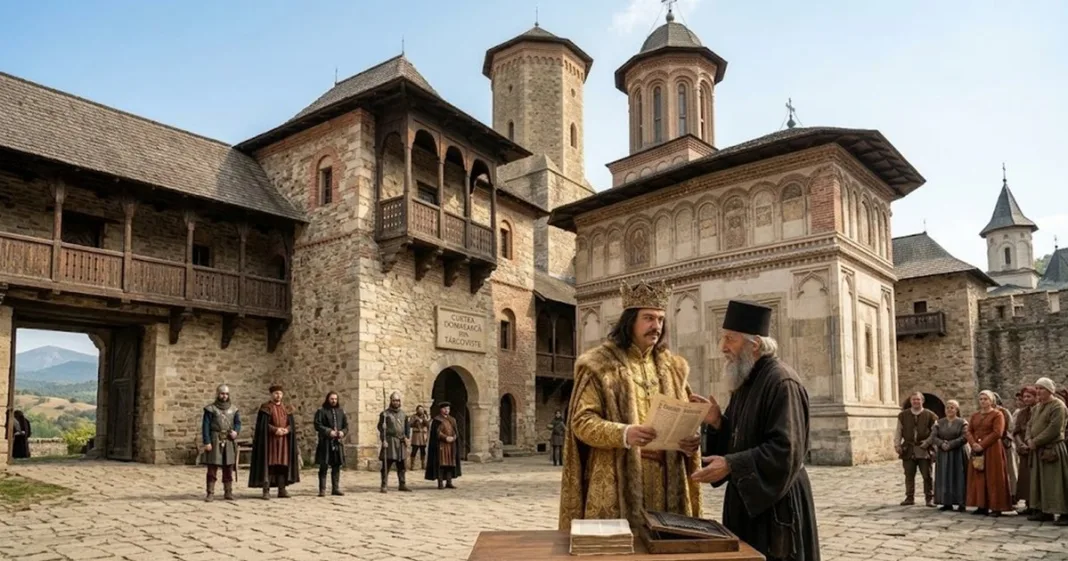
Radu IV Basarab – “Radu the Great” – a Diplomatic Reformer of 15th‑Century Wallachia Radu IV Basarab, known in Romanian historiography as Radu the Great, was a Wallachian ruler who reigned from 1481 to 1495. Born in 1467 in the midst of a civil war that followed the death of Mircea the Elder, Radu was the nephew of Vlad Țepeș (Vlad the Impaler) and the son of Vlad Călugărul (Petru), a former monk who briefly held the throne. ### Early Life and Ascension Radu was born into a turbulent period when Wallachia was contested by rival branches of the Dănești and Drăculești families. His father, Vlad Călugărul, had been a monk at the Monastery of Glavacioc before abandoning monastic life to claim the throne in 1481. Radu was already involved in governance at the age of 23, acting as co‑ruler with his father and being recognized in official documents as the heir apparent. ### Reign and Policies Radu’s reign is noted for its emphasis on diplomacy rather than warfare. He maintained a tributary relationship with the Ottoman Empire, paying an annual tribute of 12,000 gold coins, which secured Wallachia’s autonomy and opened trade routes to Ottoman markets. His administration also fostered relations with neighboring Hungary and Transylvania, granting privileges to Hungarian merchants and the Saxon communities, thereby stimulating economic growth. Radu’s domestic policy focused on stability. He worked closely with the powerful Craiovești boyar clan, whose support helped maintain internal peace. His reign is recorded as a period of relative prosperity, with Wallachia experiencing over a decade of peace and economic development. ### Cultural Contributions Radu is credited with patronizing the arts and religious institutions. He donated lands and funds to monasteries, including those on Mount Athos, and supported the construction and restoration of churches within Wallachia. His reign is considered part of the “Golden Age” of medieval Romanian culture, comparable in significance to the Stephen the Great Renaissance in Moldavia. ### The “Apocalypse” Narrative During Radu’s rule, a contemporary chronicler noted that the year 1492 was perceived by some as the “Year of the Apocalypse,” based on Byzantine calendar calculations that linked the year to the seventh millennium since creation. This belief led to a temporary abdication of Vlad Călugărul in late August 1492, after which Radu assumed full control. Vlad Călugărul later returned to the throne for a brief period before his death in 1495. The historical accuracy of the “Apocalypse” claim remains debated among scholars; it is treated as an unverified contemporary belief rather than a factual event. ### Legacy Radu IV Basarab’s reign is remembered for its diplomatic skill, economic prosperity, and cultural patronage. He is often referred to as “Radu the Great” in Romanian historiography, a title given by the 18th‑century historian Gheorghe Șincai. His ability to navigate the complex political landscape of the late 15th century, balancing Ottoman demands with internal stability, left a lasting imprint on Wallachian history. Article source: Adev&acaron;rul | Image credit: Adev&acaron;rul
Radu IV Basarab – “Radu the Great” – a Diplomatic Reformer of 15th‑Century Wallachia Radu IV Basarab, known in Romanian historiography as Radu the Great, was a Wallachian ruler who reigned from 1481 to 1495. Born in 1467 in the midst of a civil war that followed the death of Mircea the Elder, Radu was the nephew of Vlad Țepeș (Vlad the Impaler) and the son of Vlad Călugărul (Petru), a former monk who briefly held the throne. ### Early Life and Ascension Radu was born into a turbulent period when Wallachia was contested by rival branches of the Dănești and Drăculești families. His father, Vlad Călugărul, had been a monk at the Monastery of Glavacioc before abandoning monastic life to claim the throne in 1481. Radu was already involved in governance at the age of 23, acting as co‑ruler with his father and being recognized in official documents as the heir apparent. ### Reign and Policies Radu’s reign is noted for its emphasis on diplomacy rather than warfare. He maintained a tributary relationship with the Ottoman Empire, paying an annual tribute of 12,000 gold coins, which secured Wallachia’s autonomy and opened trade routes to Ottoman markets. His administration also fostered relations with neighboring Hungary and Transylvania, granting privileges to Hungarian merchants and the Saxon communities, thereby stimulating economic growth. Radu’s domestic policy focused on stability. He worked closely with the powerful Craiovești boyar clan, whose support helped maintain internal peace. His reign is recorded as a period of relative prosperity, with Wallachia experiencing over a decade of peace and economic development. ### Cultural Contributions Radu is credited with patronizing the arts and religious institutions. He donated lands and funds to monasteries, including those on Mount Athos, and supported the construction and restoration of churches within Wallachia. His reign is considered part of the “Golden Age” of medieval Romanian culture, comparable in significance to the Stephen the Great Renaissance in Moldavia. ### The “Apocalypse” Narrative During Radu’s rule, a contemporary chronicler noted that the year 1492 was perceived by some as the “Year of the Apocalypse,” based on Byzantine calendar calculations that linked the year to the seventh millennium since creation. This belief led to a temporary abdication of Vlad Călugărul in late August 1492, after which Radu assumed full control. Vlad Călugărul later returned to the throne for a brief period before his death in 1495. The historical accuracy of the “Apocalypse” claim remains debated among scholars; it is treated as an unverified contemporary belief rather than a factual event. ### Legacy Radu IV Basarab’s reign is remembered for its diplomatic skill, economic prosperity, and cultural patronage. He is often referred to as “Radu the Great” in Romanian historiography, a title given by the 18th‑century historian Gheorghe Șincai. His ability to navigate the complex political landscape of the late 15th century, balancing Ottoman demands with internal stability, left a lasting imprint on Wallachian history.
News Desk is the editorial publishing account for Tringlobe Media News, covering breaking news, public affairs, entertainment, community developments and regional stories across Trinidad and Tobago, the Caribbean and internationally.