The key points are temporarily unavailable. You can still read the full Story below.
Main Points
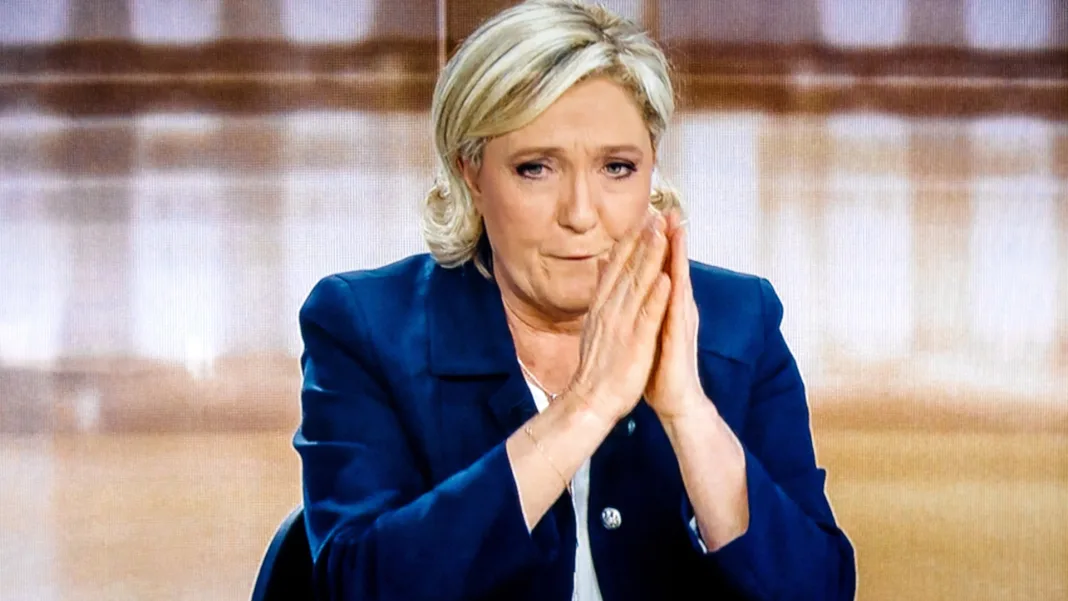
**Around 30 Candidates Enter France’s 2026 Presidential Race; Marine Le Pen Leads Early Polls** *Paris, 1 September 2026* – The field for France’s upcoming presidential election has expanded to roughly 30 declared candidates, with early opinion polls showing far‑right leader Marine Le Pen holding a substantial lead ahead of the first‑round vote scheduled for 18 April 2026. A second round, if required, is set for 2 May 2026. **Polls and Legal Background** Recent surveys, which remain subject to change, give Le Pen – 58 – about 34 percent of the vote in a hypothetical first round, positioning her as the frontrunner for a likely outright victory in the runoff regardless of her opponent. The polls come despite Le Pen’s ongoing legal issues; she is currently under appeal after being convicted of misappropriating European Parliament funds. **Key Contenders** Trailing Le Pen are two prominent figures: * **Édouard Philippe**, 55, former prime minister, who is seeking to unite the right and centre under a single candidacy. * **Jean‑Luc Mélenchon**, 75, leader of the radical left party La France Insoumise. Other declared candidates include: * **Gabriel Attal**, former prime minister under Emmanuel Macron. * **Bruno Retailleau**, leader of the right‑wing party Les Républicains. * **Xavier Bertrand**, president of the Hauts‑de‑France region and member of Les Républicains. * **David Lisnard**, mayor of Cannes. * **Raphaël Glucksmann**, euro‑deputy and head of the progressive party Place Publique, who announced his candidacy at the end of summer and is currently polling at 10‑15 percent. * **Olivier Faure**, secretary‑general of the Socialist Party (PS), who declared his bid over the weekend. * **François Hollande**, former president (2012‑2017), who remains a potential alternative for the left. * **Marine Tondelier**, leader of the Green Party, whose party is divided over possible alliances with Mélenchon, support for Glucksmann, or an independent run. **Analysts’ Views** Political communication specialist **Émilie Zapalski**, speaking to AFP, said it is “difficult to know what will emerge after the elections,” noting that the past decade has “blurred the traditional left‑right divide that was once fundamental to French politics and the French mindset.” Political science professor **Rémi Lefebvre** of the University of Lille described the crowded field as a “Macron syndrome,” referencing the 2017 election in which Emmanuel Macron, then a political outsider without strong party backing, ultimately won the presidency. Lefebvre added that the situation “feeds ambitions” amid an “uncertain election” and a voter base that is “more volatile and less loyal to any party.” He characterized the left’s situation as a “true fragmentation,” observing that France now has “more parties than ever and they are all weaker,” making it the most fragmented left in Europe. **Calls for Primaries** Given the risk that a divided right‑wing vote could jeopardize a second‑round victory, several political figures have advocated for primary elections to consolidate candidacies. However, Édou Article and image source: expressodasilhas.cv
**Around 30 Candidates Enter France’s 2026 Presidential Race; Marine Le Pen Leads Early Polls**
*Paris, 1 September 2026* – The field for France’s upcoming presidential election has expanded to roughly 30 declared candidates, with early opinion polls showing far‑right leader Marine Le Pen holding a substantial lead ahead of the first‑round vote scheduled for 18 April 2026. A second round, if required, is set for 2 May 2026.
**Polls and Legal Background**
Recent surveys, which remain subject to change, give Le Pen – 58 – about 34 percent of the vote in a hypothetical first round, positioning her as the frontrunner for a likely outright victory in the runoff regardless of her opponent. The polls come despite Le Pen’s ongoing legal issues; she is currently under appeal after being convicted of misappropriating European Parliament funds.
**Key Contenders**
Trailing Le Pen are two prominent figures:
* **Édouard Philippe**, 55, former prime minister, who is seeking to unite the right and centre under a single candidacy.
* **Jean‑Luc Mélenchon**, 75, leader of the radical left party La France Insoumise.
Other declared candidates include:
* **Gabriel Attal**, former prime minister under Emmanuel Macron.
* **Bruno Retailleau**, leader of the right‑wing party Les Républicains.
* **Xavier Bertrand**, president of the Hauts‑de‑France region and member of Les Républicains.
* **David Lisnard**, mayor of Cannes.
* **Raphaël Glucksmann**, euro‑deputy and head of the progressive party Place Publique, who announced his candidacy at the end of summer and is currently polling at 10‑15 percent.
* **Olivier Faure**, secretary‑general of the Socialist Party (PS), who declared his bid over the weekend.
* **François Hollande**, former president (2012‑2017), who remains a potential alternative for the left.
* **Marine Tondelier**, leader of the Green Party, whose party is divided over possible alliances with Mélenchon, support for Glucksmann, or an independent run.
**Analysts’ Views**
Political communication specialist **Émilie Zapalski**, speaking to AFP, said it is “difficult to know what will emerge after the elections,” noting that the past decade has “blurred the traditional left‑right divide that was once fundamental to French politics and the French mindset.”
Political science professor **Rémi Lefebvre** of the University of Lille described the crowded field as a “Macron syndrome,” referencing the 2017 election in which Emmanuel Macron, then a political outsider without strong party backing, ultimately won the presidency. Lefebvre added that the situation “feeds ambitions” amid an “uncertain election” and a voter base that is “more volatile and less loyal to any party.” He characterized the left’s situation as a “true fragmentation,” observing that France now has “more parties than ever and they are all weaker,” making it the most fragmented left in Europe.
**Calls for Primaries**
Given the risk that a divided right‑wing vote could jeopardize a second‑round victory, several political figures have advocated for primary elections to consolidate candidacies. However, Édou
News Desk is the editorial publishing account for Tringlobe Media News, covering breaking news, public affairs, entertainment, community developments and regional stories across Trinidad and Tobago, the Caribbean and internationally.