The key points are temporarily unavailable. You can still read the full Story below.
Main Points
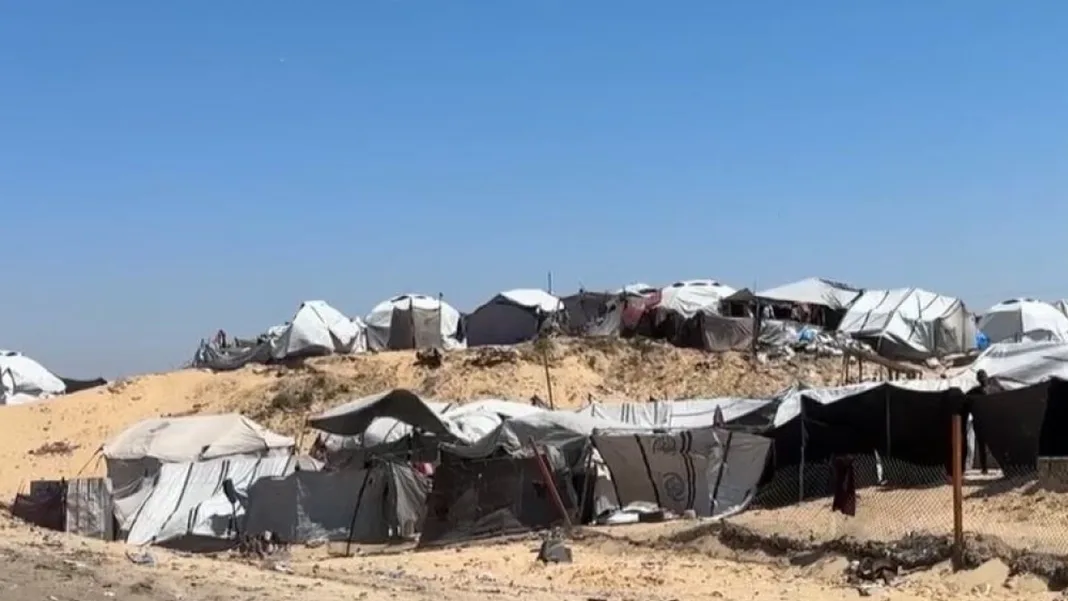
**Displaced Gazans Living Near Garbage Dump Face Heightened Health Risks** *Gaza Strip – August 30, 2026* – Families residing in displacement camps near a large garbage dump in the northern Gaza Strip are reporting worsening health conditions, limited access to medical care, and environmental hazards, according to interviews conducted by the Palestinian News Network (PNN) and statements from United Nations agencies. **Personal accounts** Shorouq Saadallah, who has been living with her family in a camp adjacent to the dump for eight months, said her children have developed itching, scabies and allergies. “We have been living near the dump for eight months,” Saadallah told reporters. “My children became sick with itching, scabies and allergies, and there are no medicines available in the hospitals.” She added that she often cannot afford prescribed medicines, telling doctors to withhold prescriptions because she cannot purchase the drugs. Ahlam Youssef Maarouf, displaced several times since the conflict began, described similar conditions after her family was forced to settle near the Al‑Hayya camp north of Beit Lahia toward the end of the war. “We are living in very difficult conditions,” Maarouf said. “There are rats and insects, and everything around us is difficult.” She noted that some families have turned to the dump as a source of livelihood, scavenging for food, cans and other materials. **Wider waste and sanitation crisis** Humanitarian organizations have highlighted the broader implications of waste accumulation near displacement sites. A United Nations (U.N.) humanitarian survey conducted in early July found that 26 % of households in Gaza reported solid‑waste piles near their shelters, while 43 % said sewage or sludge was located within 10 metres of their dwellings. UNICEF has warned that the combination of overcrowding, inadequate sanitation and uncollected waste can foster rodent, fly and pest infestations, increasing the risk of disease transmission. An August report by the United Nations Relief and Works Agency for Palestine Refugees (UNRWA) linked repeated displacement, environmental contamination and the collapse of water‑sanitation systems to a surge in communicable diseases across the territory. The environmental impact extends beyond health. Open‑air waste can generate air pollution when burned and may contaminate soil and water, especially where drainage infrastructure has been damaged. A Reuters video released on August 26 showed large quantities of garbage accumulating among tents housing displaced Palestinians, with residents collecting items from the waste. **Challenges for displaced families** For families like those of Saadallah and Maarouf, the proximity of the dump translates into daily hardships. Flies attracted to the waste swarm over food, and rodents move through the camp, complicating basic hygiene practices. The lack of affordable medical treatment further exacerbates health concerns, particularly for children. The situation underscores a dilemma faced by many displaced residents: remaining in locations that expose them to heightened health and environmental risks, or relocating again without certainty of safer shelter. **International response** UN agencies continue to call for improved waste management, water, and sanitation services in Gaza to mitigate the public‑health crisis. However, the scale of the problem, compounded by ongoing conflict and mass displacement, presents significant logistical challenges. The report and accompanying video were produced with financial support from the French Cooperation Initiative (CFI), Expertise France and the European Union. The content reflects the observations of the beneficiaries and does not represent the official positions of the funding organizations. Article and image source: english.pnn.ps
**Displaced Gazans Living Near Garbage Dump Face Heightened Health Risks**
*Gaza Strip – August 30, 2026* – Families residing in displacement camps near a large garbage dump in the northern Gaza Strip are reporting worsening health conditions, limited access to medical care, and environmental hazards, according to interviews conducted by the Palestinian News Network (PNN) and statements from United Nations agencies.
**Personal accounts**
Shorouq Saadallah, who has been living with her family in a camp adjacent to the dump for eight months, said her children have developed itching, scabies and allergies. “We have been living near the dump for eight months,” Saadallah told reporters. “My children became sick with itching, scabies and allergies, and there are no medicines available in the hospitals.” She added that she often cannot afford prescribed medicines, telling doctors to withhold prescriptions because she cannot purchase the drugs.
Ahlam Youssef Maarouf, displaced several times since the conflict began, described similar conditions after her family was forced to settle near the Al‑Hayya camp north of Beit Lahia toward the end of the war. “We are living in very difficult conditions,” Maarouf said. “There are rats and insects, and everything around us is difficult.” She noted that some families have turned to the dump as a source of livelihood, scavenging for food, cans and other materials.
**Wider waste and sanitation crisis**
Humanitarian organizations have highlighted the broader implications of waste accumulation near displacement sites. A United Nations (U.N.) humanitarian survey conducted in early July found that 26 % of households in Gaza reported solid‑waste piles near their shelters, while 43 % said sewage or sludge was located within 10 metres of their dwellings.
UNICEF has warned that the combination of overcrowding, inadequate sanitation and uncollected waste can foster rodent, fly and pest infestations, increasing the risk of disease transmission. An August report by the United Nations Relief and Works Agency for Palestine Refugees (UNRWA) linked repeated displacement, environmental contamination and the collapse of water‑sanitation systems to a surge in communicable diseases across the territory.
The environmental impact extends beyond health. Open‑air waste can generate air pollution when burned and may contaminate soil and water, especially where drainage infrastructure has been damaged. A Reuters video released on August 26 showed large quantities of garbage accumulating among tents housing displaced Palestinians, with residents collecting items from the waste.
**Challenges for displaced families**
For families like those of Saadallah and Maarouf, the proximity of the dump translates into daily hardships. Flies attracted to the waste swarm over food, and rodents move through the camp, complicating basic hygiene practices. The lack of affordable medical treatment further exacerbates health concerns, particularly for children.
The situation underscores a dilemma faced by many displaced residents: remaining in locations that expose them to heightened health and environmental risks, or relocating again without certainty of safer shelter.
**International response**
UN agencies continue to call for improved waste management, water, and sanitation services in Gaza to mitigate the public‑health crisis. However, the scale of the problem, compounded by ongoing conflict and mass displacement, presents significant logistical challenges.
The report and accompanying video were produced with financial support from the French Cooperation Initiative (CFI), Expertise France and the European Union. The content reflects the observations of the beneficiaries and does not represent the official positions of the funding organizations.
News Desk is the editorial publishing account for Tringlobe Media News, covering breaking news, public affairs, entertainment, community developments and regional stories across Trinidad and Tobago, the Caribbean and internationally.