The key points are temporarily unavailable. You can still read the full Story below.
Main Points
On 8 Kartik 2024, the Ministry of Finance announced that the operation of productive state‑owned enterprises would also benefit the private sector. The statement was made during a parliamentary session in Kathmandu, where Congress MP Niskal Rai had asked the ministry to clarify the government’s stance on the role of private industry. In its reply, the ministry reiterated that “the private sector is the engine of the country’s economy” and that even if state enterprises are re‑operated, they will be managed in partnership with private firms. The ministry said that such collaboration would ensure sustainable management of state enterprises and create backward‑forward linkages that open new markets for private businesses, thereby benefiting the private sector. The ministry also cited the Constitution’s policy of public, private and cooperative participation, noting that the government’s approach is consistent with this principle. It added that reforms aimed at placing the private sector at the forefront of productive economic development are not in doubt. Rai had questioned the apparent contradiction between the government’s declaration of the private sector as the economic engine and its continued operation of state enterprises. The ministry responded that public institutions are necessary to keep the economy dynamic and to attract private investment. It referenced the 2024 OECD report, which noted that 500 of the world’s largest companies are state‑owned, compared with only 34 in 2000. It also cited 2023 figures showing state enterprises with assets of 53.5 trillion US dollars and income of 1.2 trillion US dollars. The ministry explained that, except for a few strategically important industries, the government does not directly run enterprises. It pointed to the Public Enterprise Management Act of 2050 (2013) Section 8(g), which requires private sector participation in the management of state enterprises. In the 2083/84 fiscal year budget, the government adopted a policy of capital increase and share issuance to strengthen public institutions. Asset and liability valuations are underway for seven state enterprises, with reports received for five of them. Valuations for Bhatwal Dhagyo Factory Ltd and Nepal Arind Magnetite Prolko are also in progress. The ministry highlighted its policy of selecting appropriate public‑private partnership (PPP) models for investment management. For the Hatunada textile industry, 3.3 million rupees have been withdrawn, and a pilot production run has begun using a few machines. After the pilot, the ministry will discuss and select a suitable model for full re‑operation. Article source: Gorkhapatra National Daily | Image credit: Gorkhapatra National Daily
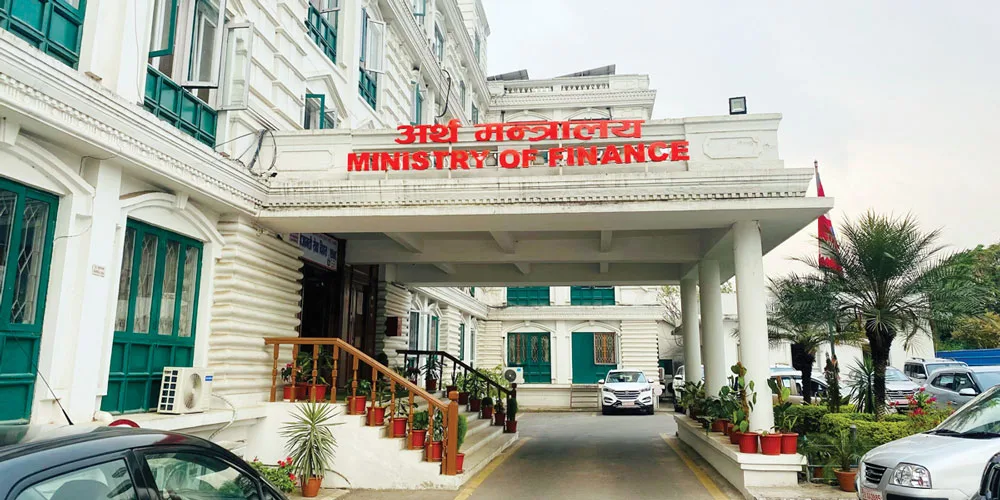
On 8 Kartik 2024, the Ministry of Finance announced that the operation of productive state‑owned enterprises would also benefit the private sector. The statement was made during a parliamentary session in Kathmandu, where Congress MP Niskal Rai had asked the ministry to clarify the government’s stance on the role of private industry. In its reply, the ministry reiterated that “the private sector is the engine of the country’s economy” and that even if state enterprises are re‑operated, they will be managed in partnership with private firms. The ministry said that such collaboration would ensure sustainable management of state enterprises and create backward‑forward linkages that open new markets for private businesses, thereby benefiting the private sector. The ministry also cited the Constitution’s policy of public, private and cooperative participation, noting that the government’s approach is consistent with this principle. It added that reforms aimed at placing the private sector at the forefront of productive economic development are not in doubt. Rai had questioned the apparent contradiction between the government’s declaration of the private sector as the economic engine and its continued operation of state enterprises. The ministry responded that public institutions are necessary to keep the economy dynamic and to attract private investment. It referenced the 2024 OECD report, which noted that 500 of the world’s largest companies are state‑owned, compared with only 34 in 2000. It also cited 2023 figures showing state enterprises with assets of 53.5 trillion US dollars and income of 1.2 trillion US dollars. The ministry explained that, except for a few strategically important industries, the government does not directly run enterprises. It pointed to the Public Enterprise Management Act of 2050 (2013) Section 8(g), which requires private sector participation in the management of state enterprises. In the 2083/84 fiscal year budget, the government adopted a policy of capital increase and share issuance to strengthen public institutions. Asset and liability valuations are underway for seven state enterprises, with reports received for five of them. Valuations for Bhatwal Dhagyo Factory Ltd and Nepal Arind Magnetite Prolko are also in progress. The ministry highlighted its policy of selecting appropriate public‑private partnership (PPP) models for investment management. For the Hatunada textile industry, 3.3 million rupees have been withdrawn, and a pilot production run has begun using a few machines. After the pilot, the ministry will discuss and select a suitable model for full re‑operation.
News Desk is the editorial publishing account for Tringlobe Media News, covering breaking news, public affairs, entertainment, community developments and regional stories across Trinidad and Tobago, the Caribbean and internationally.