The key points are temporarily unavailable. You can still read the full Story below.
Main Points
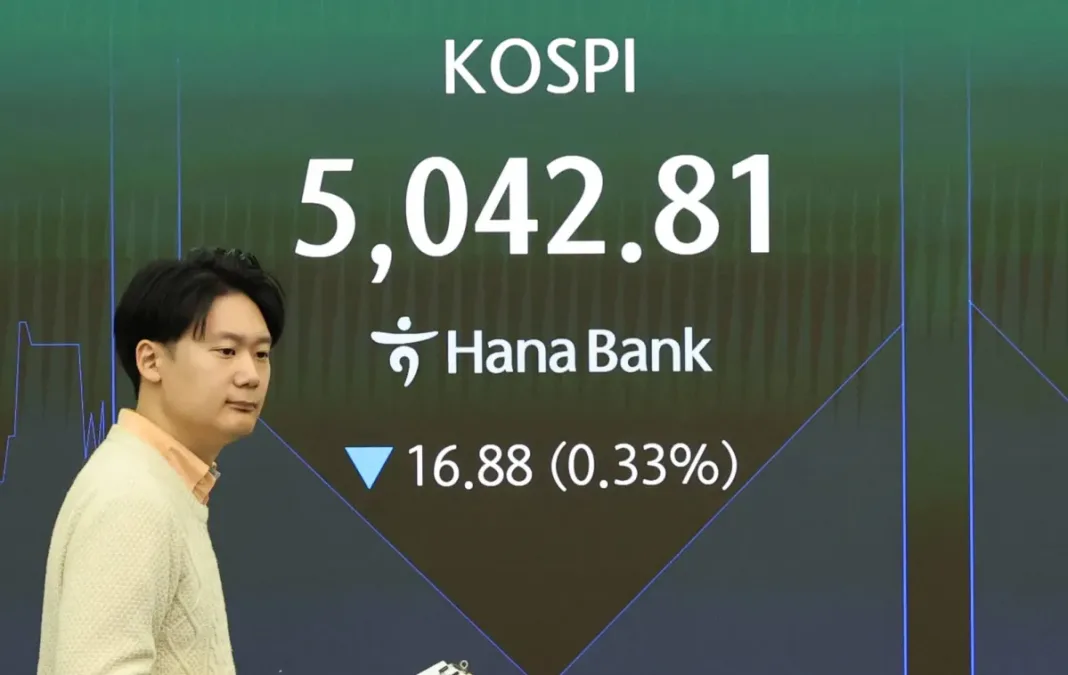
On Monday, November 9 2026 (29 Jumada al‑Awwal 1448 AH), the Korean equity market rebounded sharply after a steep sell‑off earlier in the week that had been driven by concerns over the artificial‑intelligence (AI) sector. The KOSPI index rose 1.57 % to 5,139.27 points by 01:46 GMT, a gain of 79.58 points, following a 6 % decline on Friday that had produced the lowest closing level since March 31. The rally was led by semiconductor names. Samsung Electronics shares climbed 2.9 %, while SK Hynix gained 4.7 % after suffering heavy losses in the previous sessions. Both companies are major beneficiaries of demand for AI‑related computing and data‑center infrastructure. A senior Korean official said that current issues with Nvidia would not affect the contracted supply of graphics processing units (GPUs) that South Korea receives from the U.S. company. Currency and bond markets also moved in a supportive direction. The Korean won strengthened 0.18 % to 1,360.6 won per U.S. dollar, up from 1,363 won at the close. Three‑year government bond yields rose 2.4 basis points to 3.646 %, while ten‑year yields increased 2.5 basis points to 3.877 %. Despite the index’s rise, foreign investors recorded a net sale of 512.1 billion won (about $375.5 million), indicating continued caution around technology stocks. Asian equity markets as a whole were also stabilising. The MSCI Pacific index, excluding Japan, gained 0.8 % after a 4.6 % decline over the week. Japan’s Nikkei index rose 2.5 %, and Taiwan’s benchmark index increased 2.5 % following its worst weekly loss in two decades, driven by fears that AI investment returns and demand for related infrastructure could falter. Analysts noted that a repeat of the previous week’s sell‑off seemed unlikely unless new negative macroeconomic data or AI‑company results emerged. In the United States, the market had recovered some of the losses from the AI‑related sell‑off, but volatility remained. The Dow Jones Industrial Average and the S&P 500 had both posted modest gains, while the Nasdaq, heavily weighted with technology stocks, had been more volatile. Kyle Roda, chief market‑strategy analyst at Capital.com, cautioned that the markets had not yet exited the risk‑off cycle, citing the U.S. midterm election outcomes and potential regulatory tightening on AI and data‑center operations. Oil prices fell to $97.49 per barrel of Brent crude, following remarks by former U.S. President Donald Trump that the likelihood of new attacks on Iran was unlikely, provided diplomatic talks continued. The decline in oil prices eased inflationary pressure, which in turn supported the gold market. Gold prices rose 1.3 % to $4,122 per ounce in spot trading, while December U.S. Treasury futures for gold increased 1.6 % to $4,139 per ounce. The price rise was partly attributed to the easing of oil‑price‑related inflationary concerns and a modest weakening of the U.S. dollar, which stood at 102.2 against a basket of major currencies. The euro traded at $1.1148 and the Japanese yen at 158.215 yen per dollar. Cryptocurrencies saw a decline, with Bitcoin down more than 2 % to $73,708 and Ethereum falling about 5 % to $2,223, reflecting worries that a Democratic‑controlled U.S. Congress could impose stricter regulatory oversight on the sector. U.S. economic data reinforced expectations of continued monetary tightening. The Labor Department reported 165,000 new jobs added in October, surpassing forecasts and supporting the view that the Federal Reserve may raise interest rates in December. The Fed’s policy‑watching tool, CME’s FedWatch, priced an 80 % probability of a 25‑basis‑point hike at the December meeting. The U.S. dollar index remained near 102.2, while the dollar’s strength was partly offset by the dollar’s lower cost of holding gold and the ongoing inflation concerns. Investors are now awaiting the U.S. Consumer Price Index for November and the Producer Price Index for December, which could further shape expectations for the Fed’s policy path. Article source: Al Awsat | Image credit: Al Awsat
On Monday, November 9 2026 (29 Jumada al‑Awwal 1448 AH), the Korean equity market rebounded sharply after a steep sell‑off earlier in the week that had been driven by concerns over the artificial‑intelligence (AI) sector. The KOSPI index rose 1.57 % to 5,139.27 points by 01:46 GMT, a gain of 79.58 points, following a 6 % decline on Friday that had produced the lowest closing level since March 31. The rally was led by semiconductor names. Samsung Electronics shares climbed 2.9 %, while SK Hynix gained 4.7 % after suffering heavy losses in the previous sessions. Both companies are major beneficiaries of demand for AI‑related computing and data‑center infrastructure. A senior Korean official said that current issues with Nvidia would not affect the contracted supply of graphics processing units (GPUs) that South Korea receives from the U.S. company. Currency and bond markets also moved in a supportive direction. The Korean won strengthened 0.18 % to 1,360.6 won per U.S. dollar, up from 1,363 won at the close. Three‑year government bond yields rose 2.4 basis points to 3.646 %, while ten‑year yields increased 2.5 basis points to 3.877 %. Despite the index’s rise, foreign investors recorded a net sale of 512.1 billion won (about $375.5 million), indicating continued caution around technology stocks. Asian equity markets as a whole were also stabilising. The MSCI Pacific index, excluding Japan, gained 0.8 % after a 4.6 % decline over the week. Japan’s Nikkei index rose 2.5 %, and Taiwan’s benchmark index increased 2.5 % following its worst weekly loss in two decades, driven by fears that AI investment returns and demand for related infrastructure could falter. Analysts noted that a repeat of the previous week’s sell‑off seemed unlikely unless new negative macroeconomic data or AI‑company results emerged. In the United States, the market had recovered some of the losses from the AI‑related sell‑off, but volatility remained. The Dow Jones Industrial Average and the S&P 500 had both posted modest gains, while the Nasdaq, heavily weighted with technology stocks, had been more volatile. Kyle Roda, chief market‑strategy analyst at Capital.com, cautioned that the markets had not yet exited the risk‑off cycle, citing the U.S. midterm election outcomes and potential regulatory tightening on AI and data‑center operations. Oil prices fell to $97.49 per barrel of Brent crude, following remarks by former U.S. President Donald Trump that the likelihood of new attacks on Iran was unlikely, provided diplomatic talks continued. The decline in oil prices eased inflationary pressure, which in turn supported the gold market. Gold prices rose 1.3 % to $4,122 per ounce in spot trading, while December U.S. Treasury futures for gold increased 1.6 % to $4,139 per ounce. The price rise was partly attributed to the easing of oil‑price‑related inflationary concerns and a modest weakening of the U.S. dollar, which stood at 102.2 against a basket of major currencies. The euro traded at $1.1148 and the Japanese yen at 158.215 yen per dollar. Cryptocurrencies saw a decline, with Bitcoin down more than 2 % to $73,708 and Ethereum falling about 5 % to $2,223, reflecting worries that a Democratic‑controlled U.S. Congress could impose stricter regulatory oversight on the sector. U.S. economic data reinforced expectations of continued monetary tightening. The Labor Department reported 165,000 new jobs added in October, surpassing forecasts and supporting the view that the Federal Reserve may raise interest rates in December. The Fed’s policy‑watching tool, CME’s FedWatch, priced an 80 % probability of a 25‑basis‑point hike at the December meeting. The U.S. dollar index remained near 102.2, while the dollar’s strength was partly offset by the dollar’s lower cost of holding gold and the ongoing inflation concerns. Investors are now awaiting the U.S. Consumer Price Index for November and the Producer Price Index for December, which could further shape expectations for the Fed’s policy path.
News Desk is the editorial publishing account for Tringlobe Media News, covering breaking news, public affairs, entertainment, community developments and regional stories across Trinidad and Tobago, the Caribbean and internationally.