The key points are temporarily unavailable. You can still read the full Story below.
Main Points
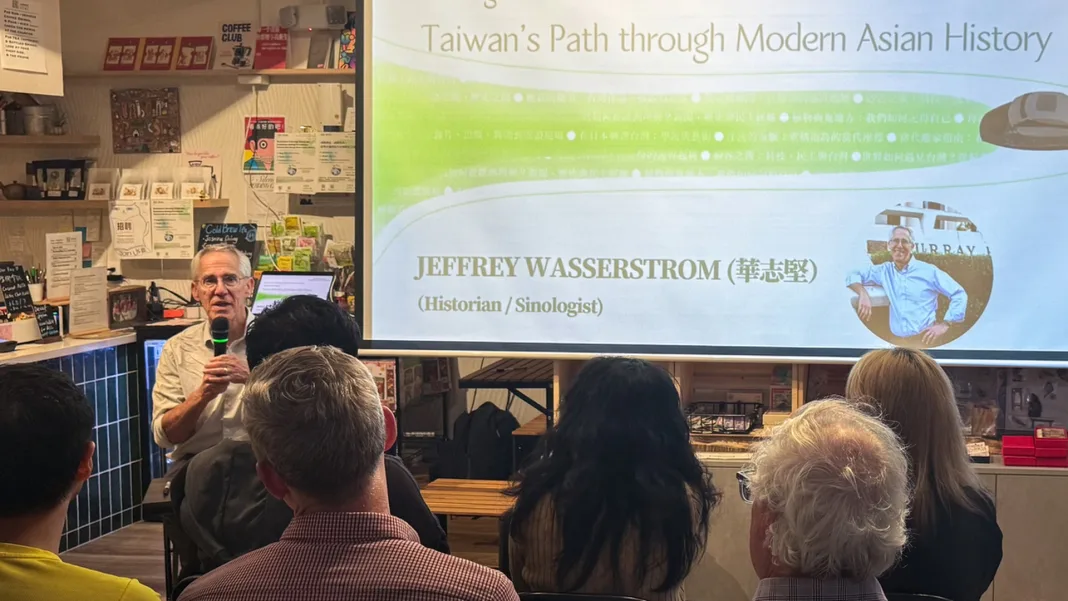
### Historian Jeffrey Wasserstrom Reflects on Taiwan’s Role in Asian Democratic Movements **SAN FRANCISCO** — University of California, Irvine historian Jeffrey Wasserstrom, a specialist in modern Chinese history and student protest movements, recently discussed the evolution of his academic perspective on Taiwan during a lecture titled "Following the Trend or Breaking New Ground: Taiwan’s Path in Modern Asian History." The event, held August 12 at Unbound Bookstore in San Francisco, was part of the "Taiwan Across Cities" series organized by Nowhere Bookstore. #### Academic Blind Spots and Regional Connections Wasserstrom, author of *The Milk Tea Alliance*, acknowledged that for much of his career, Taiwan was absent from his primary research focus. During his doctoral studies at UC Berkeley, his work on student movements and political repression in the Republic of China era focused heavily on mainland China. He admitted that he failed to incorporate the 1947 February 28 Incident in Taiwan into his research framework at the time, citing the limitations of academic specialization as a primary reason for this oversight. "If you can move between different countries and frameworks, the discussion of these events becomes much richer," Wasserstrom said. He noted that his perspective shifted after observing the 2014 Hong Kong Umbrella Movement and the subsequent rise of the "Milk Tea Alliance"—a digital network of activists from Hong Kong, Thailand, and Myanmar. Wasserstrom highlighted that he initially overlooked the significance of Taiwan’s 2014 Sunflower Movement, which he now recognizes as a pivotal moment where young activists responded to the expansion of Beijing’s influence. He noted that Hong Kong activists, such as Alex Chow, sought advice from their Taiwanese counterparts during that period, emphasizing the importance of cross-border knowledge sharing among youth movements. #### Rethinking Comparative Frameworks Wasserstrom challenged the academic tendency to use China as the sole point of comparison for Taiwan. He argued that Taiwan’s democratic trajectory—including its status as the first Asian nation to legalize same-sex marriage and its history of electing female leaders without familial political ties—should be analyzed through broader comparative lenses. "The question is not just 'Why is Taiwan different from China?' but 'Why, among all countries in Asia, did this specific phenomenon happen here first? What does that tell us?'" Wasserstrom suggested. He proposed that Taiwan could be more effectively compared to other societies that have experienced multiple colonial histories, authoritarian rule, and democratic transitions. #### Reflections on "The Other China" Drawing on the concept of "The Other China"—a term popularized by scholar Geremie Barmé to describe Chinese-speaking cultures existing outside the definition of the Chinese Communist Party—Wasserstrom noted that Taiwan has become a space where this identity flourishes, even as some residents move away from identifying as "Chinese." However, he cautioned against over-optimism regarding political change. Reflecting on his own past predictions, he noted the difficulty of forecasting historical outcomes, citing the "outcome blindness" described by historian Paul Cohen. He emphasized that while historical arcs do not always bend toward justice, the study of history serves as a reminder that future developments remain unpredictable. #### Engaging with Contemporary Challenges During the Q&A session, Wasserstrom addressed the role of independent bookstores and digital archives in circumventing censorship. He noted that while some forms of communication may seem outdated, they remain effective tools for penetrating information controls. Regarding the future of Taiwan studies, Wasserstrom encouraged scholars to remain open to diverse comparative frameworks. He concluded by reiterating that maintaining intellectual humility and flexibility is essential for understanding the complex, interconnected history of Asia. The "Taiwan Across Cities" series, which includes events in ten cities worldwide, aims to place Taiwan within a global historical context through dialogue and cultural exchange. Article and image source: twreporter.org
### Historian Jeffrey Wasserstrom Reflects on Taiwan’s Role in Asian Democratic Movements
**SAN FRANCISCO** — University of California, Irvine historian Jeffrey Wasserstrom, a specialist in modern Chinese history and student protest movements, recently discussed the evolution of his academic perspective on Taiwan during a lecture titled “Following the Trend or Breaking New Ground: Taiwan’s Path in Modern Asian History.”
The event, held August 12 at Unbound Bookstore in San Francisco, was part of the “Taiwan Across Cities” series organized by Nowhere Bookstore.
#### Academic Blind Spots and Regional Connections
Wasserstrom, author of *The Milk Tea Alliance*, acknowledged that for much of his career, Taiwan was absent from his primary research focus. During his doctoral studies at UC Berkeley, his work on student movements and political repression in the Republic of China era focused heavily on mainland China. He admitted that he failed to incorporate the 1947 February 28 Incident in Taiwan into his research framework at the time, citing the limitations of academic specialization as a primary reason for this oversight.
“If you can move between different countries and frameworks, the discussion of these events becomes much richer,” Wasserstrom said. He noted that his perspective shifted after observing the 2014 Hong Kong Umbrella Movement and the subsequent rise of the “Milk Tea Alliance”—a digital network of activists from Hong Kong, Thailand, and Myanmar.
Wasserstrom highlighted that he initially overlooked the significance of Taiwan’s 2014 Sunflower Movement, which he now recognizes as a pivotal moment where young activists responded to the expansion of Beijing’s influence. He noted that Hong Kong activists, such as Alex Chow, sought advice from their Taiwanese counterparts during that period, emphasizing the importance of cross-border knowledge sharing among youth movements.
#### Rethinking Comparative Frameworks
Wasserstrom challenged the academic tendency to use China as the sole point of comparison for Taiwan. He argued that Taiwan’s democratic trajectory—including its status as the first Asian nation to legalize same-sex marriage and its history of electing female leaders without familial political ties—should be analyzed through broader comparative lenses.
“The question is not just ‘Why is Taiwan different from China?’ but ‘Why, among all countries in Asia, did this specific phenomenon happen here first? What does that tell us?'” Wasserstrom suggested. He proposed that Taiwan could be more effectively compared to other societies that have experienced multiple colonial histories, authoritarian rule, and democratic transitions.
#### Reflections on “The Other China”
Drawing on the concept of “The Other China”—a term popularized by scholar Geremie Barmé to describe Chinese-speaking cultures existing outside the definition of the Chinese Communist Party—Wasserstrom noted that Taiwan has become a space where this identity flourishes, even as some residents move away from identifying as “Chinese.”
However, he cautioned against over-optimism regarding political change. Reflecting on his own past predictions, he noted the difficulty of forecasting historical outcomes, citing the “outcome blindness” described by historian Paul Cohen. He emphasized that while historical arcs do not always bend toward justice, the study of history serves as a reminder that future developments remain unpredictable.
#### Engaging with Contemporary Challenges
During the Q&A session, Wasserstrom addressed the role of independent bookstores and digital archives in circumventing censorship. He noted that while some forms of communication may seem outdated, they remain effective tools for penetrating information controls.
Regarding the future of Taiwan studies, Wasserstrom encouraged scholars to remain open to diverse comparative frameworks. He concluded by reiterating that maintaining intellectual humility and flexibility is essential for understanding the complex, interconnected history of Asia.
The “Taiwan Across Cities” series, which includes events in ten cities worldwide, aims to place Taiwan within a global historical context through dialogue and cultural exchange.
News Desk is the editorial publishing account for Tringlobe Media News, covering breaking news, public affairs, entertainment, community developments and regional stories across Trinidad and Tobago, the Caribbean and internationally.