The key points are temporarily unavailable. You can still read the full Story below.
Main Points
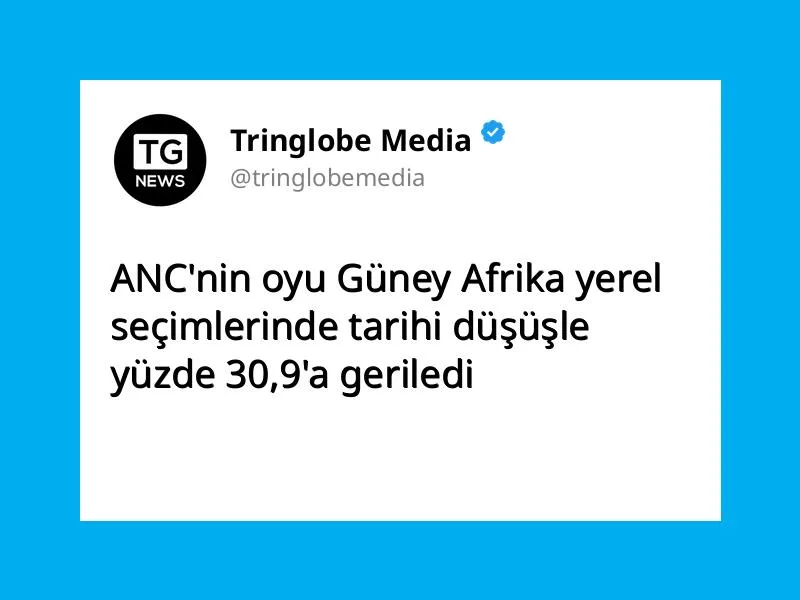
South Africa held its local elections on 4 November 2024, with the results showing a historic decline for the ruling African National Congress (ANC). According to provisional figures released by the Independent Electoral Commission (IEC), the ANC received 30.9 % of the national vote, the lowest share the party has achieved since the country’s democratic transition. The party’s vote share fell by roughly 15 percentage points from the 45.6 % it secured in the 2021 local elections. The Democratic Alliance (DA), the main opposition party, increased its share from 21.7 % in 2021 to 24.6 %, maintaining its position as the second‑largest party. The newly formed Inkatha Freedom Party (MK), led by former President Jacob Zuma, entered the local elections for the first time and captured 9.6 % of the vote, placing third. The Economic Freedom Fighters (EFF) received 6.3 %, ActionSA 5.7 %, and the Inkatha Freedom Party (IFP) 4.7 %. In the 200 municipalities where voting had been completed, 128 councils did not achieve a single‑party majority, prompting discussions of coalition arrangements. In major cities, the DA performed strongly: it secured 56.4 % of the vote in Cape Town, retaining control of the city council; it also won 35 % in Johannesburg and 34.3 % in Tshwane (the Pretoria metropolitan area). In the eThekwini Metropolitan Municipality, which includes Durban, the MK topped the poll with 39.7 %. In Nelson Mandela Bay, the DA won the most votes, while in Buffalo City and Mangaung the ANC remained the leading party. Municipal mayors in South Africa are elected by the municipal councils rather than directly by voters, a process that will now require negotiations among parties in many councils that lack a clear majority. Article and image source: Haberler
South Africa held its local elections on 4 November 2024, with the results showing a historic decline for the ruling African National Congress (ANC). According to provisional figures released by the Independent Electoral Commission (IEC), the ANC received 30.9 % of the national vote, the lowest share the party has achieved since the country’s democratic transition. The party’s vote share fell by roughly 15 percentage points from the 45.6 % it secured in the 2021 local elections. The Democratic Alliance (DA), the main opposition party, increased its share from 21.7 % in 2021 to 24.6 %, maintaining its position as the second‑largest party. The newly formed Inkatha Freedom Party (MK), led by former President Jacob Zuma, entered the local elections for the first time and captured 9.6 % of the vote, placing third. The Economic Freedom Fighters (EFF) received 6.3 %, ActionSA 5.7 %, and the Inkatha Freedom Party (IFP) 4.7 %. In the 200 municipalities where voting had been completed, 128 councils did not achieve a single‑party majority, prompting discussions of coalition arrangements. In major cities, the DA performed strongly: it secured 56.4 % of the vote in Cape Town, retaining control of the city council; it also won 35 % in Johannesburg and 34.3 % in Tshwane (the Pretoria metropolitan area). In the eThekwini Metropolitan Municipality, which includes Durban, the MK topped the poll with 39.7 %. In Nelson Mandela Bay, the DA won the most votes, while in Buffalo City and Mangaung the ANC remained the leading party. Municipal mayors in South Africa are elected by the municipal councils rather than directly by voters, a process that will now require negotiations among parties in many councils that lack a clear majority.
News Desk is the editorial publishing account for Tringlobe Media News, covering breaking news, public affairs, entertainment, community developments and regional stories across Trinidad and Tobago, the Caribbean and internationally.