The key points are temporarily unavailable. You can still read the full Story below.
Main Points
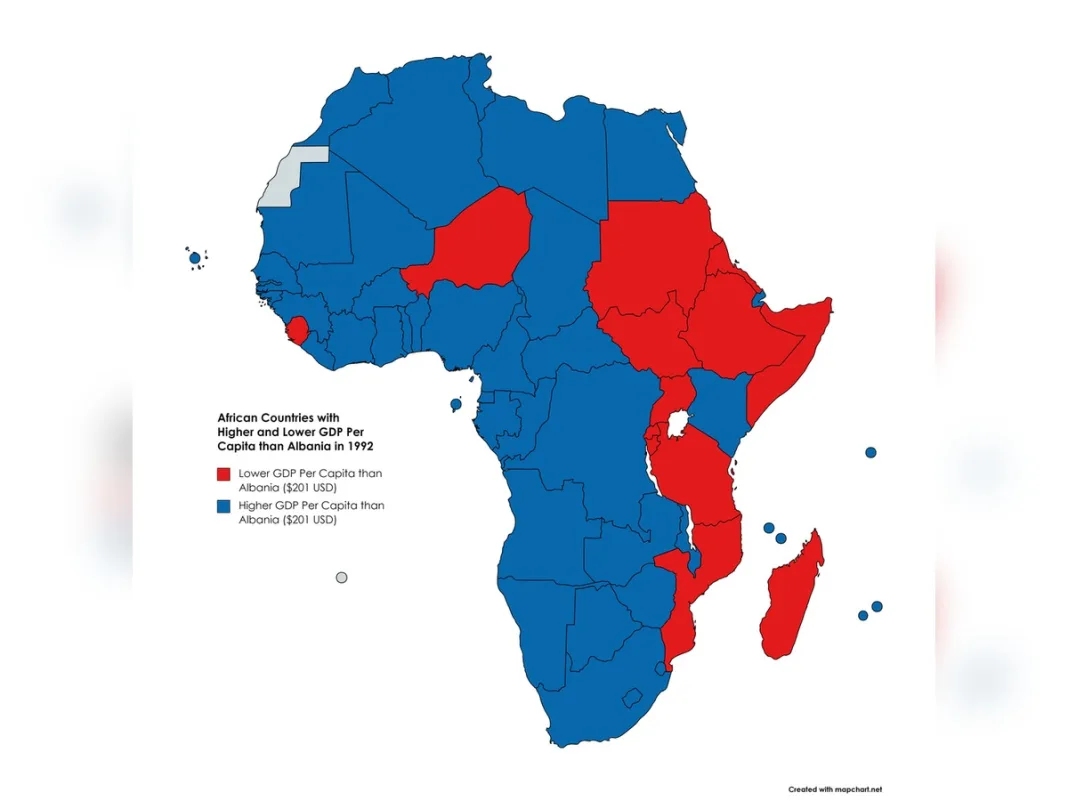
Albania’s economy has grown significantly since the 1990s, yet ordinary citizens continue to struggle with poverty, exposing a stark disconnect between national wealth and individual well-being. According to the World Bank’s 2012 Living Standards Measurement Survey (LSMS), Albania’s GDP per capita (adjusted for purchasing power) stood at just 35% of the EU average in 2008—a gap that persists despite economic reforms. While the country’s GDP expanded by over 111% in 1993 following communist collapse, growth has been uneven, with rural areas and peripheral cities lagging far behind urban centres like Tirana and Durrës. The issue lies in wealth distribution. Albania’s Gini coefficient (a measure of inequality) remains high, with 42.1% of the population at risk of poverty or social exclusion as of 2023. Even in the most optimistic EU integration scenario, Albania could take over 100 years to close the poverty gap with Western Europe, according to the Vienna Institute for International Studies (2026). The problem is structural: construction and energy sectors drive GDP growth, but wages for pensioners, rural families, and informal workers have stagnated. For example, while Albania’s average monthly wage reached €920 (2026), nearly 19.9% of the population still lives on less than $8.30 per day (2021 PPP). Regional disparities worsen the divide. Coastal and central Albania are converging with EU standards faster than rural areas, where agricultural incomes remain low and infrastructure is poor. The World Bank notes that without radical reforms—such as pension system overhauls, minimum wage increases, and anti-corruption measures—GDP growth will remain a statistical illusion, failing to improve living conditions for the majority. Albanians may see economic progress on paper, but for many, poverty persists as a daily reality.
Albania’s economy has grown significantly since the 1990s, yet ordinary citizens continue to struggle with poverty, exposing a stark disconnect between national wealth and individual well-being. According to the World Bank’s 2012 Living Standards Measurement Survey (LSMS), Albania’s GDP per capita (adjusted for purchasing power) stood at just 35% of the EU average in 2008—a gap that persists despite economic reforms. While the country’s GDP expanded by over 111% in 1993 following communist collapse, growth has been uneven, with rural areas and peripheral cities lagging far behind urban centres like Tirana and Durrës.
The issue lies in wealth distribution. Albania’s Gini coefficient (a measure of inequality) remains high, with 42.1% of the population at risk of poverty or social exclusion as of 2023. Even in the most optimistic EU integration scenario, Albania could take over 100 years to close the poverty gap with Western Europe, according to the Vienna Institute for International Studies (2026). The problem is structural: construction and energy sectors drive GDP growth, but wages for pensioners, rural families, and informal workers have stagnated. For example, while Albania’s average monthly wage reached €920 (2026), nearly 19.9% of the population still lives on less than $8.30 per day (2021 PPP).
Regional disparities worsen the divide. Coastal and central Albania are converging with EU standards faster than rural areas, where agricultural incomes remain low and infrastructure is poor. The World Bank notes that without radical reforms—such as pension system overhauls, minimum wage increases, and anti-corruption measures—GDP growth will remain a statistical illusion, failing to improve living conditions for the majority. Albanians may see economic progress on paper, but for many, poverty persists as a daily reality.
News Desk is the editorial publishing account for Tringlobe Media News, covering breaking news, public affairs, entertainment, community developments and regional stories across Trinidad and Tobago, the Caribbean and internationally.