The key points are temporarily unavailable. You can still read the full Story below.
Main Points
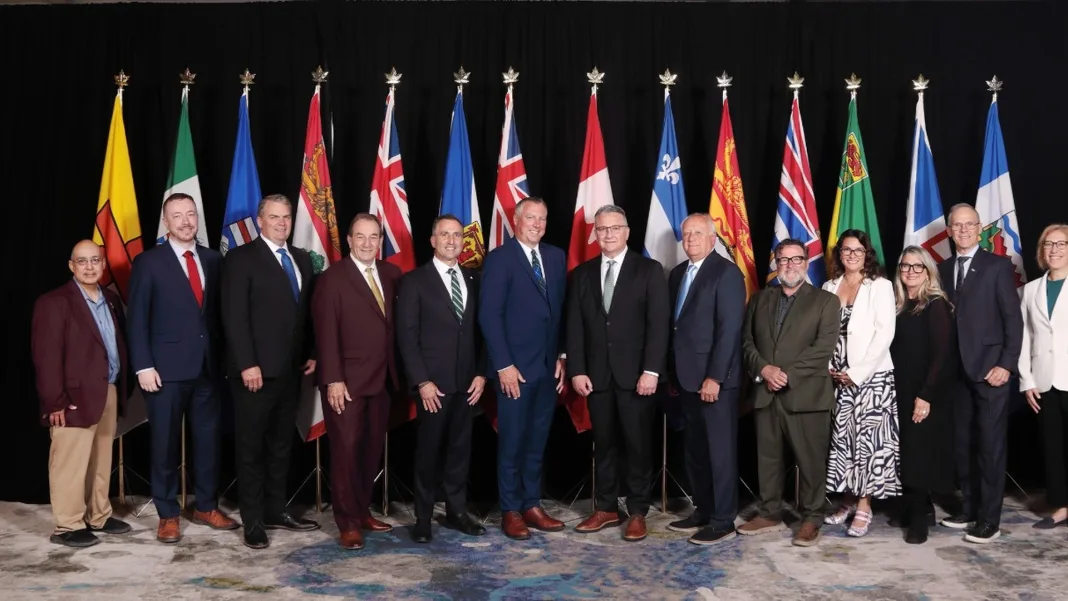
**HALIFAX, Nova Scotia** — Federal, provincial, and territorial agriculture ministers have unveiled a new policy vision aimed at shaping Canada’s agricultural sector from 2028 to 2033.
Presented during the annual ministers of agriculture conference in Halifax, Nova Scotia, on Friday, July 17, the roadmap is outlined in a document called the Halifax Statement. The initiative lays the groundwork for the next iteration of the Next Policy Framework (NPF), focusing on risk management, trade, innovation, and inter-provincial communication.
“Today, federal, provincial, and territorial governments are advancing a clear path forward for Canada’s Next Policy Framework, one that is grounded in collaboration, informed by producers and partners and focused on results,” said federal Agriculture and Agri-Food Minister Heath MacDonald.
According to the Government of Canada, the domestic agriculture and agri-food system generates $158 billion—accounting for an estimated seven per cent of the country’s gross domestic product—and supports one in nine jobs. Canada exported nearly $101.2 billion in agri-food, fish, and seafood globally in 2025, which is $80 million more than the previous year.
### Business Risk Management and AgriStability
Ministers reviewed the business risk management programs under the current Sustainable Canadian Agricultural Partnership, which is scheduled to conclude in 2028. Officials highlighted the need for flexible programs capable of addressing rising economic and production risks.
Discussions focused heavily on the AgriStability payment cap. Ministers agreed to return with official positions on potentially raising the cap from $3 million to $6 million within the NPF. Such a change would impact non-arm’s-length labor and contract work directed at small farms employing individuals related by blood, marriage, common-law partnership, or adoption.
Alberta Agriculture and Irrigation Minister Tara Sawyer noted that the policy framework outlines future programming and funding prospects for growers and producers in her province.
“Alberta’s competitive advantages attract expansion that strengthens the entire value-added chain, from family farms and smaller producers to large-scale processors and major industry players,” Sawyer said. “This means a more resilient food-processing industry and an even stronger reputation for Alberta as one of the best places to do business.”
### Trade and Global Uncertainty
The roadmap prioritizes market diversification and trade enhancement across local, domestic, and international sectors. Officials emphasized that coordinated collaboration between levels of government will strengthen trade promotion and advocacy.
Trade discussions have taken on heightened significance following the introduction of the United States’ America First Trade Policy in April 2025, which imposed a 25 per cent tariff on most Canadian products and a 10 per cent tariff on energy products.
“In light of ongoing global trade uncertainty, tariffs, and supply chain disruptions, ministers reaffirmed their commitment to ensuring the agriculture and agri-food sector remains competitive and resilient,” the federal government stated in a press release.
### Innovation, Environment, and Next Steps
The framework’s third priority centers on investing in science, research, and innovation to expand digital agriculture. Ministers intend to support the development and validation of artificial intelligence and data-informed decision-making tools to foster inclusive research.
Additionally, the strategy addresses environmental and climate change adaptation by strengthening disease surveillance, prevention, and control safeguards for plant and animal health. Sector prosperity and environmental stewardship will be prioritized to promote sustainable resource management, biodiversity, ecosystem services, and greenhouse gas emission reductions.
“The Next Policy Framework will help shape the future of Canadian agriculture through 2033,” said Nova Scotia Minister of Agriculture Greg Morrow. “The Halifax Statement gives us a shared direction as we continue working together on responsive business risk management tools and strategic programs that support our producers and agri-food businesses.”
The Halifax conference concluded the first phase of NPF consultations. The second phase is set to begin in Calgary in fall 2027, where ministers will present stakeholder perspectives.
Article and image source: townandcountrytoday.com