The key points are temporarily unavailable. You can still read the full Story below.
Main Points
What would happen if schools across the United States stopped assigning homework for an entire academic year? The experiment would challenge a familiar assumption about education: that more work completed at home necessarily produces better learning. The available evidence raises questions about that assumption, but it does not establish that eliminating homework would improve academic outcomes for every student. A 2024 systematic review published in Campbell Systematic Reviews examined the relationship between homework time and academic performance among K–12 students. The review identifies a central issue for educators: understanding how the amount of time spent on homework relates to achievement. Its authors note that excessive homework can increase cognitive load and mental fatigue, potentially reducing motivation and performance. The article's stated objective is to evaluate the relationship between homework duration and academic results, rather than simply assume that more time is always better. The debate has a long history in American education. Harvard Graduate School of Education recounts how critics of mechanical homework argued in the late nineteenth century that repetitive assignments could interfere with family life. Some states subsequently limited homework for younger children. After the Soviet Union launched Sputnik in 1957, however, homework became associated with concerns about national competitiveness, helping shift the debate toward demands for more academic work. A school-level example illustrates what a different approach can look like. Harvard's account describes Stephanie Brant, principal of Gaithersburg Elementary School in Maryland, who replaced routine homework such as mathematics worksheets and spelling flash cards with a daily expectation that children read for 30 minutes, with parents or independently. Brant said she wanted students to develop critical thinking and a stronger understanding of their learning instead of spending their evenings on repetitive exercises. This example documents a policy choice, not proof that abolishing homework improves test scores. A nationwide experiment would also raise questions about fairness. Students do not all complete assignments under the same conditions, and a policy change could affect families differently. Removing required assignments might free time for reading, rest and family activities, while students who benefit from structured practice could lose a familiar opportunity to reinforce lessons. The supplied evidence does not quantify these effects or establish which groups would gain or lose most. The most informative way to test the idea would be to measure outcomes rather than rely on anecdotes. Participating schools could record baseline achievement, compare results with those from similar schools that retain homework, and track changes in reading, subject-specific performance, attendance and student well-being. Researchers would also need to distinguish between eliminating all homework and replacing repetitive assignments with purposeful independent reading. Recording results by grade level and student circumstances could help reveal whether the policy works differently across groups. The evidence supports a more precise question than whether homework is good or bad: what kinds of work, for which students, at what ages and for how long produce meaningful learning? A carefully evaluated year without conventional homework could help schools answer that question. Until such evidence is available, neither a nationwide ban nor an assumption that more homework automatically improves achievement is justified by the supplied research.
What would happen if schools across the United States stopped assigning homework for an entire academic year? The experiment would challenge a familiar assumption about education: that more work completed at home necessarily produces better learning. The available evidence raises questions about that assumption, but it does not establish that eliminating homework would improve academic outcomes for every student.
A 2024 systematic review published in Campbell Systematic Reviews examined the relationship between homework time and academic performance among K–12 students. The review identifies a central issue for educators: understanding how the amount of time spent on homework relates to achievement. Its authors note that excessive homework can increase cognitive load and mental fatigue, potentially reducing motivation and performance. The article’s stated objective is to evaluate the relationship between homework duration and academic results, rather than simply assume that more time is always better.
The debate has a long history in American education. Harvard Graduate School of Education recounts how critics of mechanical homework argued in the late nineteenth century that repetitive assignments could interfere with family life. Some states subsequently limited homework for younger children. After the Soviet Union launched Sputnik in 1957, however, homework became associated with concerns about national competitiveness, helping shift the debate toward demands for more academic work.
A school-level example illustrates what a different approach can look like. Harvard’s account describes Stephanie Brant, principal of Gaithersburg Elementary School in Maryland, who replaced routine homework such as mathematics worksheets and spelling flash cards with a daily expectation that children read for 30 minutes, with parents or independently. Brant said she wanted students to develop critical thinking and a stronger understanding of their learning instead of spending their evenings on repetitive exercises. This example documents a policy choice, not proof that abolishing homework improves test scores.
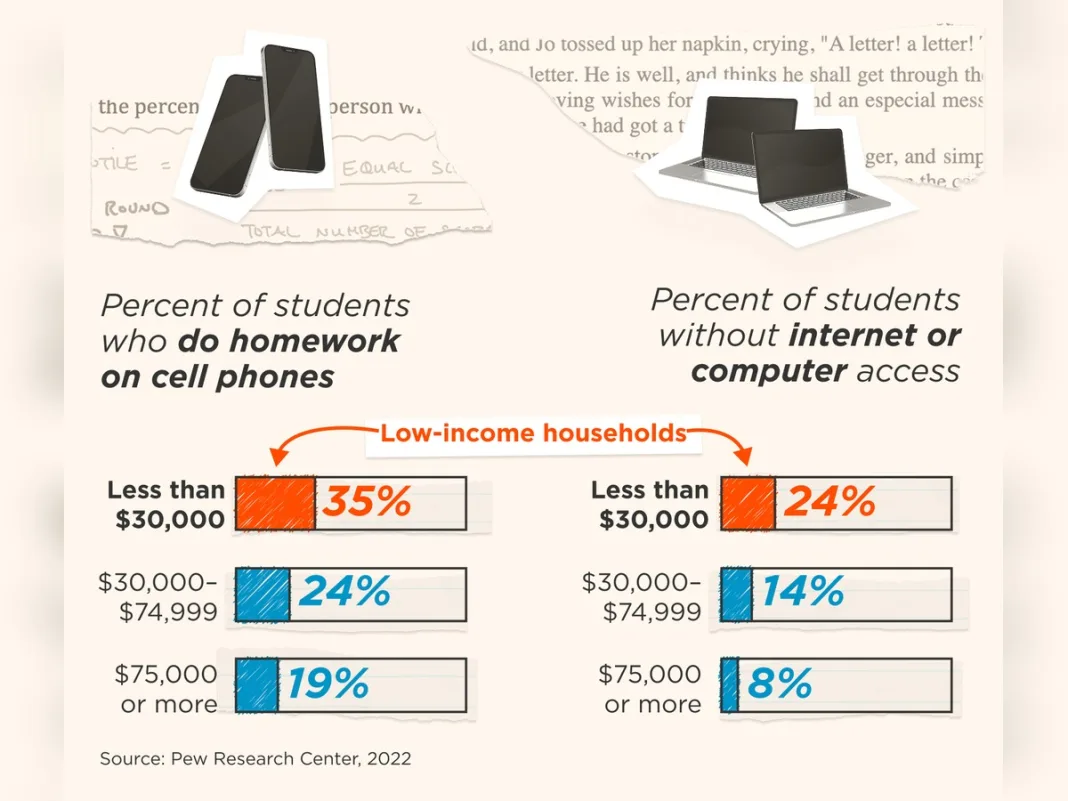
A nationwide experiment would also raise questions about fairness. Students do not all complete assignments under the same conditions, and a policy change could affect families differently. Removing required assignments might free time for reading, rest and family activities, while students who benefit from structured practice could lose a familiar opportunity to reinforce lessons. The supplied evidence does not quantify these effects or establish which groups would gain or lose most.
The most informative way to test the idea would be to measure outcomes rather than rely on anecdotes. Participating schools could record baseline achievement, compare results with those from similar schools that retain homework, and track changes in reading, subject-specific performance, attendance and student well-being. Researchers would also need to distinguish between eliminating all homework and replacing repetitive assignments with purposeful independent reading. Recording results by grade level and student circumstances could help reveal whether the policy works differently across groups.
The evidence supports a more precise question than whether homework is good or bad: what kinds of work, for which students, at what ages and for how long produce meaningful learning? A carefully evaluated year without conventional homework could help schools answer that question. Until such evidence is available, neither a nationwide ban nor an assumption that more homework automatically improves achievement is justified by the supplied research.
News Desk is the editorial publishing account for Tringlobe Media News, covering breaking news, public affairs, entertainment, community developments and regional stories across Trinidad and Tobago, the Caribbean and internationally.