The key points are temporarily unavailable. You can still read the full Story below.
Main Points
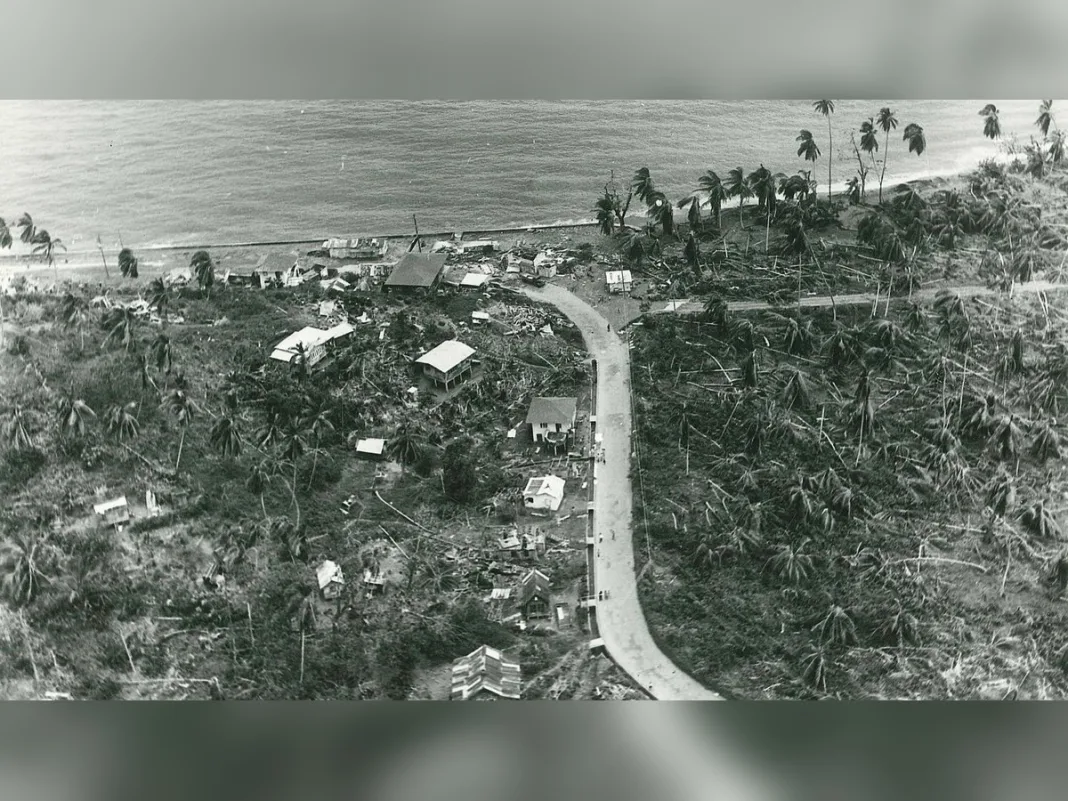
One of the most haunting images from Tobago’s history is a 1963 photograph capturing the aftermath of Hurricane Flora, a storm so destructive it reshaped the island’s landscape and memory. The hurricane, which struck in October 1963, was one of the deadliest in Caribbean history, leaving Tobago in ruins with flooding, landslides, and collapsed infrastructure. The photograph, held in the National Archives of Trinidad and Tobago, shows waterlogged streets in Scarborough, the island’s capital, where homes were submerged and roads impassable. The image is a raw record of survival—residents wading through debris, soldiers assisting with rescue efforts, and foreign aid workers setting up relief camps. Unlike modern disasters, communication was limited, and the full extent of the damage took weeks to assess. Hurricane Flora’s impact was far-reaching. The storm destroyed crops, disrupted fishing industries, and displaced hundreds. The government’s response was slow, and international aid—including British military support—was crucial in rebuilding. The hurricane also accelerated discussions on disaster preparedness, leading to better early-warning systems in later decades. Today, Scarborough’s waterfront has been rebuilt, but the 1963 photograph remains a stark reminder of nature’s power. It contrasts sharply with Tobago’s modern image as a tourist paradise, revealing how one storm could erase decades of progress. The image is more than just a historical document—it’s a cautionary tale about resilience in the face of climate vulnerability.
One of the most haunting images from Tobago’s history is a 1963 photograph capturing the aftermath of Hurricane Flora, a storm so destructive it reshaped the island’s landscape and memory. The hurricane, which struck in October 1963, was one of the deadliest in Caribbean history, leaving Tobago in ruins with flooding, landslides, and collapsed infrastructure.
The photograph, held in the National Archives of Trinidad and Tobago, shows waterlogged streets in Scarborough, the island’s capital, where homes were submerged and roads impassable. The image is a raw record of survival—residents wading through debris, soldiers assisting with rescue efforts, and foreign aid workers setting up relief camps. Unlike modern disasters, communication was limited, and the full extent of the damage took weeks to assess.
Hurricane Flora’s impact was far-reaching. The storm destroyed crops, disrupted fishing industries, and displaced hundreds. The government’s response was slow, and international aid—including British military support—was crucial in rebuilding. The hurricane also accelerated discussions on disaster preparedness, leading to better early-warning systems in later decades.
Today, Scarborough’s waterfront has been rebuilt, but the 1963 photograph remains a stark reminder of nature’s power. It contrasts sharply with Tobago’s modern image as a tourist paradise, revealing how one storm could erase decades of progress. The image is more than just a historical document—it’s a cautionary tale about resilience in the face of climate vulnerability.
News Desk is the editorial publishing account for Tringlobe Media News, covering breaking news, public affairs, entertainment, community developments and regional stories across Trinidad and Tobago, the Caribbean and internationally.