The key points are temporarily unavailable. You can still read the full Story below.
Main Points
Michael Lezama Reflects on Nearly 60 Years of Parang, Leadership and Cultural Preservation From the traditional parang communities of Trinidad and Tobago to performances across North America, the Caribbean and even the United Nations, veteran musician Michael Lezama has spent nearly six decades promoting and preserving one of the country's most cherished cultural traditions. Lezama, a former president of the National Parang Association of Trinidad and Tobago (NPATT) and longstanding member of the San Jose Serenaders, recently reflected on his extraordinary musical journey during an online interview presented by Nkosi Kenyatta. His recollections revealed not only the challenges faced by earlier generations of parranderos but also his determination to expand the commercial opportunities available to musicians, preserve traditional parang and introduce the art form to international audiences. Among the most remarkable revelations was his account of performing at the United Nations and meeting a UN Secretary-General through his involvement in parang. A Musical Journey Beginning in 1967 Lezama's involvement in traditional parang dates back to 1967, marking approximately 59 years of participation in the musical tradition. His early years were shaped by a period when parang remained closely connected to community life, particularly in areas influenced by Trinidad's Spanish cultural heritage. Traditional parang involved groups of musicians travelling from house to house during the Christmas season, performing Spanish-language songs while being welcomed by families with food, refreshments and hospitality. These gatherings helped strengthen community relationships and preserve a distinctive part of Trinidad and Tobago's cultural identity. However, Lezama acknowledged that the earlier generations of performers faced considerable difficulties. Musicians often relied on their passion for the tradition rather than substantial financial rewards. Despite those challenges, their dedication helped establish the foundation upon which modern parang developed. The San Jose Serenaders A major part of Lezama's musical career has been his association with the San Jose Serenaders, one of Trinidad and Tobago's established traditional parang groups. Originating from St Joseph, the group played an important role in the development of organised parang and was among the founding groups involved in establishing the National Parang Association in 1971. Lezama has been identified in historical reporting as an original member and leader of the San Jose Serenaders. His involvement extended beyond musical performance, reflecting a longstanding commitment to developing the art form and ensuring its survival. Through the group, he helped maintain traditional Spanish-language parang while supporting opportunities for the music to reach wider audiences. Taking Parang Across the World One of the most fascinating aspects of Lezama's recent interview was his account of the international opportunities created through parang. He recalled travelling to several destinations across North America and the Caribbean to perform. In the United States, his performances took him to Brooklyn, New Jersey, Connecticut and Miami. He also performed in Canada, expanding his musical experiences beyond the Caribbean. Within the region, Lezama recalled travelling to Grenada, Barbados and Venezuela. According to his account, he visited Venezuela approximately four times and spent about three weeks in Barbados during one of his musical engagements. He described the reception to his performances overseas as positive, indicating that traditional parang was appreciated by audiences beyond Trinidad and Tobago. These experiences demonstrated the potential for the country's indigenous musical traditions to connect with international audiences. For Lezama, parang became more than a seasonal activity. It provided opportunities to travel, perform and represent Trinidad and Tobago's cultural heritage abroad. Performing at the United Nations Perhaps the most remarkable international experience shared during the interview was Lezama's recollection of performing at the United Nations. He revealed that his involvement in parang provided him with an opportunity to visit the international organisation and meet a Secretary-General of the United Nations. Lezama described the experience as one of the unexpected opportunities that emerged from his musical career. According to his account, he and fellow musicians performed at the United Nations, placing Trinidad and Tobago's traditional Christmas music before an international audience. The interview excerpt did not identify the Secretary-General he met or establish the year of the performance. Nevertheless, his recollection highlights the international opportunities that traditional parang created for him. It also illustrates how a musical tradition rooted in Trinidadian communities could reach institutions and audiences far beyond the country. A Vision for the National Parang Association Lezama's contribution to parang extended well beyond his international performances. During the interview, he discussed his ambition to transform the National Parang Association into an organisation capable of supporting cultural education and greater commercial development. He explained that he had developed a clear vision for the association and wanted to see the art form achieve greater recognition. "I had a map in my mind to where I wanted the Parang Association to go," he recalled. His vision focused on two major areas: preserving the educational and cultural foundations of parang while developing its ability to generate income for performers. Lezama believed that musicians deserved greater financial recognition for their contributions. He also wanted the art form to become more commercially sustainable without sacrificing its traditional identity. "I was very passionate too for parang to reach great heights," he said. According to Lezama, this ambition motivated him to pursue the presidency of the association in 2002. Increasing Competition Prizes Among the achievements Lezama highlighted was his effort to increase the financial rewards offered through national parang competitions. He recalled that the first prize stood at TT$50,000 when he entered the association's leadership. According to his account, the amount increased to TT$75,000 the following year and eventually reached TT$100,000. He said the increases occurred over three years and that the first prize subsequently remained at TT$100,000. These figures represent Lezama's recollection during the interview and have not been independently confirmed against historical competition records. His account nevertheless demonstrates the importance he placed on improving financial opportunities for musicians. For Lezama, recognising the value of parang required investment in the performers responsible for sustaining the tradition. Promoting Parang Across Cultural Communities Lezama also recalled seeking support from Indian radio stations while preparing for the launch of the 2002 parang season. He said he approached two stations and appeared on Indian radio to discuss the music and promote the upcoming activities. The decision reflected his willingness to reach audiences outside the communities traditionally associated with parang. He mentioned Sanoman Singh during his recollection of those early promotional efforts. By introducing parang through different media platforms, Lezama sought to broaden its appeal and attract greater public participation. His approach reflected a belief that traditional parang should be embraced as part of Trinidad and Tobago's wider national cultural identity. Challenges During His Presidency Lezama acknowledged that leadership of the National Parang Association presented difficulties. He recalled experiencing what he described as a "baptism of fire" early in his presidency. Although the available interview excerpt did not provide the complete details of the incident, his remarks suggested that he remained determined to pursue his vision despite the challenges. His leadership took place during a period when traditional parang faced ongoing concerns about financial support, public exposure and competition from more commercially established musical genres. Lezama continued advocating for greater investment, wider promotion and opportunities to strengthen the organisation. Preserving Traditional House Parang Alongside his commercial ambitions, Lezama has remained a strong advocate for preserving the original traditions associated with parang. One of his longstanding concerns has been the decline of house-to-house performances. Historically, parranderos travelled between homes during the Christmas season, performing music that celebrated religious themes, community relationships and cultural heritage. The tradition was particularly prominent in communities such as St Joseph, Lopinot, Arima, Santa Cruz and Paramin. In a 2015 interview with Trinidad and Tobago Newsday, Lezama expressed concern about the gradual disappearance of house parang. He believed that the tradition represented an essential part of the art form's identity. While concerts and competitions helped increase public exposure, he maintained that the community-based experience remained important to preserving the music's original character. Educating Future Generations Education has also been central to Lezama's vision for parang. He has supported efforts to introduce young people to traditional instruments, Spanish-language lyrics and the history of the musical tradition. Instruments such as the violin, mandolin, cuatro and percussion remain important components of traditional parang performances. Lezama has previously expressed concern that young musicians participating in school competitions do not always continue performing after graduation. He has therefore advocated for sustained training and opportunities that would encourage young performers to remain involved. His recent interview reinforced the importance he places on education as a foundation for the art form's long-term survival. National Recognition Lezama's contribution to parang received significant recognition in November 2017 when the National Junior Parang Festival was dedicated to him. The tribute acknowledged his decades of involvement in the music and his efforts to promote its development. The festival brought together primary and secondary school performers, highlighting the role of young musicians in preserving Trinidad and Tobago's cultural traditions. The San Jose Serenaders were also selected as guest performers during the event. The recognition reflected Lezama's influence as a musician, cultural advocate and former association leader. Remembering the Pioneers Lezama has also spoken about the importance of preserving the contributions of earlier generations of parang musicians. Following the death of Willie Lara in 2014, he reflected on the musical legacy of the Lara Brothers and their influence on traditional parang. His comments highlighted the importance of documenting distinctive musical styles and ensuring that younger performers understand the contributions of the pioneers. For Lezama, preserving parang involves more than maintaining a repertoire of songs. It also requires safeguarding the history, experiences and cultural knowledge of the people who helped develop the tradition. Balancing Tradition and Commercial Growth Over the decades, parang has evolved significantly. Traditional Spanish-language Christmas music now shares the national musical landscape with soca parang and other contemporary interpretations. While newer styles have helped expand the music's popularity, Lezama has consistently advocated for protecting the distinctive identity of traditional parang. His leadership philosophy demonstrates that he does not necessarily regard cultural preservation and commercial success as opposing objectives. Instead, his interview suggests that he sees education, financial development and cultural continuity as interconnected priorities. His efforts to increase competition prizes, secure promotional support and expand international opportunities reflected that broader vision. A Legacy That Crosses Borders As Trinidad and Tobago approaches Christmas 2026, Michael Lezama's story offers an opportunity to recognise a lifetime of cultural dedication. From his beginnings in 1967 to his involvement with the San Jose Serenaders, leadership of the National Parang Association and performances across North America and the Caribbean, his musical journey has extended far beyond the traditional Christmas season. His recollection of performing at the United Nations adds a particularly memorable chapter to that history. It demonstrates how traditional parang created opportunities for a Trinidad and Tobago musician to engage with audiences and institutions internationally. His efforts to improve competition prizes, promote cultural education and preserve house-to-house parang also reflect a commitment to ensuring that the music remains relevant for future generations. Nearly six decades after beginning his journey, Michael Lezama remains an important figure in the preservation and promotion of traditional parang. His experiences serve as a reminder that Trinidad and Tobago's cultural traditions can achieve international recognition while remaining deeply connected to the communities and musicians who created them.
Michael Lezama Reflects on Nearly 60 Years of Parang, Leadership and Cultural Preservation
From the traditional parang communities of Trinidad and Tobago to performances across North America, the Caribbean and even the United Nations, veteran musician Michael Lezama has spent nearly six decades promoting and preserving one of the country's most cherished cultural traditions.
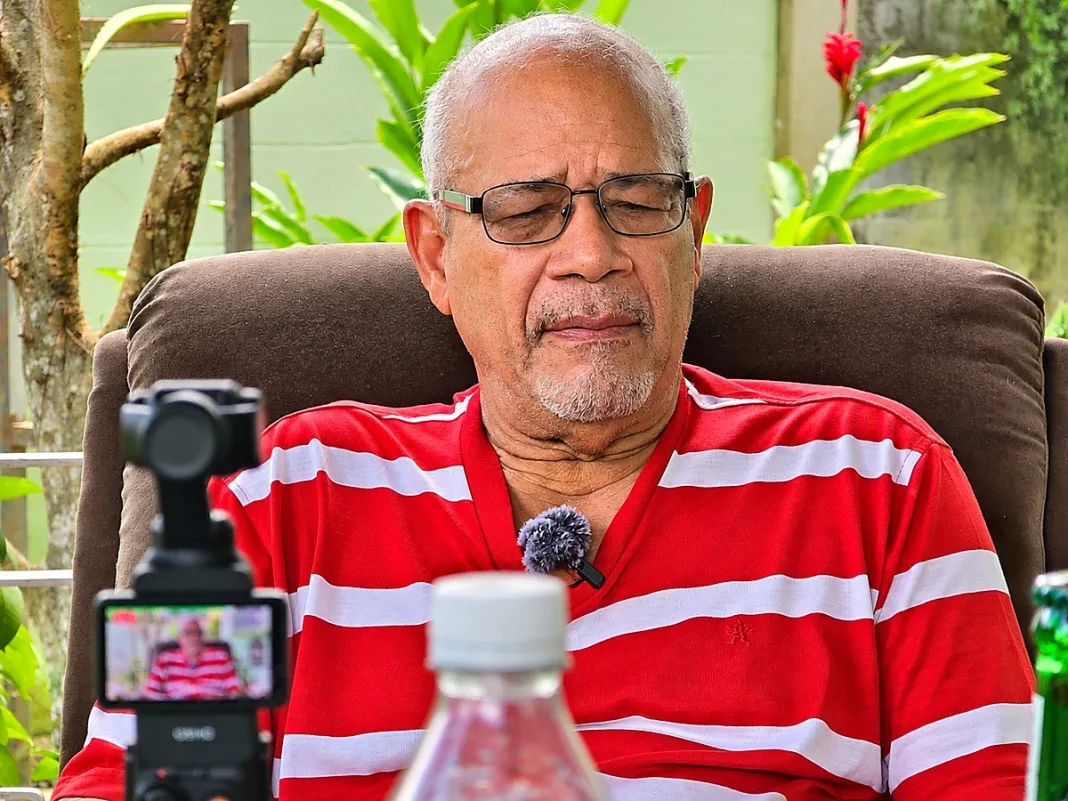
Lezama, a former president of the National Parang Association of Trinidad and Tobago (NPATT) and longstanding member of the San Jose Serenaders, recently reflected on his extraordinary musical journey during an online interview presented by Nkosi Kenyatta.
His recollections revealed not only the challenges faced by earlier generations of parranderos but also his determination to expand the commercial opportunities available to musicians, preserve traditional parang and introduce the art form to international audiences.
Among the most remarkable revelations was his account of performing at the United Nations and meeting a UN Secretary-General through his involvement in parang.
A Musical Journey Beginning in 1967
Lezama's involvement in traditional parang dates back to 1967, marking approximately 59 years of participation in the musical tradition.
His early years were shaped by a period when parang remained closely connected to community life, particularly in areas influenced by Trinidad's Spanish cultural heritage.
Traditional parang involved groups of musicians travelling from house to house during the Christmas season, performing Spanish-language songs while being welcomed by families with food, refreshments and hospitality.
These gatherings helped strengthen community relationships and preserve a distinctive part of Trinidad and Tobago's cultural identity.
However, Lezama acknowledged that the earlier generations of performers faced considerable difficulties.
Musicians often relied on their passion for the tradition rather than substantial financial rewards.
Despite those challenges, their dedication helped establish the foundation upon which modern parang developed.
The San Jose Serenaders
A major part of Lezama's musical career has been his association with the San Jose Serenaders, one of Trinidad and Tobago's established traditional parang groups.
Originating from St Joseph, the group played an important role in the development of organised parang and was among the founding groups involved in establishing the National Parang Association in 1971.
Lezama has been identified in historical reporting as an original member and leader of the San Jose Serenaders.
His involvement extended beyond musical performance, reflecting a longstanding commitment to developing the art form and ensuring its survival.
Through the group, he helped maintain traditional Spanish-language parang while supporting opportunities for the music to reach wider audiences.
Taking Parang Across the World
One of the most fascinating aspects of Lezama's recent interview was his account of the international opportunities created through parang.
He recalled travelling to several destinations across North America and the Caribbean to perform.
In the United States, his performances took him to Brooklyn, New Jersey, Connecticut and Miami.
He also performed in Canada, expanding his musical experiences beyond the Caribbean.
Within the region, Lezama recalled travelling to Grenada, Barbados and Venezuela.
According to his account, he visited Venezuela approximately four times and spent about three weeks in Barbados during one of his musical engagements.
He described the reception to his performances overseas as positive, indicating that traditional parang was appreciated by audiences beyond Trinidad and Tobago.
These experiences demonstrated the potential for the country's indigenous musical traditions to connect with international audiences.
For Lezama, parang became more than a seasonal activity. It provided opportunities to travel, perform and represent Trinidad and Tobago's cultural heritage abroad.
Performing at the United Nations
Perhaps the most remarkable international experience shared during the interview was Lezama's recollection of performing at the United Nations.
He revealed that his involvement in parang provided him with an opportunity to visit the international organisation and meet a Secretary-General of the United Nations.
Lezama described the experience as one of the unexpected opportunities that emerged from his musical career.
According to his account, he and fellow musicians performed at the United Nations, placing Trinidad and Tobago's traditional Christmas music before an international audience.
The interview excerpt did not identify the Secretary-General he met or establish the year of the performance.
Nevertheless, his recollection highlights the international opportunities that traditional parang created for him.
It also illustrates how a musical tradition rooted in Trinidadian communities could reach institutions and audiences far beyond the country.
A Vision for the National Parang Association
Lezama's contribution to parang extended well beyond his international performances.
During the interview, he discussed his ambition to transform the National Parang Association into an organisation capable of supporting cultural education and greater commercial development.
He explained that he had developed a clear vision for the association and wanted to see the art form achieve greater recognition.
"I had a map in my mind to where I wanted the Parang Association to go," he recalled.
His vision focused on two major areas: preserving the educational and cultural foundations of parang while developing its ability to generate income for performers.
Lezama believed that musicians deserved greater financial recognition for their contributions.
He also wanted the art form to become more commercially sustainable without sacrificing its traditional identity.
"I was very passionate too for parang to reach great heights," he said.
According to Lezama, this ambition motivated him to pursue the presidency of the association in 2002.
Increasing Competition Prizes
Among the achievements Lezama highlighted was his effort to increase the financial rewards offered through national parang competitions.
He recalled that the first prize stood at TT$50,000 when he entered the association's leadership.
According to his account, the amount increased to TT$75,000 the following year and eventually reached TT$100,000.
He said the increases occurred over three years and that the first prize subsequently remained at TT$100,000.
These figures represent Lezama's recollection during the interview and have not been independently confirmed against historical competition records.
His account nevertheless demonstrates the importance he placed on improving financial opportunities for musicians.
For Lezama, recognising the value of parang required investment in the performers responsible for sustaining the tradition.
Promoting Parang Across Cultural Communities
Lezama also recalled seeking support from Indian radio stations while preparing for the launch of the 2002 parang season.
He said he approached two stations and appeared on Indian radio to discuss the music and promote the upcoming activities.
The decision reflected his willingness to reach audiences outside the communities traditionally associated with parang.
He mentioned Sanoman Singh during his recollection of those early promotional efforts.
By introducing parang through different media platforms, Lezama sought to broaden its appeal and attract greater public participation.
His approach reflected a belief that traditional parang should be embraced as part of Trinidad and Tobago's wider national cultural identity.
Challenges During His Presidency
Lezama acknowledged that leadership of the National Parang Association presented difficulties.
He recalled experiencing what he described as a "baptism of fire" early in his presidency.
Although the available interview excerpt did not provide the complete details of the incident, his remarks suggested that he remained determined to pursue his vision despite the challenges.
His leadership took place during a period when traditional parang faced ongoing concerns about financial support, public exposure and competition from more commercially established musical genres.
Lezama continued advocating for greater investment, wider promotion and opportunities to strengthen the organisation.
Preserving Traditional House Parang
Alongside his commercial ambitions, Lezama has remained a strong advocate for preserving the original traditions associated with parang.
One of his longstanding concerns has been the decline of house-to-house performances.
Historically, parranderos travelled between homes during the Christmas season, performing music that celebrated religious themes, community relationships and cultural heritage.
The tradition was particularly prominent in communities such as St Joseph, Lopinot, Arima, Santa Cruz and Paramin.
In a 2015 interview with Trinidad and Tobago Newsday, Lezama expressed concern about the gradual disappearance of house parang.
He believed that the tradition represented an essential part of the art form's identity.
While concerts and competitions helped increase public exposure, he maintained that the community-based experience remained important to preserving the music's original character.
Educating Future Generations
Education has also been central to Lezama's vision for parang.
He has supported efforts to introduce young people to traditional instruments, Spanish-language lyrics and the history of the musical tradition.
Instruments such as the violin, mandolin, cuatro and percussion remain important components of traditional parang performances.
Lezama has previously expressed concern that young musicians participating in school competitions do not always continue performing after graduation.
He has therefore advocated for sustained training and opportunities that would encourage young performers to remain involved.
His recent interview reinforced the importance he places on education as a foundation for the art form's long-term survival.
National Recognition
Lezama's contribution to parang received significant recognition in November 2017 when the National Junior Parang Festival was dedicated to him.
The tribute acknowledged his decades of involvement in the music and his efforts to promote its development.
The festival brought together primary and secondary school performers, highlighting the role of young musicians in preserving Trinidad and Tobago's cultural traditions.
The San Jose Serenaders were also selected as guest performers during the event.
The recognition reflected Lezama's influence as a musician, cultural advocate and former association leader.
Remembering the Pioneers
Lezama has also spoken about the importance of preserving the contributions of earlier generations of parang musicians.
Following the death of Willie Lara in 2014, he reflected on the musical legacy of the Lara Brothers and their influence on traditional parang.
His comments highlighted the importance of documenting distinctive musical styles and ensuring that younger performers understand the contributions of the pioneers.
For Lezama, preserving parang involves more than maintaining a repertoire of songs.
It also requires safeguarding the history, experiences and cultural knowledge of the people who helped develop the tradition.
Balancing Tradition and Commercial Growth
Over the decades, parang has evolved significantly.
Traditional Spanish-language Christmas music now shares the national musical landscape with soca parang and other contemporary interpretations.
While newer styles have helped expand the music's popularity, Lezama has consistently advocated for protecting the distinctive identity of traditional parang.
His leadership philosophy demonstrates that he does not necessarily regard cultural preservation and commercial success as opposing objectives.
Instead, his interview suggests that he sees education, financial development and cultural continuity as interconnected priorities.
His efforts to increase competition prizes, secure promotional support and expand international opportunities reflected that broader vision.
A Legacy That Crosses Borders
As Trinidad and Tobago approaches Christmas 2026, Michael Lezama's story offers an opportunity to recognise a lifetime of cultural dedication.
From his beginnings in 1967 to his involvement with the San Jose Serenaders, leadership of the National Parang Association and performances across North America and the Caribbean, his musical journey has extended far beyond the traditional Christmas season.
His recollection of performing at the United Nations adds a particularly memorable chapter to that history.
It demonstrates how traditional parang created opportunities for a Trinidad and Tobago musician to engage with audiences and institutions internationally.
His efforts to improve competition prizes, promote cultural education and preserve house-to-house parang also reflect a commitment to ensuring that the music remains relevant for future generations.
Nearly six decades after beginning his journey, Michael Lezama remains an important figure in the preservation and promotion of traditional parang.
His experiences serve as a reminder that Trinidad and Tobago's cultural traditions can achieve international recognition while remaining deeply connected to the communities and musicians who created them.
News Desk is the editorial publishing account for Tringlobe Media News, covering breaking news, public affairs, entertainment, community developments and regional stories across Trinidad and Tobago, the Caribbean and internationally.