The key points are temporarily unavailable. You can still read the full Story below.
Main Points
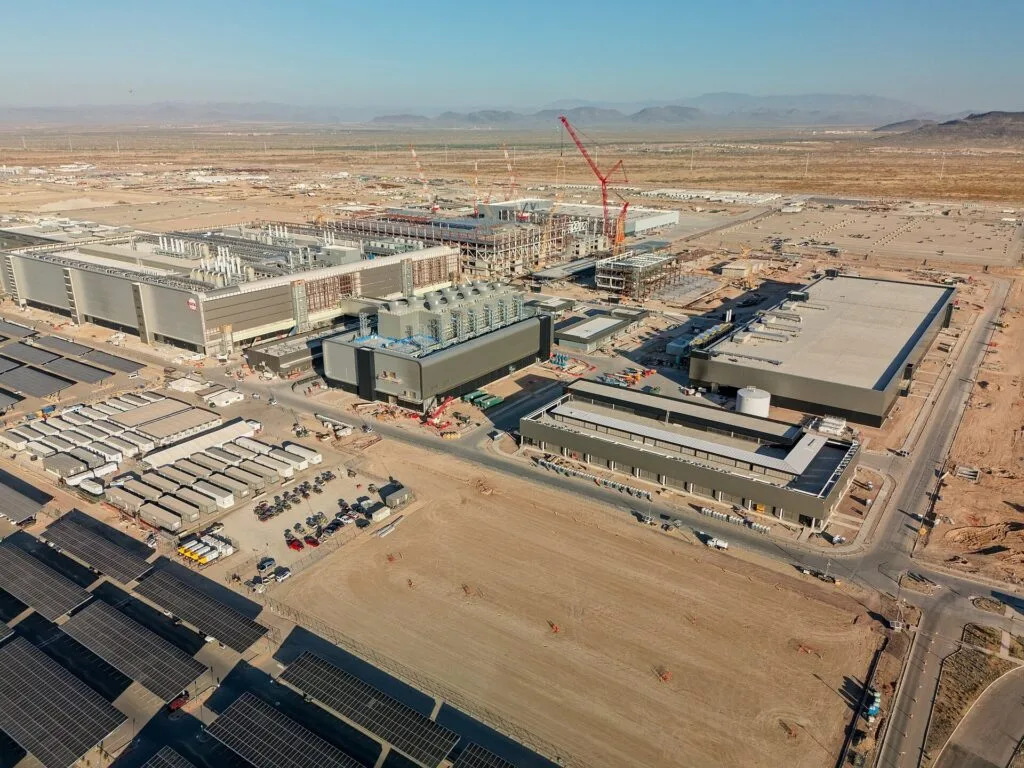
Taiwan Semiconductor Manufacturing Co. (TSMC), the world’s largest contract chipmaker, is reportedly exploring entry into the production of advanced 3D DRAM memory chips. According to a report by The Information, the initiative is being driven by demand from Nvidia, TSMC’s largest client, as the artificial intelligence boom continues to strain global memory supplies. 3D DRAM is a memory architecture that stacks cells vertically rather than arranging them in a single horizontal layer, a design intended to significantly increase storage capacity. The technology is critical for AI hardware, where high-speed, high-capacity memory is essential for processing large datasets. Sources familiar with the matter indicated that TSMC has begun drafting plans for this expansion. The company is reportedly considering multiple strategies, including the construction of new manufacturing facilities or the acquisition and conversion of existing plants. This approach would mirror recent industry moves, such as those taken by Micron earlier this year. The project is reportedly being led by Hsu Kuo-chin, a TSMC vice president who oversees the company’s advanced packaging operations. While the report suggests a strategic shift, it remains unclear when production might commence. Neither TSMC nor Nvidia has officially confirmed the plans, and both companies did not immediately respond to requests for comment from Reuters. If TSMC proceeds with the move, it would mark a significant shift in the competitive landscape, placing the company in direct competition with the world’s three dominant memory manufacturers: Samsung Electronics, SK Hynix, and Micron. The potential expansion comes as a severe shortage of memory chips, fueled by the rapid growth of artificial intelligence, has driven up prices and intensified competition among chip designers to secure reliable supply chains. Article source: 24 Orë | Image credit: 24 Orë
Taiwan Semiconductor Manufacturing Co. (TSMC), the world’s largest contract chipmaker, is reportedly exploring entry into the production of advanced 3D DRAM memory chips. According to a report by The Information, the initiative is being driven by demand from Nvidia, TSMC’s largest client, as the artificial intelligence boom continues to strain global memory supplies. 3D DRAM is a memory architecture that stacks cells vertically rather than arranging them in a single horizontal layer, a design intended to significantly increase storage capacity. The technology is critical for AI hardware, where high-speed, high-capacity memory is essential for processing large datasets. Sources familiar with the matter indicated that TSMC has begun drafting plans for this expansion. The company is reportedly considering multiple strategies, including the construction of new manufacturing facilities or the acquisition and conversion of existing plants. This approach would mirror recent industry moves, such as those taken by Micron earlier this year. The project is reportedly being led by Hsu Kuo-chin, a TSMC vice president who oversees the company’s advanced packaging operations. While the report suggests a strategic shift, it remains unclear when production might commence. Neither TSMC nor Nvidia has officially confirmed the plans, and both companies did not immediately respond to requests for comment from Reuters. If TSMC proceeds with the move, it would mark a significant shift in the competitive landscape, placing the company in direct competition with the world’s three dominant memory manufacturers: Samsung Electronics, SK Hynix, and Micron. The potential expansion comes as a severe shortage of memory chips, fueled by the rapid growth of artificial intelligence, has driven up prices and intensified competition among chip designers to secure reliable supply chains.
News Desk is the editorial publishing account for Tringlobe Media News, covering breaking news, public affairs, entertainment, community developments and regional stories across Trinidad and Tobago, the Caribbean and internationally.