The key points are temporarily unavailable. You can still read the full Story below.
Main Points
Grindavík’s volcanic emergency has produced two substantial, implemented responses: extensive lava barriers and a government-backed purchase of most of the town’s homes. Together, they show how disaster planning can involve both defending buildings and helping residents leave them. A study published in Natural Hazards examines the Sundhnúkagígar–Grindavík emergency of 2023–2026. It reports that 3,790 residents were evacuated on November 10–11, 2023, and that most remained displaced more than 28 months later. That duration describes the study’s reporting period, rather than establishing the position of every household today. The emergency followed the return of episodic volcanic activity to the Reykjanes Peninsula in 2021 after roughly eight centuries of relative quiet. From late 2023, the sequence threatened Grindavík, the Blue Lagoon tourist centre and the Svartsengi geothermal power plant. The researchers identify surface deformation, fissuring and lava flows as sources of damage. Physical protection became a major part of the response. The study describes lava barriers stretching 14 kilometres and reaching heights of up to 25 metres. Its authors credit their construction with preventing most damage. These are reported structures already built, rather than proposed defences awaiting implementation. The housing response has been equally consequential. According to the study, Þórkatla, a government-chartered corporation, bought more than 950 residences, representing over 90 per cent of the town’s homes. The authors describe the purchases as the emergency’s most sweeping response and explain that they began as a short-term humanitarian programme. Prolonged volcanic activity has complicated that original approach. The researchers identify the continuing uncertainty and length of the eruption sequence as growing challenges for a programme initially conceived around temporary displacement. Their account does not establish a final settlement outcome for the community. The study puts Iceland’s investment in the disaster above US$1 billion, approximately 2.6 per cent of annual gross domestic product. That estimate indicates the scale of the response, but it does not establish that Grindavík has changed national planning more than any earlier disaster. What the evidence does demonstrate is a significant expansion of protection and housing intervention in one emergency. Barriers address the movement of lava; home purchases address residents’ financial exposure and displacement. Whether those measures ultimately support return, longer displacement or another settlement pattern remains unresolved in the supplied account.
Grindavík’s volcanic emergency has produced two substantial, implemented responses: extensive lava barriers and a government-backed purchase of most of the town’s homes. Together, they show how disaster planning can involve both defending buildings and helping residents leave them.
A study published in Natural Hazards examines the Sundhnúkagígar–Grindavík emergency of 2023–2026. It reports that 3,790 residents were evacuated on November 10–11, 2023, and that most remained displaced more than 28 months later. That duration describes the study’s reporting period, rather than establishing the position of every household today.
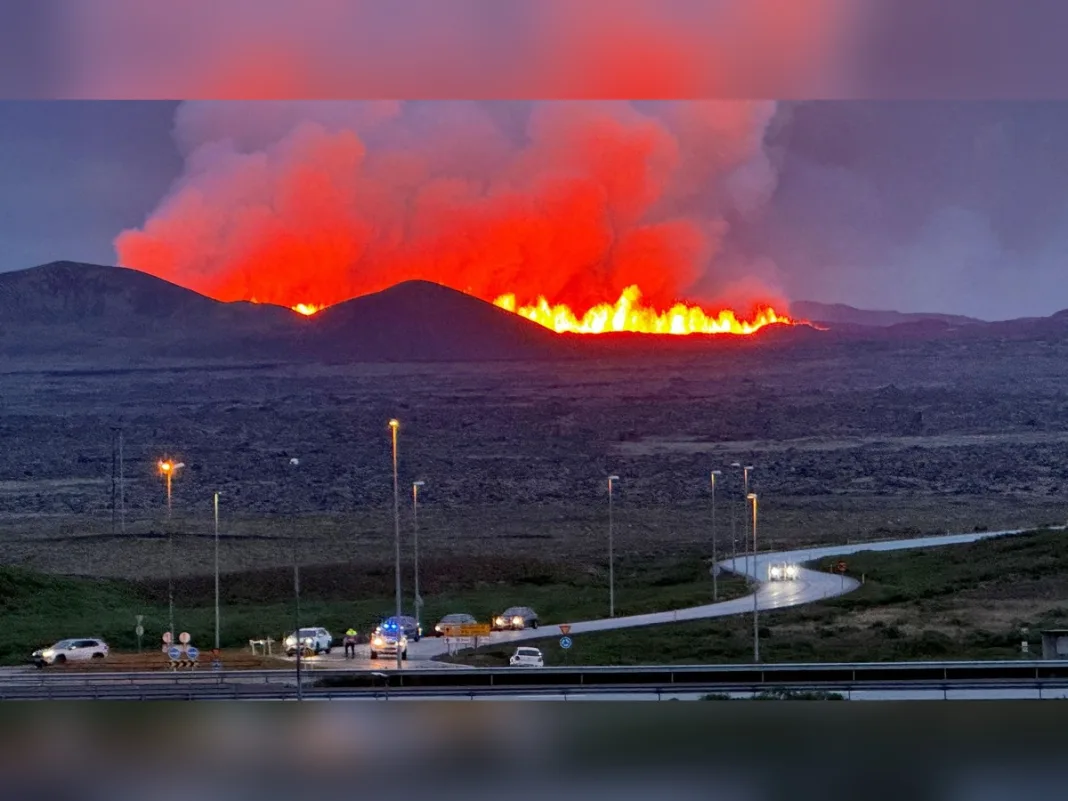
The emergency followed the return of episodic volcanic activity to the Reykjanes Peninsula in 2021 after roughly eight centuries of relative quiet. From late 2023, the sequence threatened Grindavík, the Blue Lagoon tourist centre and the Svartsengi geothermal power plant. The researchers identify surface deformation, fissuring and lava flows as sources of damage.
Physical protection became a major part of the response. The study describes lava barriers stretching 14 kilometres and reaching heights of up to 25 metres. Its authors credit their construction with preventing most damage. These are reported structures already built, rather than proposed defences awaiting implementation.
The housing response has been equally consequential. According to the study, Þórkatla, a government-chartered corporation, bought more than 950 residences, representing over 90 per cent of the town’s homes. The authors describe the purchases as the emergency’s most sweeping response and explain that they began as a short-term humanitarian programme.
Prolonged volcanic activity has complicated that original approach. The researchers identify the continuing uncertainty and length of the eruption sequence as growing challenges for a programme initially conceived around temporary displacement. Their account does not establish a final settlement outcome for the community.
The study puts Iceland’s investment in the disaster above US$1 billion, approximately 2.6 per cent of annual gross domestic product. That estimate indicates the scale of the response, but it does not establish that Grindavík has changed national planning more than any earlier disaster.
What the evidence does demonstrate is a significant expansion of protection and housing intervention in one emergency. Barriers address the movement of lava; home purchases address residents’ financial exposure and displacement. Whether those measures ultimately support return, longer displacement or another settlement pattern remains unresolved in the supplied account.
News Desk is the editorial publishing account for Tringlobe Media News, covering breaking news, public affairs, entertainment, community developments and regional stories across Trinidad and Tobago, the Caribbean and internationally.