The key points are temporarily unavailable. You can still read the full Story below.
Main Points
Confucius, the ancient Chinese philosopher who lived from 551 to 479 BCE, is still cited today for his insights on personal growth and social conduct. One of his most frequently quoted teachings appears in the Analects and reads: “When you see a good man, imitate him; when you see a bad man, examine yourself.” The statement encourages observers to learn from the virtues of others and to reflect on their own behavior when confronted with negative conduct. The quote is often interpreted as a two‑part lesson. First, it advises individuals to adopt the positive traits they observe in others—such as honesty, patience, generosity, and responsibility—so that those qualities can become part of their own character. Second, it warns against quick judgment of others’ faults. Instead, it suggests that a person should consider whether they themselves might share similar shortcomings, using the observation as a prompt for self‑improvement rather than a justification for the other’s misdeeds. In addition to this teaching, Confucius is known for other aphorisms that emphasize the importance of learning, clarity, and purposeful work. Examples include: “I buy rice for living and flowers for living,” “Learning without thinking is useless; thinking without learning is dangerous,” “A loud voice cannot compete with a clear one, even if it is a whisper,” “It is better to light a candle than to curse the darkness,” and “Choose a job you love and you will never work a day in your life.” These sayings, preserved in the Analects and other classical texts, continue to be referenced in contemporary discussions about ethics, education, and personal development. They illustrate Confucius’s enduring influence on ideas about how individuals can cultivate virtue and self‑awareness through observation and reflection. Article source: El Comercio | Image credit: El Comercio
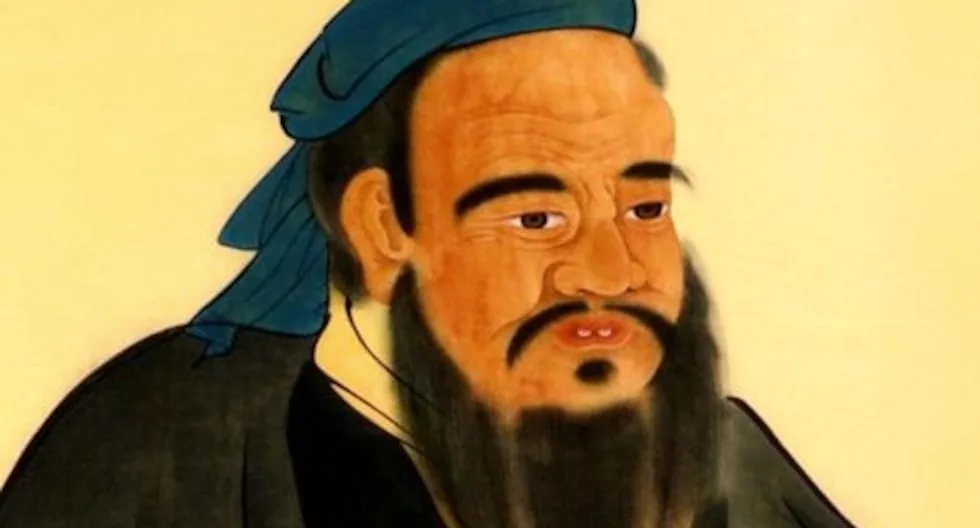
Confucius, the ancient Chinese philosopher who lived from 551 to 479 BCE, is still cited today for his insights on personal growth and social conduct. One of his most frequently quoted teachings appears in the Analects and reads: “When you see a good man, imitate him; when you see a bad man, examine yourself.” The statement encourages observers to learn from the virtues of others and to reflect on their own behavior when confronted with negative conduct. The quote is often interpreted as a two‑part lesson. First, it advises individuals to adopt the positive traits they observe in others—such as honesty, patience, generosity, and responsibility—so that those qualities can become part of their own character. Second, it warns against quick judgment of others’ faults. Instead, it suggests that a person should consider whether they themselves might share similar shortcomings, using the observation as a prompt for self‑improvement rather than a justification for the other’s misdeeds. In addition to this teaching, Confucius is known for other aphorisms that emphasize the importance of learning, clarity, and purposeful work. Examples include: “I buy rice for living and flowers for living,” “Learning without thinking is useless; thinking without learning is dangerous,” “A loud voice cannot compete with a clear one, even if it is a whisper,” “It is better to light a candle than to curse the darkness,” and “Choose a job you love and you will never work a day in your life.” These sayings, preserved in the Analects and other classical texts, continue to be referenced in contemporary discussions about ethics, education, and personal development. They illustrate Confucius’s enduring influence on ideas about how individuals can cultivate virtue and self‑awareness through observation and reflection.
News Desk is the editorial publishing account for Tringlobe Media News, covering breaking news, public affairs, entertainment, community developments and regional stories across Trinidad and Tobago, the Caribbean and internationally.