The key points are temporarily unavailable. You can still read the full Story below.
Main Points
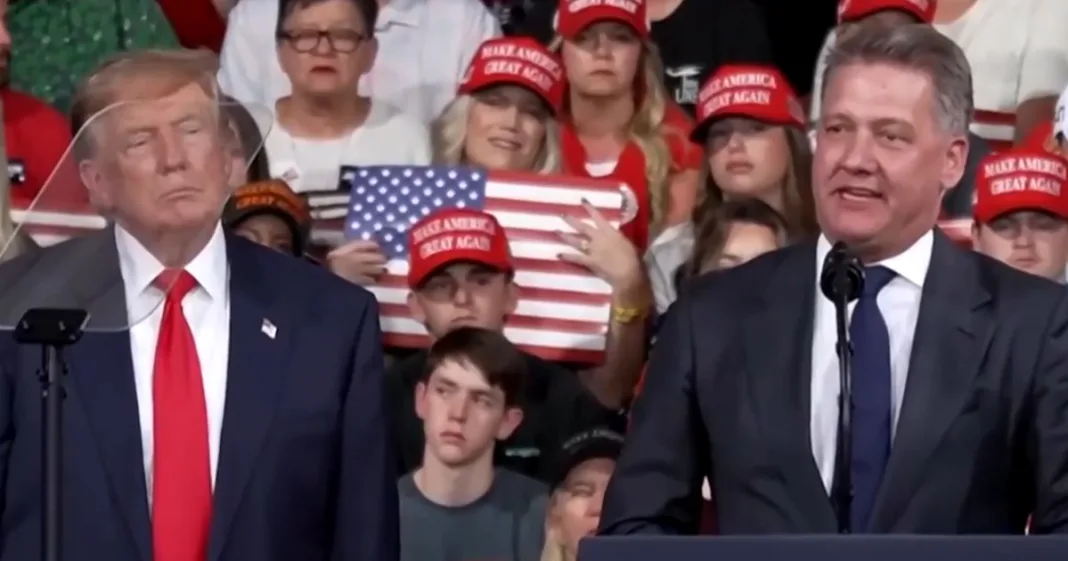
Audi’s chief executive, Gernot Döllner, faced criticism from German unions and officials on 26 October after attending a Donald Trump rally in Georgia. The event, held on 24 October, was part of a campaign to promote a proposed $4 billion plant that would produce roughly 200,000 SUVs annually in the state. The investment has not yet received approval from Volkswagen’s supervisory board, which owns Audi. Christiane Benner, president of the German IG Metall union and vice‑chair of Volkswagen’s supervisory board, accused Audi of violating the company’s internal rules on political neutrality during the pre‑election period. “Döllner flagrantly violates the company’s own rules, which explicitly require political neutrality before elections,” Benner said. Audi responded that a company delegation had travelled to Georgia to advance discussions about the new plant and that the invitation to present the project alongside the U.S. president was accepted solely in Audi’s interest. The company added that it takes the interpretation of Döllner’s participation as a political endorsement very seriously. Audi also confirmed that it had granted a temporary exemption from its code of conduct for Döllner’s attendance at the Trump rally. The decision sparked concerns among Volkswagen employees, particularly Daniele Cavallo, a workers’ representative, who criticized the association with the president’s campaign. Lower Saxony’s premier, Olaf Lies, remarked that a political rally was an inappropriate venue for announcing a major investment. “This appearance has caused consternation among employees who are worried about their jobs here and elsewhere. I can fully understand their reaction,” Lies said. The controversy comes amid Volkswagen’s restructuring plan, which includes the elimination of about 100,000 jobs and a reduction in production capacity. German plants are under pressure to cut costs, and Audi’s Neckarsulm facility is one of four units that may face closure in the coming decade. Article source: Adev&acaron;rul | Image credit: Adev&acaron;rul
Audi’s chief executive, Gernot Döllner, faced criticism from German unions and officials on 26 October after attending a Donald Trump rally in Georgia. The event, held on 24 October, was part of a campaign to promote a proposed $4 billion plant that would produce roughly 200,000 SUVs annually in the state. The investment has not yet received approval from Volkswagen’s supervisory board, which owns Audi. Christiane Benner, president of the German IG Metall union and vice‑chair of Volkswagen’s supervisory board, accused Audi of violating the company’s internal rules on political neutrality during the pre‑election period. “Döllner flagrantly violates the company’s own rules, which explicitly require political neutrality before elections,” Benner said. Audi responded that a company delegation had travelled to Georgia to advance discussions about the new plant and that the invitation to present the project alongside the U.S. president was accepted solely in Audi’s interest. The company added that it takes the interpretation of Döllner’s participation as a political endorsement very seriously. Audi also confirmed that it had granted a temporary exemption from its code of conduct for Döllner’s attendance at the Trump rally. The decision sparked concerns among Volkswagen employees, particularly Daniele Cavallo, a workers’ representative, who criticized the association with the president’s campaign. Lower Saxony’s premier, Olaf Lies, remarked that a political rally was an inappropriate venue for announcing a major investment. “This appearance has caused consternation among employees who are worried about their jobs here and elsewhere. I can fully understand their reaction,” Lies said. The controversy comes amid Volkswagen’s restructuring plan, which includes the elimination of about 100,000 jobs and a reduction in production capacity. German plants are under pressure to cut costs, and Audi’s Neckarsulm facility is one of four units that may face closure in the coming decade.
News Desk is the editorial publishing account for Tringlobe Media News, covering breaking news, public affairs, entertainment, community developments and regional stories across Trinidad and Tobago, the Caribbean and internationally.