The key points are temporarily unavailable. You can still read the full Story below.
Main Points
America’s museum landscape stretches far beyond the familiar art galleries and natural history institutions that anchor major cities. A project developed at Drexel University set out to make that diversity easier to discover, building a searchable resource designed to document museums across the country and show how they connect with their surrounding communities. In an article published in August 2016, Drexel described MuseumStat, an online resource that presents information about museums through maps, charts and other visualizations. An associated mobile application, MuseumFinder, was designed to help users locate museums by type, find addresses and directions, and discover institutions near a selected location or anywhere else in the United States. The examples in Drexel’s account illustrate just how varied the museum world can be. A whiskey enthusiast might seek out the Oscar Getz Museum of Whiskey History in Kentucky. Chattanooga, Tennessee, has a tow truck museum, while Los Angeles has a Museum of Death. The article also identifies a knife museum in Napanoch, New York. These specialized institutions demonstrate that museum collections can focus on remarkably narrow subjects, preserving stories and objects that might otherwise receive little public attention. The project was intended to do more than help people plan visits. MuseumStat was designed to give museum professionals, researchers, advocates and policymakers a clearer picture of the institutions operating across the country. Its maps and data visualizations could help users examine the geographic distribution of museums and explore how these organizations relate to community characteristics. Drexel described the project as an effort to address a basic information problem: historically, inconsistent definitions of what counted as a museum-related institution made it difficult to document the sector comprehensively. The project team worked to gather and organize available information into a resource that could be searched and analyzed more easily. The research and development effort was led by an assistant professor and research director in arts administration at Drexel’s Westphal College of Media Arts & Design. Students from the university’s College of Computing & Informatics, Westphal College and STAR program participated in the work. Funding came through a Cooperative Research Grant from the Institute of Museum and Library Services. The resulting MuseumStat resource was designed to offer information useful for community programming and outreach as well as research. Users could select a museum, view its location on a map and see other museums nearby. An “Add Demographics” feature was described as a way to overlay demographic and community health measures, while a dashboard provided measures relating to people and households in a selected geographic area. The article also described options for downloading museum information for further analysis. MuseumFinder approached the same landscape from the visitor’s perspective. Its location-based search was intended to help users discover institutions nearby or search from an address elsewhere in the country. The resource covered not only museums but also historic sites, zoos, aquariums and other related destinations. The project reflects two complementary ways of thinking about cultural institutions. For visitors, a searchable museum directory can reveal unexpected collections and encourage exploration beyond famous attractions. For researchers and museum leaders, a structured national resource can make it easier to understand where institutions are located and how they might serve their communities. Drexel’s article documents the project as it stood in 2016; it does not establish whether every feature or the associated app remains available today. Its lasting point is the value of making a fragmented cultural landscape easier to explore and study, including the small and highly specialized museums that tell distinctive stories about American life.
America’s museum landscape stretches far beyond the familiar art galleries and natural history institutions that anchor major cities. A project developed at Drexel University set out to make that diversity easier to discover, building a searchable resource designed to document museums across the country and show how they connect with their surrounding communities.
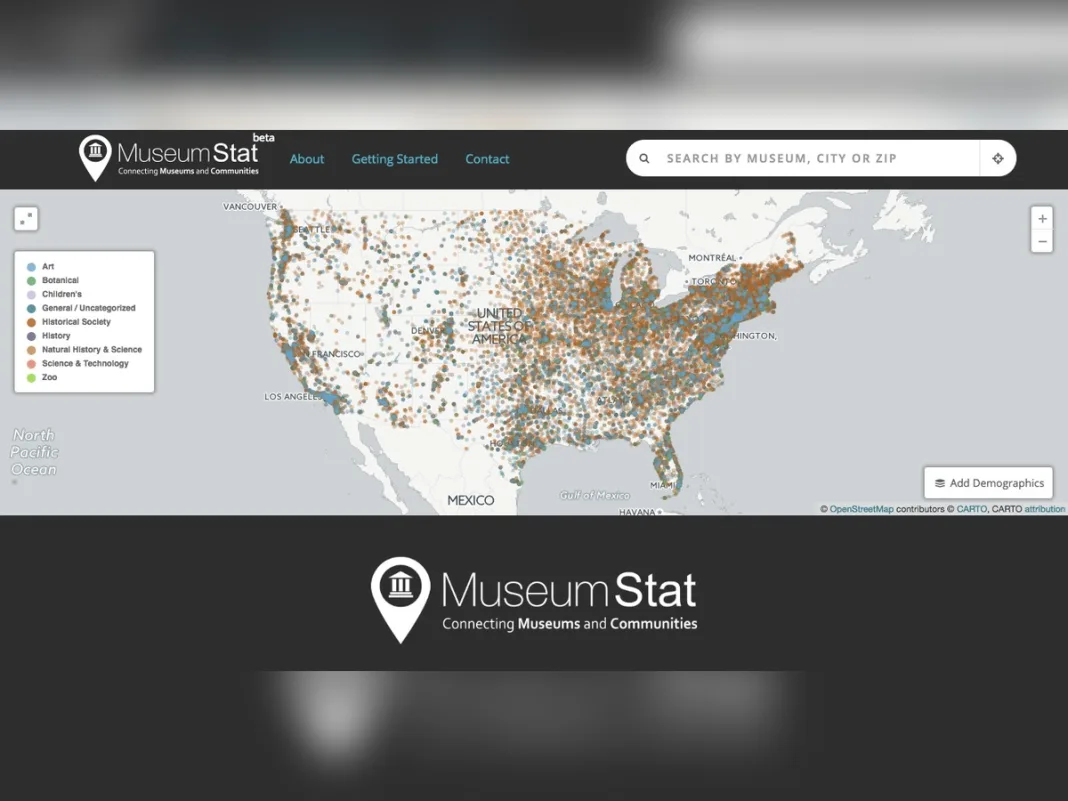
In an article published in August 2016, Drexel described MuseumStat, an online resource that presents information about museums through maps, charts and other visualizations. An associated mobile application, MuseumFinder, was designed to help users locate museums by type, find addresses and directions, and discover institutions near a selected location or anywhere else in the United States.
The examples in Drexel’s account illustrate just how varied the museum world can be. A whiskey enthusiast might seek out the Oscar Getz Museum of Whiskey History in Kentucky. Chattanooga, Tennessee, has a tow truck museum, while Los Angeles has a Museum of Death. The article also identifies a knife museum in Napanoch, New York. These specialized institutions demonstrate that museum collections can focus on remarkably narrow subjects, preserving stories and objects that might otherwise receive little public attention.
The project was intended to do more than help people plan visits. MuseumStat was designed to give museum professionals, researchers, advocates and policymakers a clearer picture of the institutions operating across the country. Its maps and data visualizations could help users examine the geographic distribution of museums and explore how these organizations relate to community characteristics.
Drexel described the project as an effort to address a basic information problem: historically, inconsistent definitions of what counted as a museum-related institution made it difficult to document the sector comprehensively. The project team worked to gather and organize available information into a resource that could be searched and analyzed more easily.
The research and development effort was led by an assistant professor and research director in arts administration at Drexel’s Westphal College of Media Arts & Design. Students from the university’s College of Computing & Informatics, Westphal College and STAR program participated in the work. Funding came through a Cooperative Research Grant from the Institute of Museum and Library Services.
The resulting MuseumStat resource was designed to offer information useful for community programming and outreach as well as research. Users could select a museum, view its location on a map and see other museums nearby. An “Add Demographics” feature was described as a way to overlay demographic and community health measures, while a dashboard provided measures relating to people and households in a selected geographic area. The article also described options for downloading museum information for further analysis.
MuseumFinder approached the same landscape from the visitor’s perspective. Its location-based search was intended to help users discover institutions nearby or search from an address elsewhere in the country. The resource covered not only museums but also historic sites, zoos, aquariums and other related destinations.
The project reflects two complementary ways of thinking about cultural institutions. For visitors, a searchable museum directory can reveal unexpected collections and encourage exploration beyond famous attractions. For researchers and museum leaders, a structured national resource can make it easier to understand where institutions are located and how they might serve their communities.
Drexel’s article documents the project as it stood in 2016; it does not establish whether every feature or the associated app remains available today. Its lasting point is the value of making a fragmented cultural landscape easier to explore and study, including the small and highly specialized museums that tell distinctive stories about American life.
News Desk is the editorial publishing account for Tringlobe Media News, covering breaking news, public affairs, entertainment, community developments and regional stories across Trinidad and Tobago, the Caribbean and internationally.