The key points are temporarily unavailable. You can still read the full Story below.
Main Points
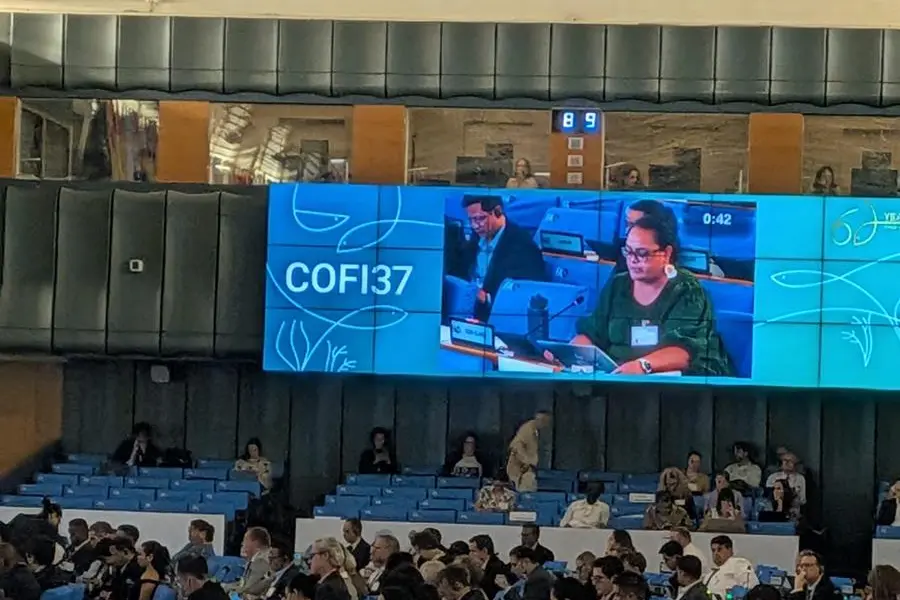
Pacific Island nations and territories advocated for increased international support for regional fisheries strategies during the 37th Session of the Food and Agriculture Organization Committee on Fisheries (COFI37) in Rome, Italy. The Pacific Community (SPC) reported that delegations emphasized the importance of regional cooperation and the specific needs of Small Island Developing States and Territories.
The delegation included representatives from the Pacific Islands Forum Fisheries Agency (FFA), the Cook Islands, Samoa, Tonga, Papua New Guinea, the Marshall Islands, Vanuatu, Palau, Fiji, New Zealand, and Australia. The session was chaired by New Zealand representative Adam Berry.
During the proceedings, the FFA was awarded the Margarita Lizarraga Medal, which recognizes contributions to sustainable fisheries management. The SPC stated that the award acknowledges decades of collective effort by the agency’s membership.
Pacific representatives highlighted the region’s commitment to science-based management and monitoring systems, arguing that coordinated action is essential to sustain tuna fisheries while supporting food security and economic development. The region requested that international support be country-driven and channeled through existing regional institutions to avoid duplication.
Climate change was identified as a primary threat to the region’s fisheries and aquaculture, with participants noting that shifting tuna distributions and pressure on coastal resources pose risks to livelihoods and government revenue. Delegations called for enhanced financial and technical assistance for climate adaptation, improved data collection, and support for vulnerable communities.
Regarding illegal, unreported, and unregulated fishing, the Pacific delegations showcased their work in regional surveillance, electronic reporting, and information-sharing. They urged the international community to continue supporting these collective systems while ensuring that new global commitments complement existing regional mandates without increasing administrative burdens.
Article source: www.solomontimes.com | Image credit: www.solomontimes.com