The key points are temporarily unavailable. You can still read the full Story below.
Main Points
**Iran Under Economic Strain Six Months After Reported Attack, United States Announces New Sanctions** *Beirut, Lebanon – August 30, 2026* – According to a report published by the Iran Herald, Iran’s government is confronting “intense economic pressure” six months after what the outlet describes as a joint United States‑Israeli operation that allegedly killed Iran’s Supreme Leader and seriously injured his son and designated successor. The report states that, despite the purported damage, the Iranian administration remains in control and believes it has sufficient time to endure the pressure. The article notes that many observers view the conflict as an “expensive stalemate.” It cites former U.S. diplomat and Carnegie Endowment senior fellow Aaron David Miller, who is quoted as saying, “The (Trump) administration is groping in a sort of desperate fashion to try to find a pathway out of this.” The reference to President Donald Trump reflects the outlet’s claim that he is the current U.S. president, a statement that is not corroborated by other sources. On August 24, the United States reportedly announced a new set of measures aimed at curbing Iran’s oil revenues, banking activities, and international trade partners. The Iran Herald suggests that the focus of the latest U.S. actions has shifted from missile strikes to economic levers, including secondary sanctions targeting countries that continue to support Iran’s economy, particularly China and India. Michael Knights, head of research at the New York‑based strategic advisory firm Horizon Engage, is quoted in the report as arguing that a naval blockade could have a greater impact than sanctions alone. Knights is said to have observed that Iran has “spent decades learning how to operate under sanctions” and has previously survived U.S. “maximum pressure” campaigns without major policy changes. He also speculated that Iran might adopt tactics similar to its Houthi allies in the Red Sea, involving intermittent attacks on commercial shipping, ports, and energy facilities while maintaining a prolonged campaign of disruption. U.S. State Department spokesperson Tommy Pigott is cited as stating that Iran’s economy is “collapsing” and that its military has suffered “major losses.” Pigott is reported to have said that President Trump “has the advantage” and that the United States is working to “cut off the remaining sources of money supporting the Iranian government.” Former U.S. diplomat Alan Eyre, who previously worked on Iran policy, is quoted questioning whether Washington possesses sufficient international backing and administrative capacity to enforce the new sanctions effectively. Eyre noted that earlier U.S. campaigns against Iran involved extensive cooperation with major powers and ultimately led to limits on Iran’s nuclear program in exchange for sanctions relief. He contrasted that with the current approach, which he described as relying more heavily on public threats and less on long‑term diplomatic engagement. The report also references concerns from within Iran that worsening economic conditions could spark public protests. An unnamed Iranian official is said to have warned that “the bigger concern could be that worsening economic conditions could once again lead to widespread public protests and unrest.” Iranian President Masoud Pezeshkian is quoted as acknowledging the seriousness of the country’s economic problems, stating, “Our problems have multiplied several times over, while our income has also fallen.” **Context and Verification** – The claim that a U.S.–Israeli operation killed Iran’s Supreme Leader and injured his son is not corroborated by independent news outlets or official statements from the governments involved. – Donald Trump is not the incumbent President of the United States as of August 2026; the current administration is led by President Joe Biden. – The Iran Herald’s report mixes verified statements (e.g., remarks from U.S. officials and analysts) with unverified or inaccurate assertions about the conflict’s origins and leadership. The article concludes with promotional material unrelated to the main story and references to other news items, which have been omitted from this summary. Article and image source: iranherald.com
**Iran Under Economic Strain Six Months After Reported Attack, United States Announces New Sanctions**
*Beirut, Lebanon – August 30, 2026* – According to a report published by the Iran Herald, Iran’s government is confronting “intense economic pressure” six months after what the outlet describes as a joint United States‑Israeli operation that allegedly killed Iran’s Supreme Leader and seriously injured his son and designated successor. The report states that, despite the purported damage, the Iranian administration remains in control and believes it has sufficient time to endure the pressure.
The article notes that many observers view the conflict as an “expensive stalemate.” It cites former U.S. diplomat and Carnegie Endowment senior fellow Aaron David Miller, who is quoted as saying, “The (Trump) administration is groping in a sort of desperate fashion to try to find a pathway out of this.” The reference to President Donald Trump reflects the outlet’s claim that he is the current U.S. president, a statement that is not corroborated by other sources.
On August 24, the United States reportedly announced a new set of measures aimed at curbing Iran’s oil revenues, banking activities, and international trade partners. The Iran Herald suggests that the focus of the latest U.S. actions has shifted from missile strikes to economic levers, including secondary sanctions targeting countries that continue to support Iran’s economy, particularly China and India.
Michael Knights, head of research at the New York‑based strategic advisory firm Horizon Engage, is quoted in the report as arguing that a naval blockade could have a greater impact than sanctions alone. Knights is said to have observed that Iran has “spent decades learning how to operate under sanctions” and has previously survived U.S. “maximum pressure” campaigns without major policy changes. He also speculated that Iran might adopt tactics similar to its Houthi allies in the Red Sea, involving intermittent attacks on commercial shipping, ports, and energy facilities while maintaining a prolonged campaign of disruption.
U.S. State Department spokesperson Tommy Pigott is cited as stating that Iran’s economy is “collapsing” and that its military has suffered “major losses.” Pigott is reported to have said that President Trump “has the advantage” and that the United States is working to “cut off the remaining sources of money supporting the Iranian government.”
Former U.S. diplomat Alan Eyre, who previously worked on Iran policy, is quoted questioning whether Washington possesses sufficient international backing and administrative capacity to enforce the new sanctions effectively. Eyre noted that earlier U.S. campaigns against Iran involved extensive cooperation with major powers and ultimately led to limits on Iran’s nuclear program in exchange for sanctions relief. He contrasted that with the current approach, which he described as relying more heavily on public threats and less on long‑term diplomatic engagement.
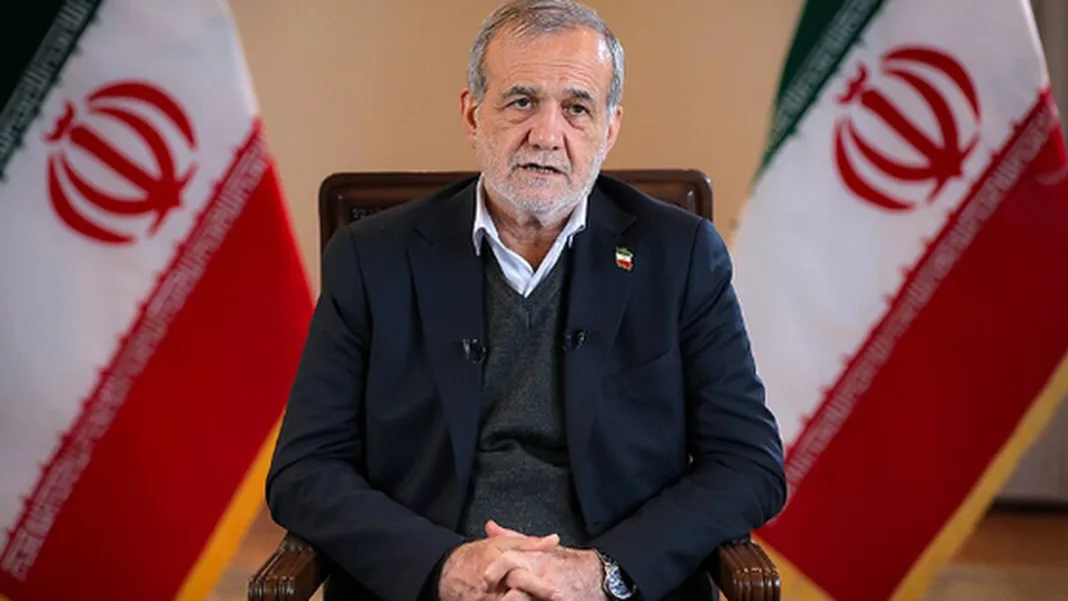
The report also references concerns from within Iran that worsening economic conditions could spark public protests. An unnamed Iranian official is said to have warned that “the bigger concern could be that worsening economic conditions could once again lead to widespread public protests and unrest.” Iranian President Masoud Pezeshkian is quoted as acknowledging the seriousness of the country’s economic problems, stating, “Our problems have multiplied several times over, while our income has also fallen.”
**Context and Verification**
– The claim that a U.S.–Israeli operation killed Iran’s Supreme Leader and injured his son is not corroborated by independent news outlets or official statements from the governments involved.
– Donald Trump is not the incumbent President of the United States as of August 2026; the current administration is led by President Joe Biden.
– The Iran Herald’s report mixes verified statements (e.g., remarks from U.S. officials and analysts) with unverified or inaccurate assertions about the conflict’s origins and leadership.
The article concludes with promotional material unrelated to the main story and references to other news items, which have been omitted from this summary.
News Desk is the editorial publishing account for Tringlobe Media News, covering breaking news, public affairs, entertainment, community developments and regional stories across Trinidad and Tobago, the Caribbean and internationally.