The key points are temporarily unavailable. You can still read the full Story below.
Main Points
**China‑Kyrgyzstan Relations Strengthened Under Leadership of Presidents Xi and Japarov, Ambassador Says** *BISHKEK, Aug. 28, 2026* — In an interview with Xinhua, Liu Jiangping, China’s ambassador to Kyrgyzstan, said that bilateral ties between the two countries have deepened under the strategic guidance of President Xi Jinping of China and President Sadyr Japarov of Kyrgyzstan. Liu noted that political mutual trust has “steadily strengthened” in recent years. Since 2022, Xi and Japarov have met seven times, including three meetings in 2025. High‑level exchanges have also involved heads of government, legislative leaders, deputy premiers, ministers and local officials, and a foreign‑minister‑level strategic dialogue mechanism has been established to make interactions more regular and institutionalized. Both sides, according to Liu, “firmly support each other on issues concerning their respective core interests.” China backs Kyrgyzstan’s efforts to safeguard its independence, sovereignty and territorial integrity, as well as its policies aimed at political stability and socioeconomic development. Kyrgyzstan, in turn, adheres to the one‑China principle and supports Beijing’s positions on Taiwan, Xinjiang, Tibet and Hong Kong. Trade and investment have continued to grow. China remains Kyrgyzstan’s largest trading partner, source of imports and foreign investment. Bilateral trade reached a record US$27.2 billion in 2025, a roughly 20 percent increase from the previous year, accounting for about one‑quarter of China’s total trade with Central Asian nations. Liu highlighted several infrastructure projects that have progressed under the Belt and Road Initiative (BRI), including the China‑Kyrgyzstan‑Uzbekistan railway, the Barskoon‑Bedel highway, the Bishkek road‑network reconstruction, the new North‑South Highway, and the Datka‑Kemin power‑transmission line. Aid projects such as a hospital in Osh have also been completed. Cooperation in clean energy, modern agriculture and the digital economy is expanding. A waste‑to‑energy plant in Bishkek and a 100‑megawatt solar power plant in the Chui region have begun feeding electricity into the grid, supporting Kyrgyzstan’s green‑energy transition. People‑to‑people exchanges have increased across education, culture, health and youth sectors. Chinese volunteer medical teams have performed free cataract surgeries for more than 1,400 patients and provided cardiac care for nearly 20 children with congenital heart defects. Four Confucius Institutes operate in Kyrgyzstan, and the Luban Workshop trains technical professionals. A Chinese Cultural Center opened in Bishkek, and joint cultural projects, including film screenings and archaeological research, have been undertaken. On the multilateral front, Liu said China and Kyrgyzstan share similar positions on major international and regional issues and cooperate within the United Nations, the Shanghai Cooperation Organization (SCO) and the China‑Central Asia Mechanism. He congratulated Kyrgyzstan on its election as a non‑permanent member of the United Nations Security Council and expressed support for Kyrgyzstan’s role as rotating chair of the SCO. 2026 marks the 25th anniversary of the SCO’s founding. Liu described China and Kyrgyzstan as “founding countries” that have consistently promoted the “Shanghai Spirit” and contributed to the organization’s development. The ambassador concluded that, under the leadership of the two heads of state and continued people‑to‑people ties, the China‑Kyrgyzstan partnership is poised for further joint development and prosperity. Article and image source: taiwansun.com
**China‑Kyrgyzstan Relations Strengthened Under Leadership of Presidents Xi and Japarov, Ambassador Says**
*BISHKEK, Aug. 28, 2026* — In an interview with Xinhua, Liu Jiangping, China’s ambassador to Kyrgyzstan, said that bilateral ties between the two countries have deepened under the strategic guidance of President Xi Jinping of China and President Sadyr Japarov of Kyrgyzstan.
Liu noted that political mutual trust has “steadily strengthened” in recent years. Since 2022, Xi and Japarov have met seven times, including three meetings in 2025. High‑level exchanges have also involved heads of government, legislative leaders, deputy premiers, ministers and local officials, and a foreign‑minister‑level strategic dialogue mechanism has been established to make interactions more regular and institutionalized.
Both sides, according to Liu, “firmly support each other on issues concerning their respective core interests.” China backs Kyrgyzstan’s efforts to safeguard its independence, sovereignty and territorial integrity, as well as its policies aimed at political stability and socioeconomic development. Kyrgyzstan, in turn, adheres to the one‑China principle and supports Beijing’s positions on Taiwan, Xinjiang, Tibet and Hong Kong.
Trade and investment have continued to grow. China remains Kyrgyzstan’s largest trading partner, source of imports and foreign investment. Bilateral trade reached a record US$27.2 billion in 2025, a roughly 20 percent increase from the previous year, accounting for about one‑quarter of China’s total trade with Central Asian nations.
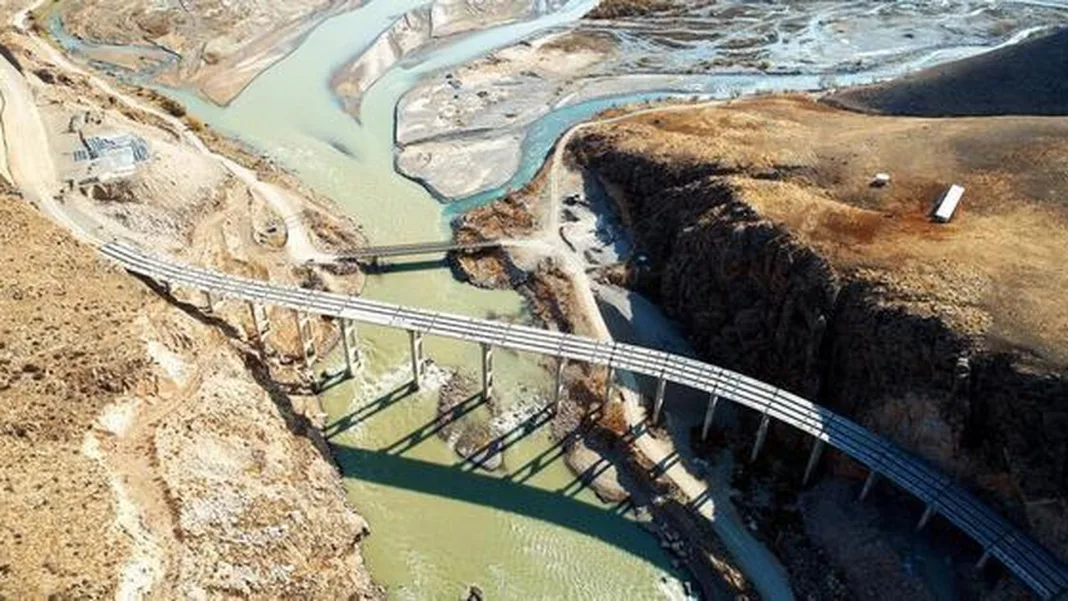
Liu highlighted several infrastructure projects that have progressed under the Belt and Road Initiative (BRI), including the China‑Kyrgyzstan‑Uzbekistan railway, the Barskoon‑Bedel highway, the Bishkek road‑network reconstruction, the new North‑South Highway, and the Datka‑Kemin power‑transmission line. Aid projects such as a hospital in Osh have also been completed.
Cooperation in clean energy, modern agriculture and the digital economy is expanding. A waste‑to‑energy plant in Bishkek and a 100‑megawatt solar power plant in the Chui region have begun feeding electricity into the grid, supporting Kyrgyzstan’s green‑energy transition.
People‑to‑people exchanges have increased across education, culture, health and youth sectors. Chinese volunteer medical teams have performed free cataract surgeries for more than 1,400 patients and provided cardiac care for nearly 20 children with congenital heart defects. Four Confucius Institutes operate in Kyrgyzstan, and the Luban Workshop trains technical professionals. A Chinese Cultural Center opened in Bishkek, and joint cultural projects, including film screenings and archaeological research, have been undertaken.
On the multilateral front, Liu said China and Kyrgyzstan share similar positions on major international and regional issues and cooperate within the United Nations, the Shanghai Cooperation Organization (SCO) and the China‑Central Asia Mechanism. He congratulated Kyrgyzstan on its election as a non‑permanent member of the United Nations Security Council and expressed support for Kyrgyzstan’s role as rotating chair of the SCO.
2026 marks the 25th anniversary of the SCO’s founding. Liu described China and Kyrgyzstan as “founding countries” that have consistently promoted the “Shanghai Spirit” and contributed to the organization’s development.
The ambassador concluded that, under the leadership of the two heads of state and continued people‑to‑people ties, the China‑Kyrgyzstan partnership is poised for further joint development and prosperity.
News Desk is the editorial publishing account for Tringlobe Media News, covering breaking news, public affairs, entertainment, community developments and regional stories across Trinidad and Tobago, the Caribbean and internationally.