The key points are temporarily unavailable. You can still read the full Story below.
Main Points
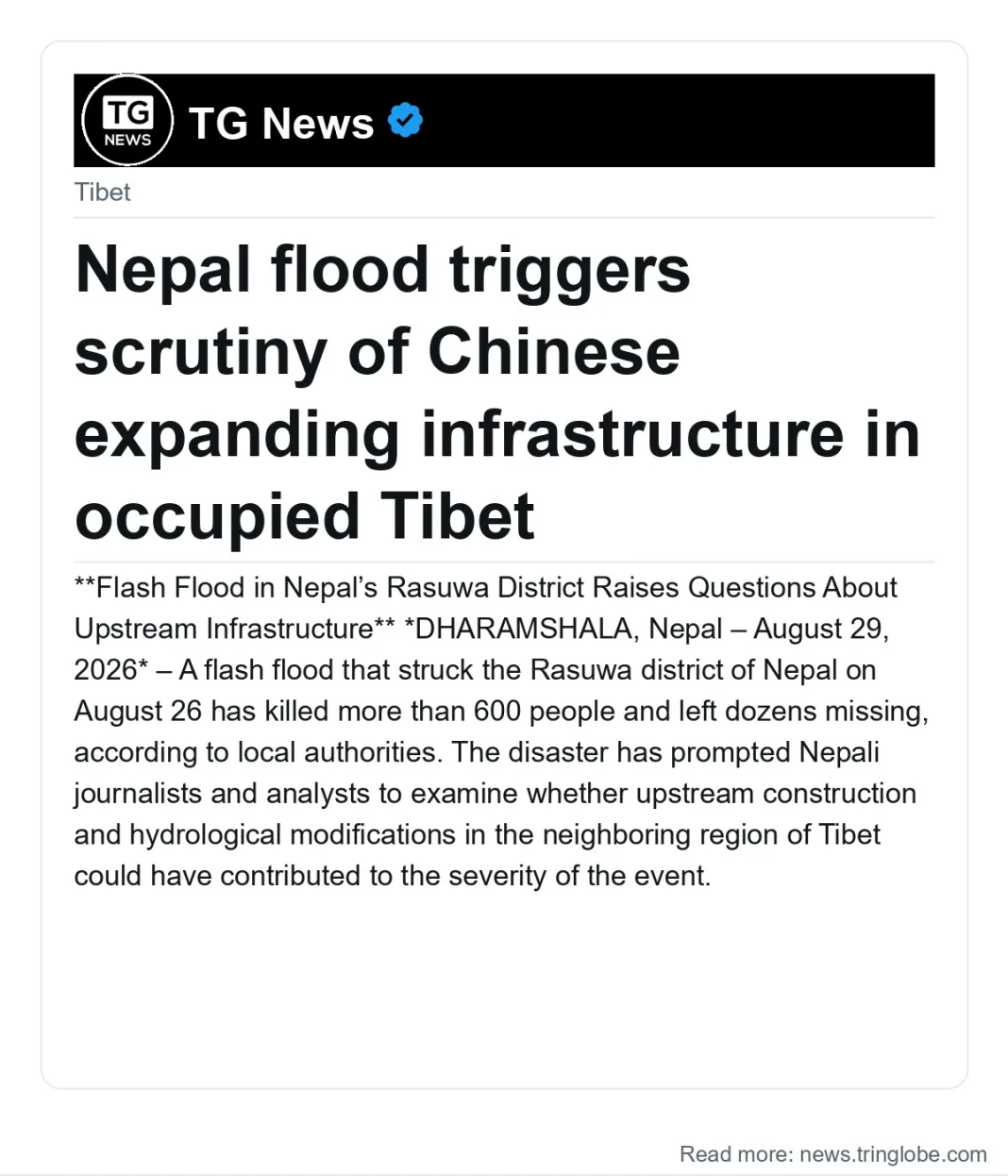
**Flash Flood in Nepal’s Rasuwa District Raises Questions About Upstream Infrastructure** *DHARAMSHALA, Nepal – August 29, 2026* – A flash flood that struck the Rasuwa district of Nepal on August 26 has killed more than 600 people and left dozens missing, according to local authorities. The disaster has prompted Nepali journalists and analysts to examine whether upstream construction and hydrological modifications in the neighboring region of Tibet could have contributed to the severity of the event. The sudden deluge, described by officials as a “catastrophic flash flood,” inundated villages along the Trishuli River, destroying homes and infrastructure. Rescue operations are ongoing, with teams from the Nepalese army, police, and humanitarian organizations working to locate survivors and recover bodies. In the wake of the tragedy, a number of Nepali media outlets and independent analysts have raised concerns about recent Chinese infrastructure projects in Tibet, which borders Nepal. The focus has been on large‑scale developments such as dams, roads, and other hydrological works that have been undertaken by China in the region it administers as the Tibet Autonomous Region. Some commentators have suggested that alterations to river flow and watershed management upstream could have amplified the flood’s impact downstream in Nepal. These observations have been framed as part of a broader scrutiny of China’s expanding footprint in the Himalayas. While no official investigation has yet linked the flood directly to any specific Chinese project, the issue underscores ongoing tensions over transboundary water management and environmental oversight between Nepal and China. The Nepalese government has not commented on the allegations. International experts note that flash floods in mountainous terrain can be triggered by a combination of heavy rainfall, glacial melt, and land‑use changes, and that establishing causality in such events typically requires detailed hydrological studies. As Nepal continues its rescue and recovery efforts, the incident is likely to fuel further debate on cross‑border infrastructure and its potential environmental consequences. Article and image source: phayul.com
**Flash Flood in Nepal’s Rasuwa District Raises Questions About Upstream Infrastructure**
*DHARAMSHALA, Nepal – August 29, 2026* – A flash flood that struck the Rasuwa district of Nepal on August 26 has killed more than 600 people and left dozens missing, according to local authorities. The disaster has prompted Nepali journalists and analysts to examine whether upstream construction and hydrological modifications in the neighboring region of Tibet could have contributed to the severity of the event.
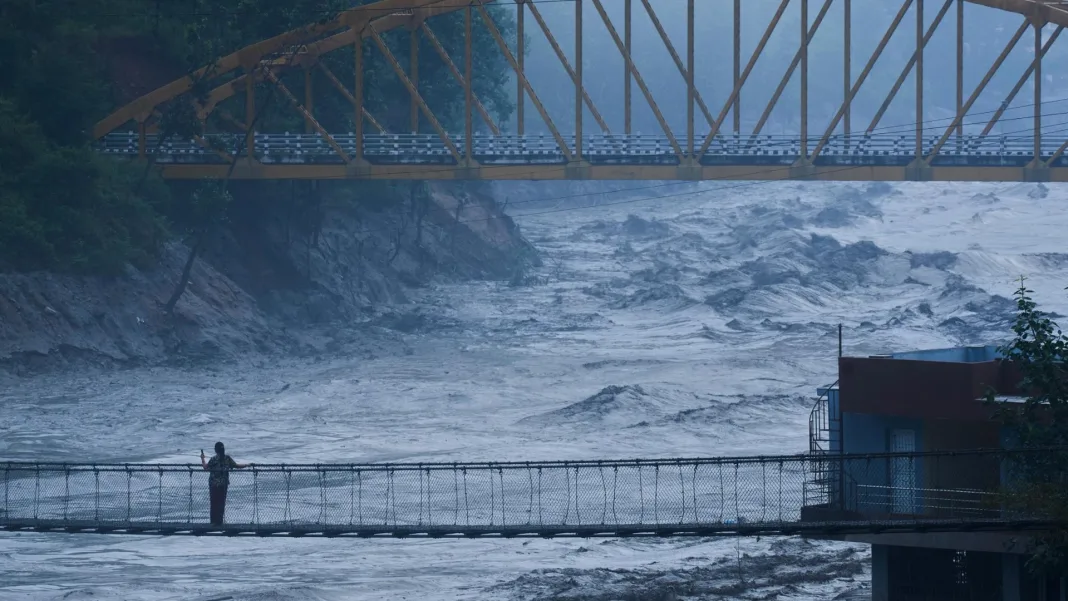
The sudden deluge, described by officials as a “catastrophic flash flood,” inundated villages along the Trishuli River, destroying homes and infrastructure. Rescue operations are ongoing, with teams from the Nepalese army, police, and humanitarian organizations working to locate survivors and recover bodies.
In the wake of the tragedy, a number of Nepali media outlets and independent analysts have raised concerns about recent Chinese infrastructure projects in Tibet, which borders Nepal. The focus has been on large‑scale developments such as dams, roads, and other hydrological works that have been undertaken by China in the region it administers as the Tibet Autonomous Region. Some commentators have suggested that alterations to river flow and watershed management upstream could have amplified the flood’s impact downstream in Nepal.
These observations have been framed as part of a broader scrutiny of China’s expanding footprint in the Himalayas. While no official investigation has yet linked the flood directly to any specific Chinese project, the issue underscores ongoing tensions over transboundary water management and environmental oversight between Nepal and China.
The Nepalese government has not commented on the allegations. International experts note that flash floods in mountainous terrain can be triggered by a combination of heavy rainfall, glacial melt, and land‑use changes, and that establishing causality in such events typically requires detailed hydrological studies.
As Nepal continues its rescue and recovery efforts, the incident is likely to fuel further debate on cross‑border infrastructure and its potential environmental consequences.
News Desk is the editorial publishing account for Tringlobe Media News, covering breaking news, public affairs, entertainment, community developments and regional stories across Trinidad and Tobago, the Caribbean and internationally.