The key points are temporarily unavailable. You can still read the full Story below.
Main Points
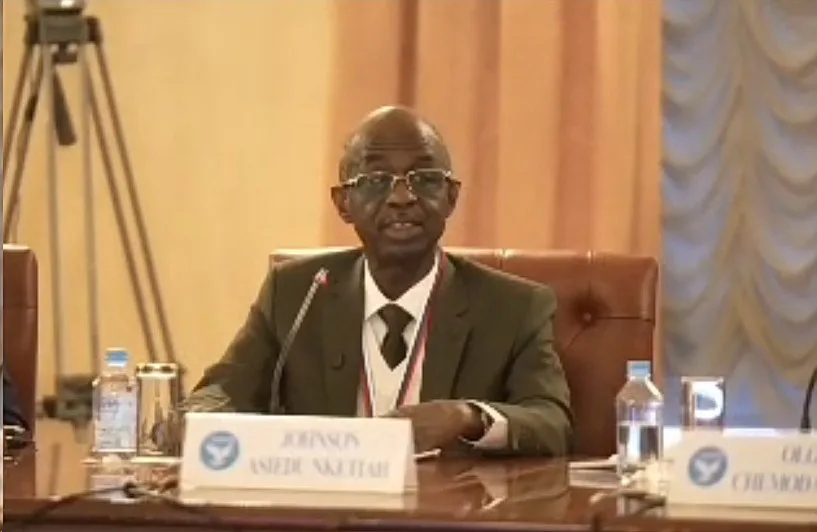
On 16 November 2026, Johnson Asiedu Nketiah, National Chairman of Ghana’s National Democratic Congress, spoke at the Movement for Freedom of Nations Assembly in Moscow. He urged that the Asante people receive more than temporary access to their royal heritage, arguing that the return of looted regalia on loan from British museums cannot be equated with full restitution. Nketiah highlighted the distinction between a loan and a transfer of ownership when assessing whether communities whose cultural treasures were taken during colonial conquest have received meaningful redress. The chairman cited the return of Asante royal regalia for public display at the Manhyia Palace Museum in Kumasi as an example of the complexities surrounding cultural restitution. He acknowledged the negotiations that facilitated the arrangements but stressed that some of the objects had been fully restituted while others were only on loan from British museums. “We appreciate the negotiations that made those arrangements possible, but a loan is not the same as a transfer of ownership,” he said. Nketiah argued that the rights restored and the obligations accepted must be central to any assessment of remedies for historical injustices. He said that claims arising from cultural seizure, enslavement, forced labour and dispossession require different forms of redress. While the provenance and ownership of identifiable objects could be investigated, he added that broader claims arising from the transatlantic slave trade raise more complex questions of responsibility, applicable law and the people entitled to benefit from reparations. “A credible claim must rest on evidence, and a credible response must be capable of implementation,” he said. The chairman also called for communities affected by historical injustices to have a voice in the design of reparative agreements and mechanisms to hold responsible parties accountable. He cautioned that development projects should not automatically be presented as reparations simply because they are given that description. “The connection between the wrong and the proposed remedy must be demonstrated, and the outcome must be open to scrutiny by those asked to accept it,” he said. Addressing an assembly of political leaders and delegates on reparative justice and the African Union, Nketiah urged the Movement for Freedom of Nations to support existing African Union and Caribbean reparations mechanisms rather than establish parallel institutions. His comments come as the African Union advances its Decade of Justice and Reparations for 2026‑2035, following its designation of 2025 as the Year of Justice for Africans and People of African Descent Through Reparations. Article source: My Joy Online | Image credit: My Joy Online
On 16 November 2026, Johnson Asiedu Nketiah, National Chairman of Ghana’s National Democratic Congress, spoke at the Movement for Freedom of Nations Assembly in Moscow. He urged that the Asante people receive more than temporary access to their royal heritage, arguing that the return of looted regalia on loan from British museums cannot be equated with full restitution. Nketiah highlighted the distinction between a loan and a transfer of ownership when assessing whether communities whose cultural treasures were taken during colonial conquest have received meaningful redress. The chairman cited the return of Asante royal regalia for public display at the Manhyia Palace Museum in Kumasi as an example of the complexities surrounding cultural restitution. He acknowledged the negotiations that facilitated the arrangements but stressed that some of the objects had been fully restituted while others were only on loan from British museums. “We appreciate the negotiations that made those arrangements possible, but a loan is not the same as a transfer of ownership,” he said. Nketiah argued that the rights restored and the obligations accepted must be central to any assessment of remedies for historical injustices. He said that claims arising from cultural seizure, enslavement, forced labour and dispossession require different forms of redress. While the provenance and ownership of identifiable objects could be investigated, he added that broader claims arising from the transatlantic slave trade raise more complex questions of responsibility, applicable law and the people entitled to benefit from reparations. “A credible claim must rest on evidence, and a credible response must be capable of implementation,” he said. The chairman also called for communities affected by historical injustices to have a voice in the design of reparative agreements and mechanisms to hold responsible parties accountable. He cautioned that development projects should not automatically be presented as reparations simply because they are given that description. “The connection between the wrong and the proposed remedy must be demonstrated, and the outcome must be open to scrutiny by those asked to accept it,” he said. Addressing an assembly of political leaders and delegates on reparative justice and the African Union, Nketiah urged the Movement for Freedom of Nations to support existing African Union and Caribbean reparations mechanisms rather than establish parallel institutions. His comments come as the African Union advances its Decade of Justice and Reparations for 2026‑2035, following its designation of 2025 as the Year of Justice for Africans and People of African Descent Through Reparations.
News Desk is the editorial publishing account for Tringlobe Media News, covering breaking news, public affairs, entertainment, community developments and regional stories across Trinidad and Tobago, the Caribbean and internationally.