The key points are temporarily unavailable. You can still read the full Story below.
Main Points
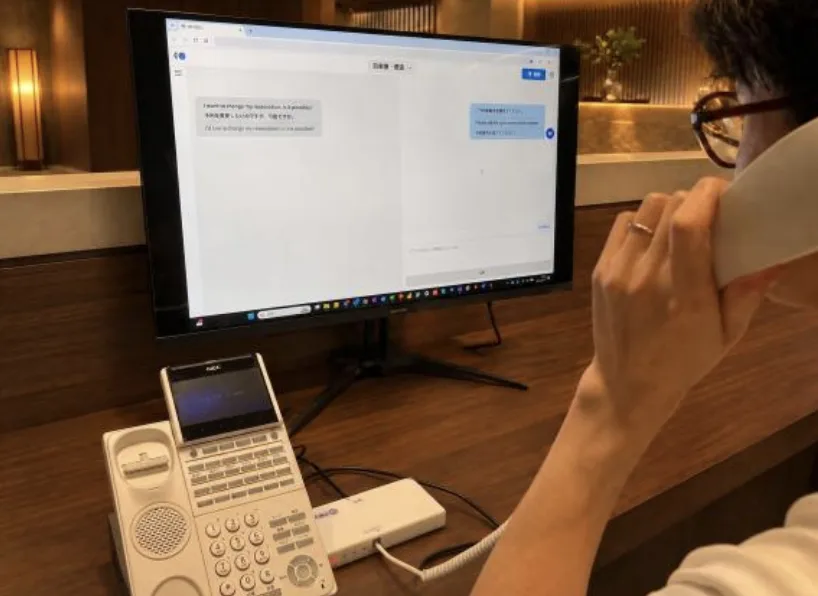
Konica Minolta Japan announced that its multilingual communication service, KOTOBAL, will launch an AI‑powered telephone translation feature for hotel landlines. The system can translate Chinese, English and Korean into Japanese, and can also convert Japanese responses back into the caller’s language in real time. According to the company, the service works by connecting a special adapter to an existing landline phone. The adapter links the phone to a computer browser, allowing the AI to display the translated text to hotel staff. When staff reply in Japanese, the AI converts the reply into the caller’s language and delivers it as spoken audio. No new telephone equipment, numbers or lines are required, and no additional call‑forwarding settings are needed. KOTOBAL’s translation can be used on any hotel landline, including the main reception line, reservation hotline and in‑room intercoms. The system also records the translated conversations for later reference, hand‑over, or staff training. The service is currently being trialed in several accommodation facilities and is expected to be available to the broader market within the current year. Konica Minolta noted that while many translation tools rely on mobile or dedicated devices, hotels, local governments and medical institutions still frequently use landlines and may find it difficult to require callers to install apps or perform special operations. Article source: Sing Tao Electronic Daily | Image credit: Sing Tao Electronic Daily
Konica Minolta Japan announced that its multilingual communication service, KOTOBAL, will launch an AI‑powered telephone translation feature for hotel landlines. The system can translate Chinese, English and Korean into Japanese, and can also convert Japanese responses back into the caller’s language in real time. According to the company, the service works by connecting a special adapter to an existing landline phone. The adapter links the phone to a computer browser, allowing the AI to display the translated text to hotel staff. When staff reply in Japanese, the AI converts the reply into the caller’s language and delivers it as spoken audio. No new telephone equipment, numbers or lines are required, and no additional call‑forwarding settings are needed. KOTOBAL’s translation can be used on any hotel landline, including the main reception line, reservation hotline and in‑room intercoms. The system also records the translated conversations for later reference, hand‑over, or staff training. The service is currently being trialed in several accommodation facilities and is expected to be available to the broader market within the current year. Konica Minolta noted that while many translation tools rely on mobile or dedicated devices, hotels, local governments and medical institutions still frequently use landlines and may find it difficult to require callers to install apps or perform special operations.
News Desk is the editorial publishing account for Tringlobe Media News, covering breaking news, public affairs, entertainment, community developments and regional stories across Trinidad and Tobago, the Caribbean and internationally.