The key points are temporarily unavailable. You can still read the full Story below.
Main Points
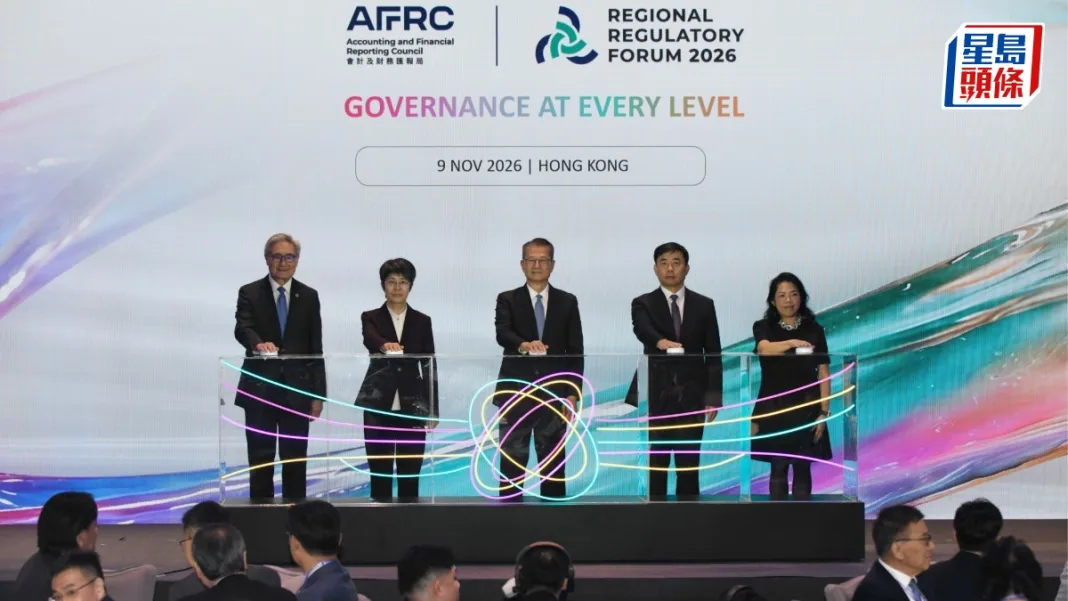
On 9 November 2026, Hong Kong’s Finance Secretary Chan Maobo attended the Accounting and Finance Reporting Bureau’s (AFRC) Regional Regulatory Forum. He highlighted the growing internationalisation of Hong Kong’s capital market, noting that in the first ten months of the year the city saw 121 new listings that raised more than HK$400 billion. Roughly 60 % of the newly listed companies have international operations, with many coming from Southeast Asia, the Middle East and Central Asia. Chan said the most obvious trend is diversification amid geopolitical uncertainty. He cited data that over half of Asian trade occurs within the region, growing 14 % last year to US$4.4 trillion. China’s 15th Five‑Year Plan, which stresses high‑level openness, saw foreign investment rise 11 % to US$240 billion and removed foreign‑investment restrictions in manufacturing, telecommunications and medical services. In technology and green transition, AI investment is expected to reach nearly US$2.7 trillion annually, while the International Monetary Fund estimates that emerging and developing Asian economies will need at least US$1.1 trillion each year to address climate challenges, though current investment is only about 30 % of that requirement. The Finance Secretary warned that the accounting profession must adapt to cross‑jurisdictional information reliability and the impact of AI. He cited an AFRC study that, among the five largest accounting firms, four have begun implementing AI capabilities. He cautioned that AI‑generated content can contain inaccuracies and misinformation, underscoring the need for professional judgment, integrity and ongoing investment in talent that blends technology and business acumen. He called for regulators to share best practices and collaborate to meet industry challenges. AFRC Chair Sun Dekai opened the forum with the theme “Comprehensive Governance, Long‑Term Success.” He stressed that governance starts with personal integrity, accountability and responsibility, and that trust is both a virtue and an economic asset. Sun noted that Hong Kong’s success as an international financial centre depends on investor confidence, which in turn relies on reliable financial reporting and high‑quality audits. Sun presented research on the 16 largest public‑interest entities in Hong Kong, finding that about two‑thirds of partners reported having a channel for staff to raise concerns, but only one‑third of employees were aware of such a channel. He identified five pillars of good governance—integrity, competence, capacity, consistency and corrigibility—and urged that governance be measured by actual decisions, behaviours and earned trust rather than by written rules alone. Deputy Minister of Finance Guo Tingting spoke on the impact of AI and big data on accounting and audit. She noted that China’s registered‑accountant sector now includes more than 10,000 firms and over 400,000 practitioners, serving more than 5,500 A‑share listed companies each year with annual revenue exceeding RMB 100 billion. Guo said that new information technologies are reshaping audit models and pose challenges for traditional regulation. The 2026 amendment to the Registered Accountants Act added a dedicated regulatory chapter, and a national unified supervision and inspection platform has been established. Guo emphasised that high‑quality financial reporting stems from sound corporate governance, with boards bearing primary responsibility for accounting information quality. She highlighted the need for dual‑directional inspections that assess both firm performance and corporate accounting and internal controls. Cross‑border regulatory cooperation remains a priority, as information gaps and enforcement barriers can create arbitrage opportunities. Guo called for a shift away from revenue‑centric performance metrics toward integrity‑based evaluation. The forum underscored the importance of maintaining Hong Kong’s position as a global financial hub through robust governance, reliable reporting and the prudent integration of emerging technologies. Article source: Sing Tao Electronic Daily | Image credit: Sing Tao Electronic Daily
On 9 November 2026, Hong Kong’s Finance Secretary Chan Maobo attended the Accounting and Finance Reporting Bureau’s (AFRC) Regional Regulatory Forum. He highlighted the growing internationalisation of Hong Kong’s capital market, noting that in the first ten months of the year the city saw 121 new listings that raised more than HK$400 billion. Roughly 60 % of the newly listed companies have international operations, with many coming from Southeast Asia, the Middle East and Central Asia. Chan said the most obvious trend is diversification amid geopolitical uncertainty. He cited data that over half of Asian trade occurs within the region, growing 14 % last year to US$4.4 trillion. China’s 15th Five‑Year Plan, which stresses high‑level openness, saw foreign investment rise 11 % to US$240 billion and removed foreign‑investment restrictions in manufacturing, telecommunications and medical services. In technology and green transition, AI investment is expected to reach nearly US$2.7 trillion annually, while the International Monetary Fund estimates that emerging and developing Asian economies will need at least US$1.1 trillion each year to address climate challenges, though current investment is only about 30 % of that requirement. The Finance Secretary warned that the accounting profession must adapt to cross‑jurisdictional information reliability and the impact of AI. He cited an AFRC study that, among the five largest accounting firms, four have begun implementing AI capabilities. He cautioned that AI‑generated content can contain inaccuracies and misinformation, underscoring the need for professional judgment, integrity and ongoing investment in talent that blends technology and business acumen. He called for regulators to share best practices and collaborate to meet industry challenges. AFRC Chair Sun Dekai opened the forum with the theme “Comprehensive Governance, Long‑Term Success.” He stressed that governance starts with personal integrity, accountability and responsibility, and that trust is both a virtue and an economic asset. Sun noted that Hong Kong’s success as an international financial centre depends on investor confidence, which in turn relies on reliable financial reporting and high‑quality audits. Sun presented research on the 16 largest public‑interest entities in Hong Kong, finding that about two‑thirds of partners reported having a channel for staff to raise concerns, but only one‑third of employees were aware of such a channel. He identified five pillars of good governance—integrity, competence, capacity, consistency and corrigibility—and urged that governance be measured by actual decisions, behaviours and earned trust rather than by written rules alone. Deputy Minister of Finance Guo Tingting spoke on the impact of AI and big data on accounting and audit. She noted that China’s registered‑accountant sector now includes more than 10,000 firms and over 400,000 practitioners, serving more than 5,500 A‑share listed companies each year with annual revenue exceeding RMB 100 billion. Guo said that new information technologies are reshaping audit models and pose challenges for traditional regulation. The 2026 amendment to the Registered Accountants Act added a dedicated regulatory chapter, and a national unified supervision and inspection platform has been established. Guo emphasised that high‑quality financial reporting stems from sound corporate governance, with boards bearing primary responsibility for accounting information quality. She highlighted the need for dual‑directional inspections that assess both firm performance and corporate accounting and internal controls. Cross‑border regulatory cooperation remains a priority, as information gaps and enforcement barriers can create arbitrage opportunities. Guo called for a shift away from revenue‑centric performance metrics toward integrity‑based evaluation. The forum underscored the importance of maintaining Hong Kong’s position as a global financial hub through robust governance, reliable reporting and the prudent integration of emerging technologies.
News Desk is the editorial publishing account for Tringlobe Media News, covering breaking news, public affairs, entertainment, community developments and regional stories across Trinidad and Tobago, the Caribbean and internationally.