The key points are temporarily unavailable. You can still read the full Story below.
Main Points
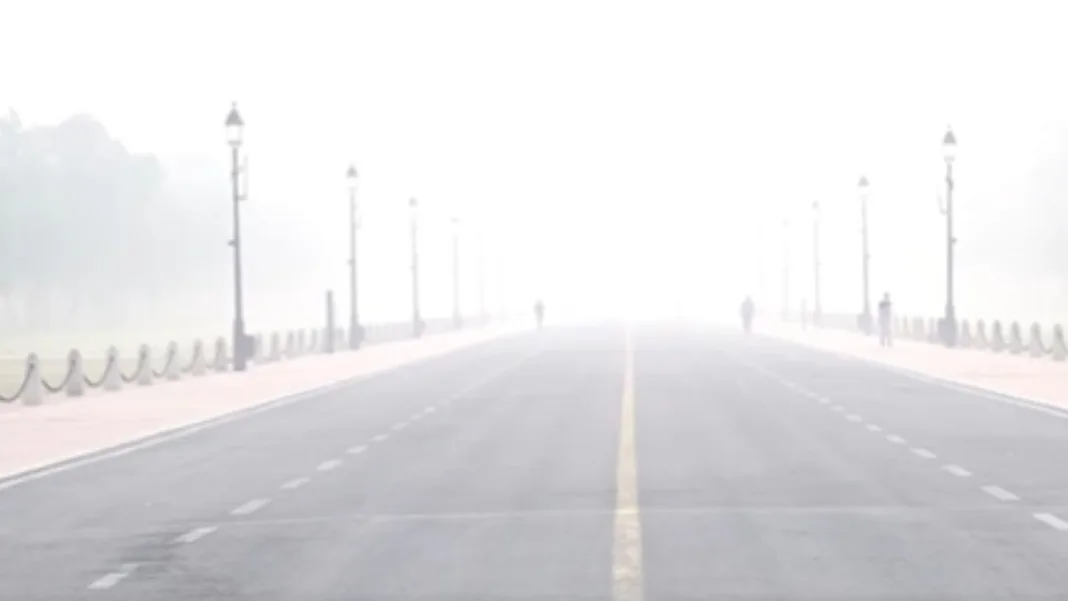
On the morning of Diwali, 8 November 2026, Delhi was shrouded in a thick blanket of smog, with the Central Pollution Control Board (CPCB) reporting an overall Air Quality Index (AQI) of 384. The AQI fell into the “very poor” and “severe” categories, indicating hazardous air quality for the capital. Several monitoring stations recorded AQI values above 400. Jahangirpuri posted the highest particulate matter (PM₂.₅) reading at 450, followed by Punjabi Bagh at 449, R K Puram at 448, Bawana at 446 and IIT Delhi at 445. The area around India Gate also remained in the “very poor” category, with an AQI of 398. In contrast, the AQI near Akshardham Temple was 344. A video released by the Press Trust of India showed the smog‑laden streets of Delhi and highlighted the severity of the air quality situation. Article source: Indian Express | Image credit: Indian Express
On the morning of Diwali, 8 November 2026, Delhi was shrouded in a thick blanket of smog, with the Central Pollution Control Board (CPCB) reporting an overall Air Quality Index (AQI) of 384. The AQI fell into the “very poor” and “severe” categories, indicating hazardous air quality for the capital. Several monitoring stations recorded AQI values above 400. Jahangirpuri posted the highest particulate matter (PM₂.₅) reading at 450, followed by Punjabi Bagh at 449, R K Puram at 448, Bawana at 446 and IIT Delhi at 445. The area around India Gate also remained in the “very poor” category, with an AQI of 398. In contrast, the AQI near Akshardham Temple was 344. A video released by the Press Trust of India showed the smog‑laden streets of Delhi and highlighted the severity of the air quality situation.
News Desk is the editorial publishing account for Tringlobe Media News, covering breaking news, public affairs, entertainment, community developments and regional stories across Trinidad and Tobago, the Caribbean and internationally.