The key points are temporarily unavailable. You can still read the full Story below.
Main Points
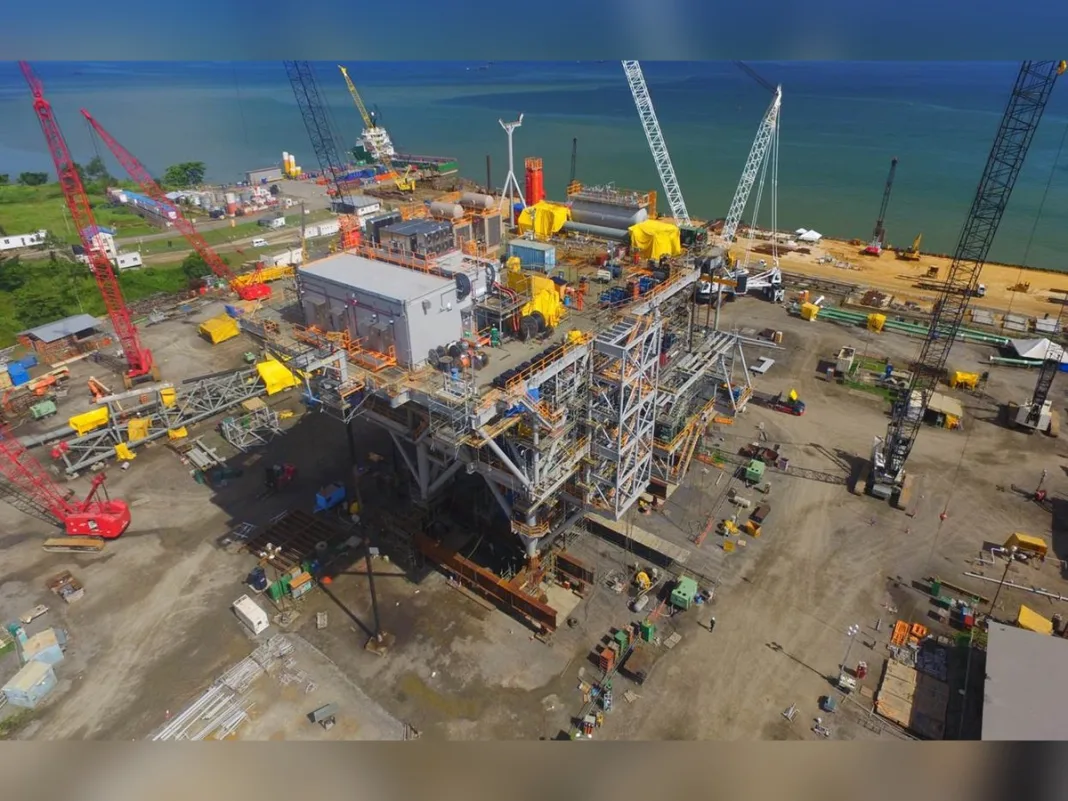
BP says its Juniper facility offshore Trinidad and Tobago has reached a new production peak of 700 million standard cubic feet of gas per day, according to a Caribbean Media Corporation report published on October 28. The company credited teams working across wells, subsurface, projects, operations and offshore activities for the milestone. It also attributed part of the increase to sidetrack drilling, which accesses additional reserves by drilling from an existing well rather than creating an entirely new one. BP described the technique’s application at Juniper as a regional first. Juniper lies roughly 50 miles off Trinidad’s southeast coast in 110 metres of water. Built at an approximate cost of US$2 billion, it began production in 2017 and was bpTT’s first subsea field development in Trinidad and Tobago. The project was developed to produce gas from the Corallita and Lantana fields, both discovered in 1996. At its launch, BP estimated that Juniper would add 590 million standard cubic feet per day to bpTT’s gas production capacity. That original capacity estimate is distinct from the latest reported daily production peak. Further work is planned at the facility. According to the report, BP’s 2025 annual report outlined approved investment to decomplete three existing wells and drill and complete three single-zone sidetracks in Trinidad and Tobago. That infill programme is expected to deliver about 19 million barrels of oil equivalent, with first gas anticipated in 2027. BP also plans to add Ginger subsea wells in 2027 as it seeks to build on Juniper’s production performance. Those dates remain expectations for future development.
BP says its Juniper facility offshore Trinidad and Tobago has reached a new production peak of 700 million standard cubic feet of gas per day, according to a Caribbean Media Corporation report published on October 28.
The company credited teams working across wells, subsurface, projects, operations and offshore activities for the milestone. It also attributed part of the increase to sidetrack drilling, which accesses additional reserves by drilling from an existing well rather than creating an entirely new one. BP described the technique’s application at Juniper as a regional first.
Juniper lies roughly 50 miles off Trinidad’s southeast coast in 110 metres of water. Built at an approximate cost of US$2 billion, it began production in 2017 and was bpTT’s first subsea field development in Trinidad and Tobago.
The project was developed to produce gas from the Corallita and Lantana fields, both discovered in 1996. At its launch, BP estimated that Juniper would add 590 million standard cubic feet per day to bpTT’s gas production capacity. That original capacity estimate is distinct from the latest reported daily production peak.
Further work is planned at the facility. According to the report, BP’s 2025 annual report outlined approved investment to decomplete three existing wells and drill and complete three single-zone sidetracks in Trinidad and Tobago.
That infill programme is expected to deliver about 19 million barrels of oil equivalent, with first gas anticipated in 2027. BP also plans to add Ginger subsea wells in 2027 as it seeks to build on Juniper’s production performance. Those dates remain expectations for future development.
News Desk is the editorial publishing account for Tringlobe Media News, covering breaking news, public affairs, entertainment, community developments and regional stories across Trinidad and Tobago, the Caribbean and internationally.