The key points are temporarily unavailable. You can still read the full Story below.
Main Points
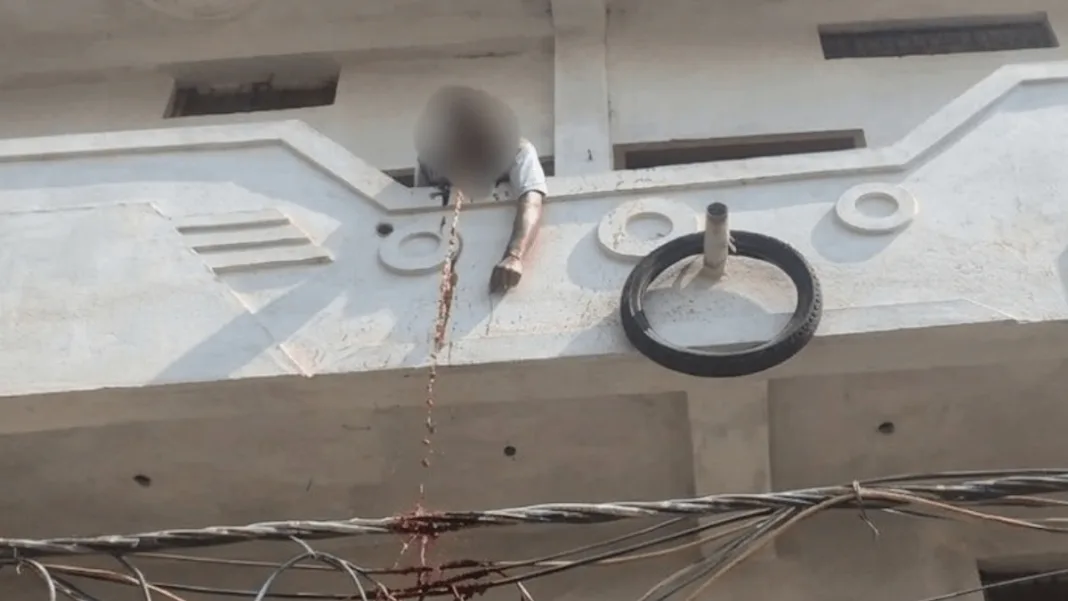
On the evening of 23 October 2026, a fatal electrocution occurred on a third‑floor balcony in a residential building in Madhya Pradesh, India. The victim, a 65‑year‑old bricklayer who had lived in the rental house for many years, died after spitting out the remnants of chewing tobacco. The saliva, which formed a continuous stream, came into contact with a 11,000‑volt high‑voltage power line that ran close to the balcony. Because saliva contains salts, it acted as a conductor, allowing an electric arc to pass through the liquid and deliver a lethal shock. The man suffered severe burns and died on the spot; his body was later found hanging half‑off the balcony wall. Residents of the building had repeatedly reported the danger posed by the high‑voltage line to the local power authority, but no action had been taken. The incident has sparked widespread anger and protests among the community, who accuse the authorities of neglecting a known safety hazard. Experts explain that even a small amount of conductive liquid can create a path for high‑voltage electricity. In this case, the saliva’s conductivity allowed the electric current to travel from the line to the man’s body, resulting in a fatal shock. Chewing tobacco, the product involved, is a smokeless tobacco that is chewed or sucked, similar to chewing gum or betel quid. It releases nicotine and other chemicals directly into the oral mucosa. Because it is not burned, users produce large amounts of saliva, which they typically spit out. The habit has origins in indigenous American cultures and was historically used in religious and medicinal contexts. Article source: Sing Tao Electronic Daily | Image credit: Sing Tao Electronic Daily
On the evening of 23 October 2026, a fatal electrocution occurred on a third‑floor balcony in a residential building in Madhya Pradesh, India. The victim, a 65‑year‑old bricklayer who had lived in the rental house for many years, died after spitting out the remnants of chewing tobacco. The saliva, which formed a continuous stream, came into contact with a 11,000‑volt high‑voltage power line that ran close to the balcony. Because saliva contains salts, it acted as a conductor, allowing an electric arc to pass through the liquid and deliver a lethal shock. The man suffered severe burns and died on the spot; his body was later found hanging half‑off the balcony wall. Residents of the building had repeatedly reported the danger posed by the high‑voltage line to the local power authority, but no action had been taken. The incident has sparked widespread anger and protests among the community, who accuse the authorities of neglecting a known safety hazard. Experts explain that even a small amount of conductive liquid can create a path for high‑voltage electricity. In this case, the saliva’s conductivity allowed the electric current to travel from the line to the man’s body, resulting in a fatal shock. Chewing tobacco, the product involved, is a smokeless tobacco that is chewed or sucked, similar to chewing gum or betel quid. It releases nicotine and other chemicals directly into the oral mucosa. Because it is not burned, users produce large amounts of saliva, which they typically spit out. The habit has origins in indigenous American cultures and was historically used in religious and medicinal contexts.
News Desk is the editorial publishing account for Tringlobe Media News, covering breaking news, public affairs, entertainment, community developments and regional stories across Trinidad and Tobago, the Caribbean and internationally.