The key points are temporarily unavailable. You can still read the full Story below.
Main Points
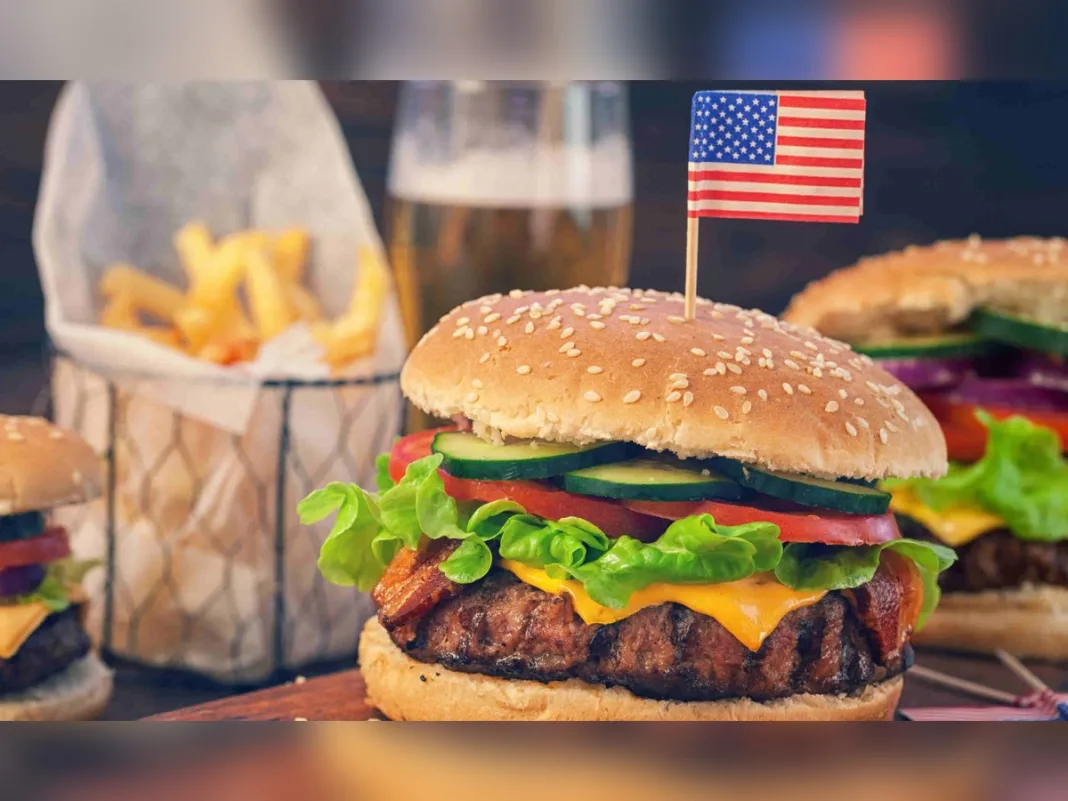
The hamburger may be an emblem of American food, but its history does not lead neatly to one inventor or hometown. A WorldAtlas account traces its name to Hamburg, Germany, while describing competing American claims to the familiar bread-and-beef combination. According to the account, German immigrants and sailors brought Hamburg steak to the United States in the 19th century. That connection helps explain the name, but it does not resolve who first turned the meat into the handheld meal associated with the modern hamburger. At least four American towns claim a role. Seymour, Wisconsin, credits “Hamburger Charlie” Nagreen in 1885. Hamburg, New York, credits the Menches brothers in the same year. Athens, Texas, points to Fletcher Davis, who is said to have popularized his version at the 1904 St. Louis World’s Fair. New Haven, Connecticut, credits Louis Lassen of Louis’ Lunch around 1900. WorldAtlas describes none of those claims as conclusive. The dates and names should therefore be understood as competing origin accounts, rather than a settled sequence establishing who invented the hamburger first. A memorable local story is not, by itself, proof of priority. The account provides a firmer milestone for the burger’s commercial development: White Castle opened in Wichita, Kansas, in 1921. By the 1920s, WorldAtlas describes the hamburger as firmly established in American food culture, with the fast-food model that followed carrying it around the world. That history makes the hamburger a useful example of how a dish can acquire a national identity through adaptation and popularization. Its German connection and its American development are both part of the story. The unresolved question is which cook first made the decisive combination—not whether the burger became a defining American food.
The hamburger may be an emblem of American food, but its history does not lead neatly to one inventor or hometown. A WorldAtlas account traces its name to Hamburg, Germany, while describing competing American claims to the familiar bread-and-beef combination.
According to the account, German immigrants and sailors brought Hamburg steak to the United States in the 19th century. That connection helps explain the name, but it does not resolve who first turned the meat into the handheld meal associated with the modern hamburger.
At least four American towns claim a role. Seymour, Wisconsin, credits “Hamburger Charlie” Nagreen in 1885. Hamburg, New York, credits the Menches brothers in the same year. Athens, Texas, points to Fletcher Davis, who is said to have popularized his version at the 1904 St. Louis World’s Fair. New Haven, Connecticut, credits Louis Lassen of Louis’ Lunch around 1900.
WorldAtlas describes none of those claims as conclusive. The dates and names should therefore be understood as competing origin accounts, rather than a settled sequence establishing who invented the hamburger first. A memorable local story is not, by itself, proof of priority.
The account provides a firmer milestone for the burger’s commercial development: White Castle opened in Wichita, Kansas, in 1921. By the 1920s, WorldAtlas describes the hamburger as firmly established in American food culture, with the fast-food model that followed carrying it around the world.
That history makes the hamburger a useful example of how a dish can acquire a national identity through adaptation and popularization. Its German connection and its American development are both part of the story. The unresolved question is which cook first made the decisive combination—not whether the burger became a defining American food.
News Desk is the editorial publishing account for Tringlobe Media News, covering breaking news, public affairs, entertainment, community developments and regional stories across Trinidad and Tobago, the Caribbean and internationally.