The key points are temporarily unavailable. You can still read the full Story below.
Main Points
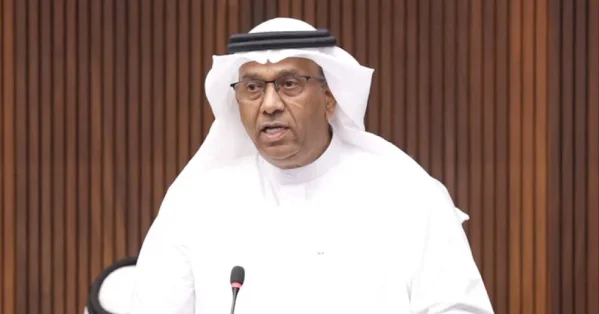
Bahrain’s Deputy Minister for Financial Affairs, Youssef Al‑Hamoud, explained that the country’s declining oil and gas revenues are largely attributable to maintenance and routine work on the sector’s infrastructure. Speaking to the press, Al‑Hamoud emphasized that the Ministry of Finance and National Economy follows a comprehensive fiscal policy that balances projected revenues against planned expenditures. He noted that the general budget is approved with a deficit, which necessitates borrowing to cover the shortfall. “The Ministry has specific revenue and expenditure capacities, and the general budget is approved with a deficit that requires debt to cover it,” Al‑Hamoud said. He urged continued efforts to rationalise spending, a strategy the government has been pursuing to reduce costs and increase both oil and non‑oil revenues in order to achieve fiscal balance. Regarding oil revenue, Al‑Hamoud said the drop in earnings from oil and natural gas in Bahrain is due to maintenance activities and routine operations. He added that the Ministry of Finance monitors revenue collection continuously through circulars, reports, and coordination with relevant ministries. “The spending carried out by the transfer agencies is fully reflected in the annexes of the state’s general budget,” he explained. On the topic of public expenditures, Al‑Hamoud observed a decline in line with the ongoing policy of spending rationalisation. He attributed the recorded increase in expenditures to higher public debt interest payments, increased social support, and overspending by some agencies. Article source: Al Bilad | Image credit: Al Bilad
Bahrain’s Deputy Minister for Financial Affairs, Youssef Al‑Hamoud, explained that the country’s declining oil and gas revenues are largely attributable to maintenance and routine work on the sector’s infrastructure. Speaking to the press, Al‑Hamoud emphasized that the Ministry of Finance and National Economy follows a comprehensive fiscal policy that balances projected revenues against planned expenditures. He noted that the general budget is approved with a deficit, which necessitates borrowing to cover the shortfall. “The Ministry has specific revenue and expenditure capacities, and the general budget is approved with a deficit that requires debt to cover it,” Al‑Hamoud said. He urged continued efforts to rationalise spending, a strategy the government has been pursuing to reduce costs and increase both oil and non‑oil revenues in order to achieve fiscal balance. Regarding oil revenue, Al‑Hamoud said the drop in earnings from oil and natural gas in Bahrain is due to maintenance activities and routine operations. He added that the Ministry of Finance monitors revenue collection continuously through circulars, reports, and coordination with relevant ministries. “The spending carried out by the transfer agencies is fully reflected in the annexes of the state’s general budget,” he explained. On the topic of public expenditures, Al‑Hamoud observed a decline in line with the ongoing policy of spending rationalisation. He attributed the recorded increase in expenditures to higher public debt interest payments, increased social support, and overspending by some agencies.
News Desk is the editorial publishing account for Tringlobe Media News, covering breaking news, public affairs, entertainment, community developments and regional stories across Trinidad and Tobago, the Caribbean and internationally.