The key points are temporarily unavailable. You can still read the full Story below.
Main Points
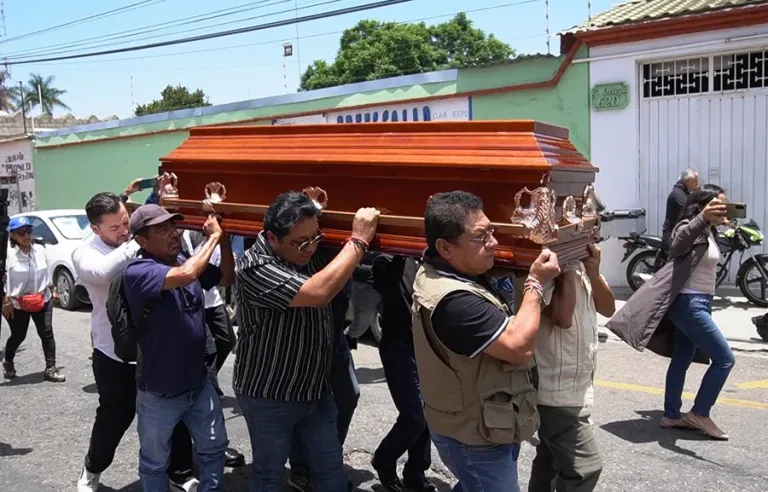
The Inter-American Press Association (SIP) has issued a warning about the ongoing violence against journalists in Mexico, citing three confirmed murders and a range of threats, assaults, and legal pressures that could undermine freedom of expression. In its latest report on press freedom in Mexico, SIP documented the killings of: Josué Martínez Contreras, director of Noticias San Martín Texmelucan, who was murdered in July in Puebla. Francisco Alejandro Leyva Aguilar, former director of the Oaxaca Radio and Television Corporation and a columnist who had criticized authorities, who was killed in Puebla. Ricardo Zúñiga Rosas, a photographer and content creator, who was murdered in August in Puebla. The report also references three additional murders in which, according to available information, there is no indication that the victims’ work was a factor. SIP, together with the Committee to Protect Journalists (CPJ) and Reporters Without Borders (RSF), called for thorough investigations that do not dismiss the possibility that the victims were targeted because of their journalism. Beyond homicide, the SIP report lists other forms of intimidation. Journalists have reported death threats, physical assaults while covering events, and pressure to remove or alter information. One case in Tamaulipas involved two reporters who said that members of the Navy forced them to delete images of a suspected oil spill. The report also highlights legal measures that could restrict press freedom. In 2025, San Luis Potosí enacted the “Ley Serrano,” a reform that imposed up to six years of prison for using artificial intelligence to disseminate false content or undermine confidence in institutions. Human‑rights organizations have criticized the law for its potential impact on free expression. The legislation led to criminal proceedings against journalists, including the detention of two female reporters in May. The state congress repealed the reform in July. SIP also criticized new guidelines on audience rights approved in August, arguing that they could interfere with editorial independence. President Claudia Sheinbaum has denied that these provisions amount to censorship. The report notes that the government’s analysis of a purported digital amplification network, which listed names of journalists and analysts, has been questioned, while the executive has denied that it aimed to stigmatize those individuals. SIP warns that impunity remains a major risk for Mexican journalists. According to Reporters Without Borders’ 2026 global ranking, Mexico ranks 122 out of 180 countries for press freedom and 160 for safety. Article source: De Ultimo Minuto | Image credit: De Ultimo Minuto
The Inter-American Press Association (SIP) has issued a warning about the ongoing violence against journalists in Mexico, citing three confirmed murders and a range of threats, assaults, and legal pressures that could undermine freedom of expression. In its latest report on press freedom in Mexico, SIP documented the killings of: Josué Martínez Contreras, director of Noticias San Martín Texmelucan, who was murdered in July in Puebla. Francisco Alejandro Leyva Aguilar, former director of the Oaxaca Radio and Television Corporation and a columnist who had criticized authorities, who was killed in Puebla. Ricardo Zúñiga Rosas, a photographer and content creator, who was murdered in August in Puebla. The report also references three additional murders in which, according to available information, there is no indication that the victims’ work was a factor. SIP, together with the Committee to Protect Journalists (CPJ) and Reporters Without Borders (RSF), called for thorough investigations that do not dismiss the possibility that the victims were targeted because of their journalism. Beyond homicide, the SIP report lists other forms of intimidation. Journalists have reported death threats, physical assaults while covering events, and pressure to remove or alter information. One case in Tamaulipas involved two reporters who said that members of the Navy forced them to delete images of a suspected oil spill. The report also highlights legal measures that could restrict press freedom. In 2025, San Luis Potosí enacted the “Ley Serrano,” a reform that imposed up to six years of prison for using artificial intelligence to disseminate false content or undermine confidence in institutions. Human‑rights organizations have criticized the law for its potential impact on free expression. The legislation led to criminal proceedings against journalists, including the detention of two female reporters in May. The state congress repealed the reform in July. SIP also criticized new guidelines on audience rights approved in August, arguing that they could interfere with editorial independence. President Claudia Sheinbaum has denied that these provisions amount to censorship. The report notes that the government’s analysis of a purported digital amplification network, which listed names of journalists and analysts, has been questioned, while the executive has denied that it aimed to stigmatize those individuals. SIP warns that impunity remains a major risk for Mexican journalists. According to Reporters Without Borders’ 2026 global ranking, Mexico ranks 122 out of 180 countries for press freedom and 160 for safety.
News Desk is the editorial publishing account for Tringlobe Media News, covering breaking news, public affairs, entertainment, community developments and regional stories across Trinidad and Tobago, the Caribbean and internationally.