The key points are temporarily unavailable. You can still read the full Story below.
Main Points
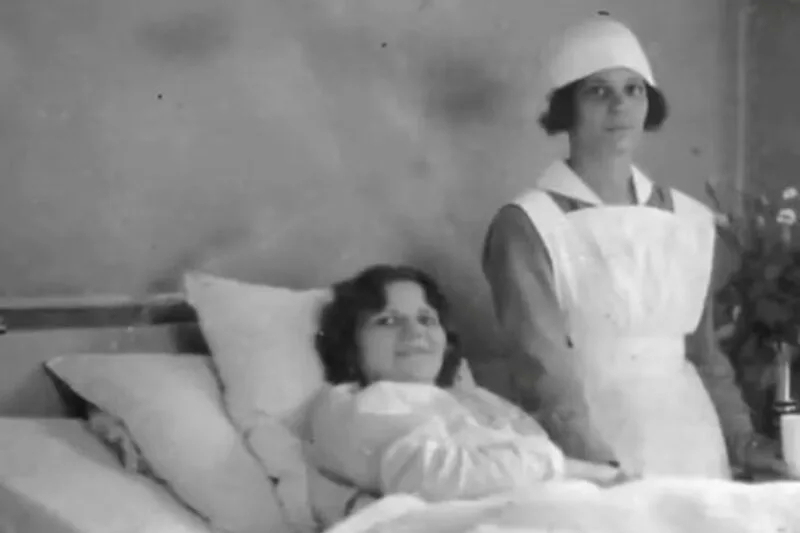
Amsterdam – The city council of Amsterdam has formally proposed to rename the foyer of the central council chamber in the city hall after Surinamese resistance hero Elisabeth “Betty” Margaretha Bergen. The proposal, presented to the municipal council by the mayor’s office, would join other rooms in the city hall that are named after resistance figures and would give the Surinamese contribution to the anti‑Nazi resistance the recognition it has long been awaiting. The initiative follows the advisory report “De route naar herstel” (The Path to Reconciliation), an Amsterdam programme that sets out ten priorities to promote healing and recovery around the contemporary impact of the slavery legacy. One of the priorities is to make the under‑represented black history visible in public spaces. “We are acknowledging her heroic deeds in the resistance by naming the foyer after Betty Bergen,” said Councillor Araya Sumter, Diversity & Inclusion. “This increases the representation of black communities and demonstrates their indispensable contribution to the city’s history and to contemporary Amsterdam.” The renaming is part of a forward‑looking fund that Amsterdam has committed to provide at least €2.5 million per year until 2040. The fund will be used in partnership with affected communities to shape recognition and recovery initiatives. The foyer’s renaming is seen as a milestone for the Surinamese community. Betty Bergen was born on 29 May 1905 in Suriname, the granddaughter of an assimilated Jew and a mixed‑race servant. She became an orphan at a young age and was repeatedly abused as a teenager, yet she completed two educational programmes. She later moved to Amsterdam, where she worked as a nurse. She married in June 1940 but became a widow shortly thereafter. During the German occupation she risked her life to join the resistance. From her home she provided a safe hiding place for nine Jewish residents, including three children. In June 1944 she was arrested after being betrayed and deported. She survived the concentration camps of Vught, Ravensbrück and Dachau, as did four of her hidden companions. Although the camp experience left her scarred, it did not break her resolve. Her story was told in the book Tante Betty by her relative Michal Nobach‑Bergen and was featured in a documentary about Surinamese resistance heroes. A theatre play was also produced about her life. Betty Bergen died on 4 October 1983 in Amsterdam. Article source: De Ware Tijd | Image credit: De Ware Tijd
Amsterdam – The city council of Amsterdam has formally proposed to rename the foyer of the central council chamber in the city hall after Surinamese resistance hero Elisabeth “Betty” Margaretha Bergen. The proposal, presented to the municipal council by the mayor’s office, would join other rooms in the city hall that are named after resistance figures and would give the Surinamese contribution to the anti‑Nazi resistance the recognition it has long been awaiting. The initiative follows the advisory report “De route naar herstel” (The Path to Reconciliation), an Amsterdam programme that sets out ten priorities to promote healing and recovery around the contemporary impact of the slavery legacy. One of the priorities is to make the under‑represented black history visible in public spaces. “We are acknowledging her heroic deeds in the resistance by naming the foyer after Betty Bergen,” said Councillor Araya Sumter, Diversity & Inclusion. “This increases the representation of black communities and demonstrates their indispensable contribution to the city’s history and to contemporary Amsterdam.” The renaming is part of a forward‑looking fund that Amsterdam has committed to provide at least €2.5 million per year until 2040. The fund will be used in partnership with affected communities to shape recognition and recovery initiatives. The foyer’s renaming is seen as a milestone for the Surinamese community. Betty Bergen was born on 29 May 1905 in Suriname, the granddaughter of an assimilated Jew and a mixed‑race servant. She became an orphan at a young age and was repeatedly abused as a teenager, yet she completed two educational programmes. She later moved to Amsterdam, where she worked as a nurse. She married in June 1940 but became a widow shortly thereafter. During the German occupation she risked her life to join the resistance. From her home she provided a safe hiding place for nine Jewish residents, including three children. In June 1944 she was arrested after being betrayed and deported. She survived the concentration camps of Vught, Ravensbrück and Dachau, as did four of her hidden companions. Although the camp experience left her scarred, it did not break her resolve. Her story was told in the book Tante Betty by her relative Michal Nobach‑Bergen and was featured in a documentary about Surinamese resistance heroes. A theatre play was also produced about her life. Betty Bergen died on 4 October 1983 in Amsterdam.
News Desk is the editorial publishing account for Tringlobe Media News, covering breaking news, public affairs, entertainment, community developments and regional stories across Trinidad and Tobago, the Caribbean and internationally.