The key points are temporarily unavailable. You can still read the full Story below.
Main Points
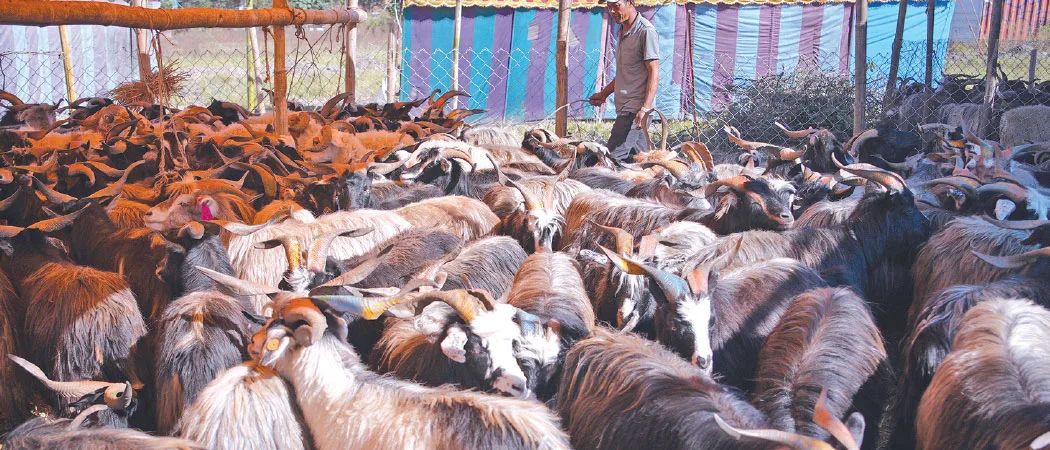
Kathmandu, 8 Kartik 2024 – The valley’s cattle market recorded a trade volume of roughly NPR 1 billion during the 10 Kartik week, according to the Four‑Legged Trading Association. In the same period, the association reported a turnover of NPR 9.7 crore from the sale of 40 000 cattle and chyangra (buffalo) heads. The figure represents a decline from last year’s NPR 1.16 billion, reflecting lower demand amid rising prices. Association president Jivanraj Khadka said the number of cattle sold fell by 15 000 heads compared with the previous year. While 55 000 chyangra were sold in the 10 Kartik week of 2023, the current year’s sales were limited to 40 000. In Kalanki cattle market, sales dropped from 24 000 heads last year to 17 000 this year. Other markets recorded 23 000 heads. Businessmen noted that the valley typically sees high cattle trade during the Kartik festival, as many people consume meat. However, the 10 Bhadra flood in September caused property damage and a rise in prices, leading to a reduction in consumption. Import of cattle has decreased, and the price per kilogram has risen to as much as NPR 200. According to traders, consumers now tend to purchase a single animal and use 2–4 kg of meat for the festival. Live cattle prices ranged from NPR 870 to NPR 920 per kilogram this year, up from NPR 720–750 the previous year. Chyangra prices fell from NPR 1 300–1 400 per kilogram last year to NPR 1 250 this year. The lower volume of cattle entering the market contributed to the overall decline in trade. Food Management and Trade Company Limited, which had sold cattle during the 10 Kartik week of 2023, did not conduct sales this year, causing prices to rise further. The company had previously offered a NPR 10 discount per kilogram to control market prices. Prepared cattle meat was priced between NPR 1 700 and NPR 1 750 per kilogram, up from NPR 1 500 the previous year. Domestic production has increased, with chyangra from Muktang and cattle from other districts being imported into the valley. The Animal Health Department tested cattle from ten locations before allowing them into the market to ensure they were free from disease. Article source: Gorkhapatra National Daily | Image credit: Gorkhapatra National Daily
Kathmandu, 8 Kartik 2024 – The valley’s cattle market recorded a trade volume of roughly NPR 1 billion during the 10 Kartik week, according to the Four‑Legged Trading Association. In the same period, the association reported a turnover of NPR 9.7 crore from the sale of 40 000 cattle and chyangra (buffalo) heads. The figure represents a decline from last year’s NPR 1.16 billion, reflecting lower demand amid rising prices. Association president Jivanraj Khadka said the number of cattle sold fell by 15 000 heads compared with the previous year. While 55 000 chyangra were sold in the 10 Kartik week of 2023, the current year’s sales were limited to 40 000. In Kalanki cattle market, sales dropped from 24 000 heads last year to 17 000 this year. Other markets recorded 23 000 heads. Businessmen noted that the valley typically sees high cattle trade during the Kartik festival, as many people consume meat. However, the 10 Bhadra flood in September caused property damage and a rise in prices, leading to a reduction in consumption. Import of cattle has decreased, and the price per kilogram has risen to as much as NPR 200. According to traders, consumers now tend to purchase a single animal and use 2–4 kg of meat for the festival. Live cattle prices ranged from NPR 870 to NPR 920 per kilogram this year, up from NPR 720–750 the previous year. Chyangra prices fell from NPR 1 300–1 400 per kilogram last year to NPR 1 250 this year. The lower volume of cattle entering the market contributed to the overall decline in trade. Food Management and Trade Company Limited, which had sold cattle during the 10 Kartik week of 2023, did not conduct sales this year, causing prices to rise further. The company had previously offered a NPR 10 discount per kilogram to control market prices. Prepared cattle meat was priced between NPR 1 700 and NPR 1 750 per kilogram, up from NPR 1 500 the previous year. Domestic production has increased, with chyangra from Muktang and cattle from other districts being imported into the valley. The Animal Health Department tested cattle from ten locations before allowing them into the market to ensure they were free from disease.
News Desk is the editorial publishing account for Tringlobe Media News, covering breaking news, public affairs, entertainment, community developments and regional stories across Trinidad and Tobago, the Caribbean and internationally.