The key points are temporarily unavailable. You can still read the full Story below.
Main Points
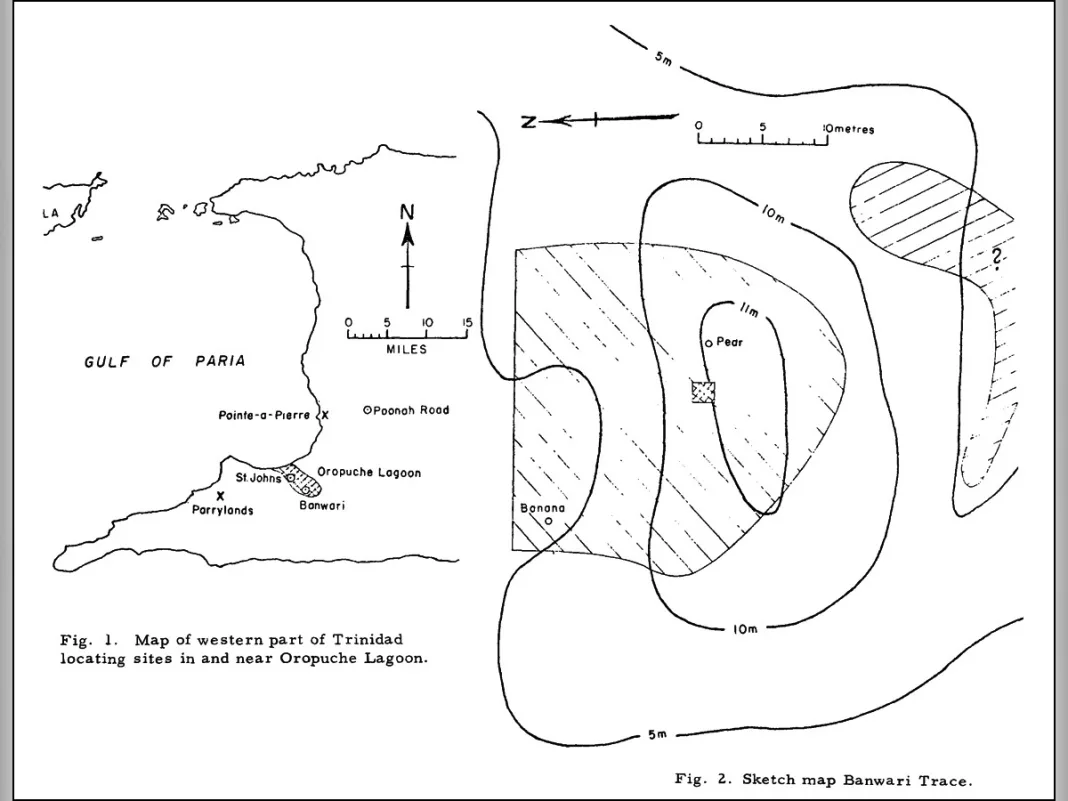
A site in southwest Trinidad holds an extraordinary place in the region’s archaeological record. According to The University of the West Indies’ Archaeology Centre, Banwari Trace yielded what it describes as the oldest pre-Columbian human skeleton discovered in the Caribbean. The skeleton was found in November 1969. UWI dates the Banwari site to about 5000 BC, placing it within a distant chapter of human history in Trinidad. That date refers to the site; the centre’s account does not give a separate date for the skeleton. The discovery features on the website of UWI’s Archaeology Centre, an institution founded in 1981 to advance archaeological work in Trinidad and Tobago. Its responsibilities extend from initiating university research to mapping, surveying and excavating sites across the two islands. Keeping track of those places is another part of its work. In consultation with the Archaeological Committee of Trinidad and Tobago, the centre updates the national inventory of known archaeological sites. It also publishes reports on archaeological activity and works with the committee on heritage management. Banwari Trace offers a striking reason to take that work seriously: a location in southwest Trinidad connects the country to a much older Caribbean past. Its significance rests in the physical evidence of early human life, and in the research that helps place that evidence within the region’s history.
A site in southwest Trinidad holds an extraordinary place in the region’s archaeological record. According to The University of the West Indies’ Archaeology Centre, Banwari Trace yielded what it describes as the oldest pre-Columbian human skeleton discovered in the Caribbean. The skeleton was found in November 1969. UWI dates the Banwari site to about 5000 BC, placing it within a distant chapter of human history in Trinidad. That date refers to the site; the centre’s account does not give a separate date for the skeleton. The discovery features on the website of UWI’s Archaeology Centre, an institution founded in 1981 to advance archaeological work in Trinidad and Tobago. Its responsibilities extend from initiating university research to mapping, surveying and excavating sites across the two islands. Keeping track of those places is another part of its work. In consultation with the Archaeological Committee of Trinidad and Tobago, the centre updates the national inventory of known archaeological sites. It also publishes reports on archaeological activity and works with the committee on heritage management. Banwari Trace offers a striking reason to take that work seriously: a location in southwest Trinidad connects the country to a much older Caribbean past. Its significance rests in the physical evidence of early human life, and in the research that helps place that evidence within the region’s history.
News Desk is the editorial publishing account for Tringlobe Media News, covering breaking news, public affairs, entertainment, community developments and regional stories across Trinidad and Tobago, the Caribbean and internationally.