The key points are temporarily unavailable. You can still read the full Story below.
Main Points
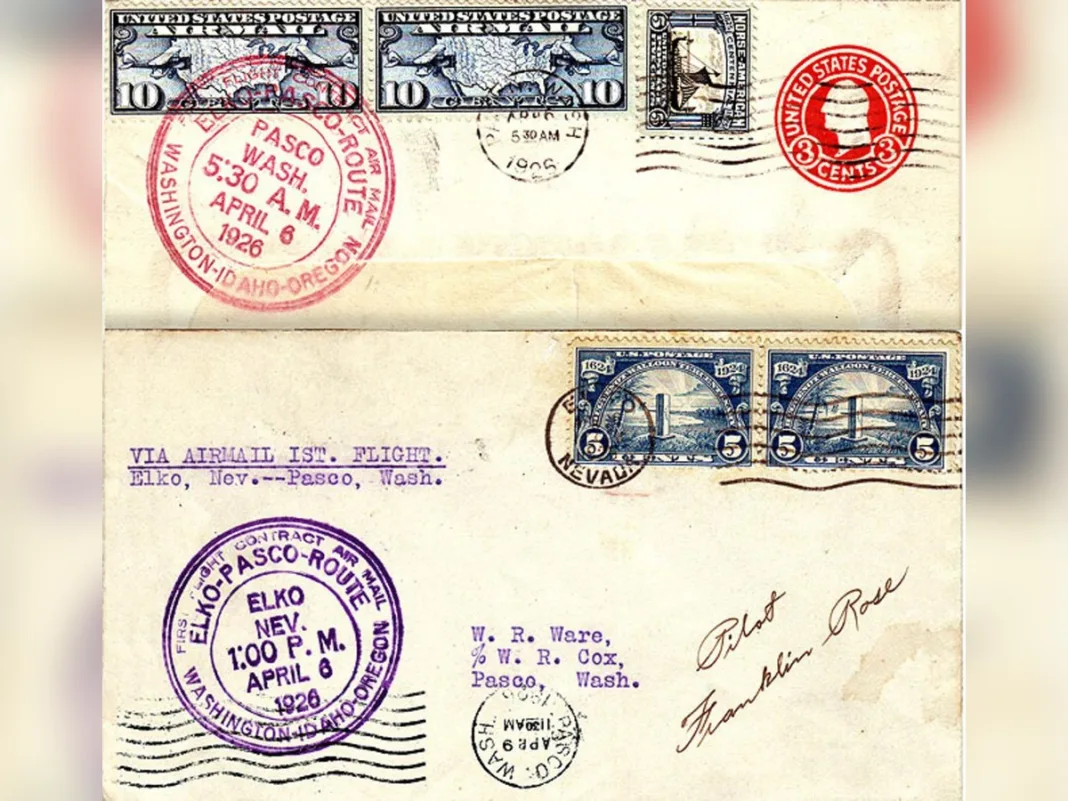
United Airlines traces its roots to a modest but pivotal moment in aviation history: the first cargo flight by Varney Air Lines on April 6, 1926. This date, often overlooked in the airline’s 100-year legacy, was later adopted by United as its unofficial centenary—celebrating not its founding in 1931, but the birth of its earliest operational forerunner. Varney Air Lines, founded by Walter Varney, was one of the five airlines merged in 1931 to form United Air Lines under the leadership of aviation pioneer William E. Boeing. While Boeing Air Transport (later Boeing Air Transport, Inc.) is more commonly associated with United’s origins, Varney’s cargo operations—beginning with mail and freight runs—were the first of the group to take flight. The airline’s early routes connected Seattle with Victoria, British Columbia, and later expanded to include passenger service, though its cargo operations remained a cornerstone of its identity. The significance of Varney’s 1926 flight lies in its role as the first commercial cargo operation among United’s predecessor companies. This distinction was later embraced by United Airlines as a symbolic origin point, marking the airline’s transition from experimental mail runs to a full-fledged carrier. The date, April 6, was quietly celebrated internally before gaining broader recognition in later decades as United’s centenary milestone. What makes this story fascinating is how a single cargo flight—often overshadowed by the glamour of passenger aviation—became the foundation of one of the world’s largest airlines. Varney Air Lines’ legacy endures not just in United’s history, but in the broader narrative of American aviation, where cargo operations paved the way for the modern airline industry. Today, as United operates routes across six continents, it’s worth remembering that its journey began with a humble cargo plane and a visionary entrepreneur’s gamble on the skies. Fun fact: Varney Air Lines’ early cargo flights were so critical that they helped establish the first scheduled airmail routes in the Pacific Northwest, a precursor to the U.S. Postal Service’s later adoption of airmail. This innovation not only saved time but also demonstrated the viability of commercial aviation—a principle that would define United’s future.
United Airlines traces its roots to a modest but pivotal moment in aviation history: the first cargo flight by Varney Air Lines on April 6, 1926. This date, often overlooked in the airline’s 100-year legacy, was later adopted by United as its unofficial centenary—celebrating not its founding in 1931, but the birth of its earliest operational forerunner.
Varney Air Lines, founded by Walter Varney, was one of the five airlines merged in 1931 to form United Air Lines under the leadership of aviation pioneer William E. Boeing. While Boeing Air Transport (later Boeing Air Transport, Inc.) is more commonly associated with United’s origins, Varney’s cargo operations—beginning with mail and freight runs—were the first of the group to take flight. The airline’s early routes connected Seattle with Victoria, British Columbia, and later expanded to include passenger service, though its cargo operations remained a cornerstone of its identity.
The significance of Varney’s 1926 flight lies in its role as the first commercial cargo operation among United’s predecessor companies. This distinction was later embraced by United Airlines as a symbolic origin point, marking the airline’s transition from experimental mail runs to a full-fledged carrier. The date, April 6, was quietly celebrated internally before gaining broader recognition in later decades as United’s centenary milestone.
What makes this story fascinating is how a single cargo flight—often overshadowed by the glamour of passenger aviation—became the foundation of one of the world’s largest airlines. Varney Air Lines’ legacy endures not just in United’s history, but in the broader narrative of American aviation, where cargo operations paved the way for the modern airline industry. Today, as United operates routes across six continents, it’s worth remembering that its journey began with a humble cargo plane and a visionary entrepreneur’s gamble on the skies.
Fun fact: Varney Air Lines’ early cargo flights were so critical that they helped establish the first scheduled airmail routes in the Pacific Northwest, a precursor to the U.S. Postal Service’s later adoption of airmail. This innovation not only saved time but also demonstrated the viability of commercial aviation—a principle that would define United’s future.
News Desk is the editorial publishing account for Tringlobe Media News, covering breaking news, public affairs, entertainment, community developments and regional stories across Trinidad and Tobago, the Caribbean and internationally.