The key points are temporarily unavailable. You can still read the full Story below.
Main Points
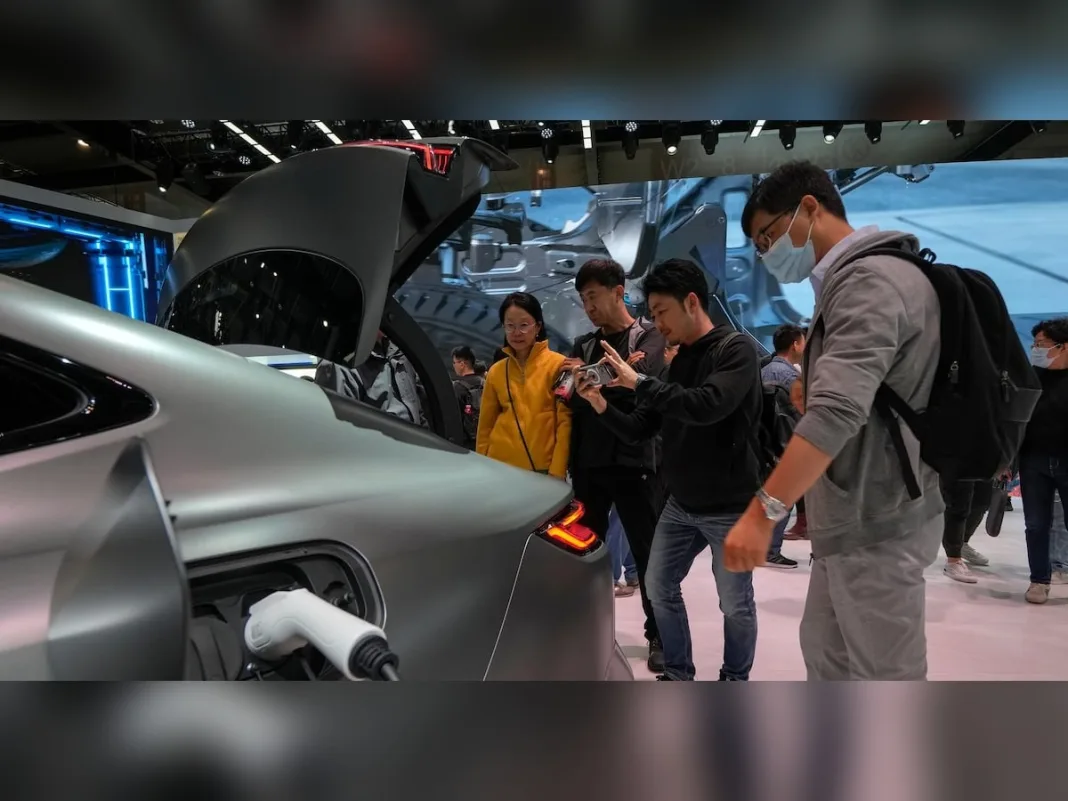
US senators have postponed efforts to pass legislation permanently restricting Chinese-linked connected vehicles, leaving the measure unlikely to advance before the November 2026 elections. The bill stalled on 30 September as lawmakers struggled to reach an agreement, according to an Associated Press report published by AgriNews on 13 October. The bipartisan legislation is sponsored by Republican Senator Bernie Moreno of Ohio and Democratic Senator Elissa Slotkin of Michigan. It seeks to prevent China's automotive industry from gaining a foothold in the US market by prohibiting the import, manufacture and sale of internet-connected vehicles, software and hardware linked to China or other foreign adversaries, including Russia and North Korea. The delay followed negotiations with Republican Senator Rand Paul of Kentucky, the reported holdout. Paul argued that the legislation's ownership provisions could unfairly affect Mercedes-Benz, which the report says has nearly 20 per cent passive Chinese ownership. The bill would cover vehicles made by companies with more than a 15 per cent ownership stake from Chinese entities. Supporters had hoped to secure passage without a formal roll-call vote, but the disagreement prevented that plan from proceeding. Slotkin said nearly every senator was prepared to support the measure, while its sponsors indicated they would try again after the elections. The proposal is part of a broader US debate over connected-car technology, data security and competition in the automotive industry. Supporters argue that internet-connected vehicles could collect sensitive information about drivers and locations, creating potential national-security risks if data were transmitted to Beijing. They also argue that Chinese manufacturers could challenge US producers through lower-priced vehicles. Senator Steve Daines, a Republican, expressed concern before the Trump-Xi summit about the effect Chinese electric vehicles could have on the US automobile industry. He described the vehicles as high-quality products offered at substantially lower prices and raised concerns about competition involving products he said were significantly subsidised by the Chinese government. The report also highlights a difference in emphasis within US policy discussions. President Donald Trump has at times said he would welcome Chinese automakers establishing factories in the United States if they employed American workers, while supporters of the bill favour stronger restrictions on Chinese-linked vehicles and technology. The White House did not respond to the Associated Press's request for comment on its position on the legislation. For the United States, the immediate consequence of the Senate delay is that the proposed permanent restrictions have not advanced as planned. The report says Chinese automakers are already effectively barred from selling or building vehicles in the country under a policy introduced during the Biden administration. The stalled bill would seek to establish a more permanent legal barrier, but its future depends on renewed legislative action after the elections. The supplied report does not establish that the delay itself changes the existing policy.
US senators have postponed efforts to pass legislation permanently restricting Chinese-linked connected vehicles, leaving the measure unlikely to advance before the November 2026 elections. The bill stalled on 30 September as lawmakers struggled to reach an agreement, according to an Associated Press report published by AgriNews on 13 October.
The bipartisan legislation is sponsored by Republican Senator Bernie Moreno of Ohio and Democratic Senator Elissa Slotkin of Michigan. It seeks to prevent China’s automotive industry from gaining a foothold in the US market by prohibiting the import, manufacture and sale of internet-connected vehicles, software and hardware linked to China or other foreign adversaries, including Russia and North Korea.
The delay followed negotiations with Republican Senator Rand Paul of Kentucky, the reported holdout. Paul argued that the legislation’s ownership provisions could unfairly affect Mercedes-Benz, which the report says has nearly 20 per cent passive Chinese ownership. The bill would cover vehicles made by companies with more than a 15 per cent ownership stake from Chinese entities.
Supporters had hoped to secure passage without a formal roll-call vote, but the disagreement prevented that plan from proceeding. Slotkin said nearly every senator was prepared to support the measure, while its sponsors indicated they would try again after the elections.
The proposal is part of a broader US debate over connected-car technology, data security and competition in the automotive industry. Supporters argue that internet-connected vehicles could collect sensitive information about drivers and locations, creating potential national-security risks if data were transmitted to Beijing. They also argue that Chinese manufacturers could challenge US producers through lower-priced vehicles.
Senator Steve Daines, a Republican, expressed concern before the Trump-Xi summit about the effect Chinese electric vehicles could have on the US automobile industry. He described the vehicles as high-quality products offered at substantially lower prices and raised concerns about competition involving products he said were significantly subsidised by the Chinese government.
The report also highlights a difference in emphasis within US policy discussions. President Donald Trump has at times said he would welcome Chinese automakers establishing factories in the United States if they employed American workers, while supporters of the bill favour stronger restrictions on Chinese-linked vehicles and technology. The White House did not respond to the Associated Press’s request for comment on its position on the legislation.
For the United States, the immediate consequence of the Senate delay is that the proposed permanent restrictions have not advanced as planned. The report says Chinese automakers are already effectively barred from selling or building vehicles in the country under a policy introduced during the Biden administration. The stalled bill would seek to establish a more permanent legal barrier, but its future depends on renewed legislative action after the elections. The supplied report does not establish that the delay itself changes the existing policy.
News Desk is the editorial publishing account for Tringlobe Media News, covering breaking news, public affairs, entertainment, community developments and regional stories across Trinidad and Tobago, the Caribbean and internationally.