The key points are temporarily unavailable. You can still read the full Story below.
Main Points
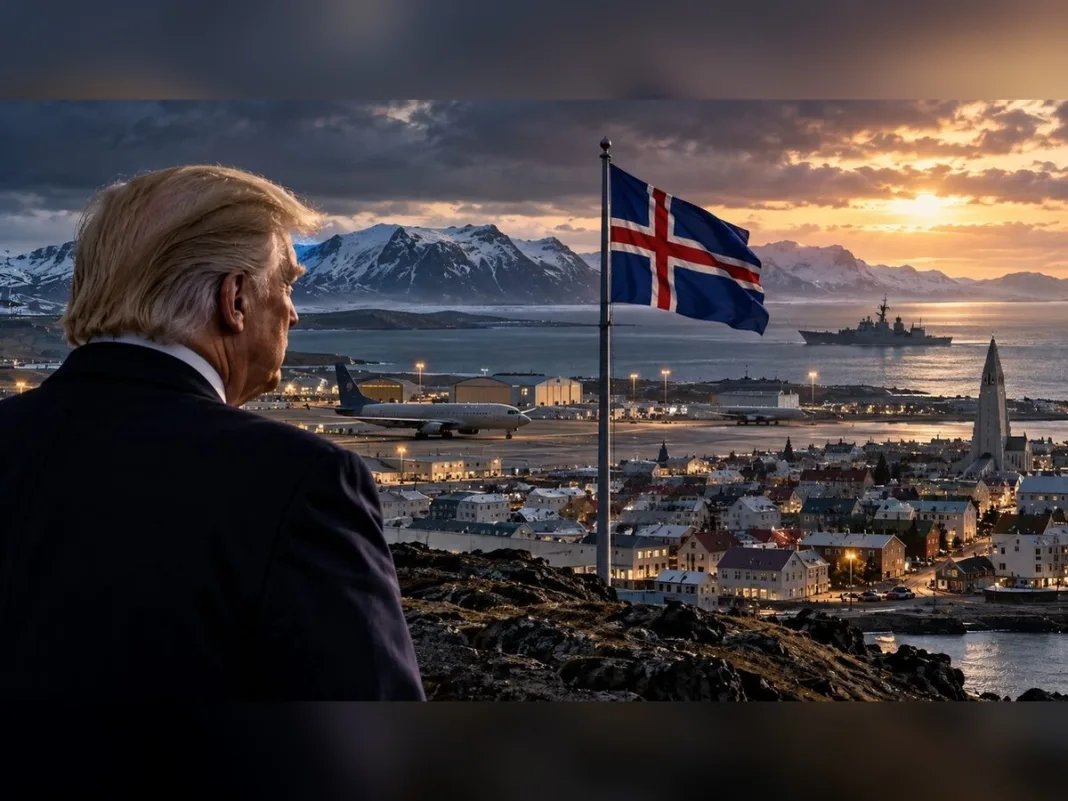
Iceland’s economy is increasingly exposed to potential US economic pressure following Washington’s recent security agreement with Greenland, according to a report by TF Global News. The island nation’s reliance on American trade—particularly in tourism and aluminium—could make it vulnerable to tariffs, licensing decisions, or corporate actions originating in the US. The report highlights that Iceland’s tourism sector, a critical driver of its economy, is heavily dependent on American visitors. In 2025, Americans accounted for nearly 30% of all foreign tourists, and when tensions flared between the US and Denmark over Greenland in January, American arrivals plummeted by 27%—the steepest decline since the pandemic, according to travel firm Guide to Iceland. This suggests that even indirect political or economic disputes could disrupt Iceland’s tourism revenue, which supports jobs and local businesses across the country. Beyond tourism, Iceland’s aluminium industry—responsible for a third of its goods export revenue in 2024—is another potential flashpoint. Two of the three aluminium smelters operating in Iceland are owned by American companies, Alcoa and Century Aluminum, meaning profits and operations are directly tied to US corporate decisions. A tariff, licence restriction, or shift in boardroom strategy in the US could directly threaten Iceland’s export earnings and industrial stability, the report warns. Iceland’s current isolation from EU protection further limits its bargaining power. After rejecting fresh EU membership talks in August 2026 by 52.8%, the government has delayed negotiations until 2028, leaving Iceland to navigate trade challenges alone. Without the EU’s collective weight, Reykjavik would face limited options if the US were to impose economic measures similar to those used against Denmark and Greenland. The report also notes that while Iceland lacks Greenland’s mineral wealth, its abundant geothermal and hydropower resources—which supply nearly all of the country’s electricity—are attracting global interest, particularly from data centres. However, this sector remains secondary to tourism and aluminium in terms of immediate economic vulnerability. For Iceland, the Greenland precedent sets a worrying example. The US has demonstrated a willingness to use economic leverage alongside strategic security moves, and Iceland’s small, open economy—with only 265,000 eligible voters—offers little room for manoeuvre in a trade dispute. The question now is whether Reykjavik can mitigate these risks before they materialise.
Iceland’s economy is increasingly exposed to potential US economic pressure following Washington’s recent security agreement with Greenland, according to a report by TF Global News. The island nation’s reliance on American trade—particularly in tourism and aluminium—could make it vulnerable to tariffs, licensing decisions, or corporate actions originating in the US.
The report highlights that Iceland’s tourism sector, a critical driver of its economy, is heavily dependent on American visitors. In 2025, Americans accounted for nearly 30% of all foreign tourists, and when tensions flared between the US and Denmark over Greenland in January, American arrivals plummeted by 27%—the steepest decline since the pandemic, according to travel firm Guide to Iceland. This suggests that even indirect political or economic disputes could disrupt Iceland’s tourism revenue, which supports jobs and local businesses across the country.
Beyond tourism, Iceland’s aluminium industry—responsible for a third of its goods export revenue in 2024—is another potential flashpoint. Two of the three aluminium smelters operating in Iceland are owned by American companies, Alcoa and Century Aluminum, meaning profits and operations are directly tied to US corporate decisions. A tariff, licence restriction, or shift in boardroom strategy in the US could directly threaten Iceland’s export earnings and industrial stability, the report warns.
Iceland’s current isolation from EU protection further limits its bargaining power. After rejecting fresh EU membership talks in August 2026 by 52.8%, the government has delayed negotiations until 2028, leaving Iceland to navigate trade challenges alone. Without the EU’s collective weight, Reykjavik would face limited options if the US were to impose economic measures similar to those used against Denmark and Greenland.
The report also notes that while Iceland lacks Greenland’s mineral wealth, its abundant geothermal and hydropower resources—which supply nearly all of the country’s electricity—are attracting global interest, particularly from data centres. However, this sector remains secondary to tourism and aluminium in terms of immediate economic vulnerability.
For Iceland, the Greenland precedent sets a worrying example. The US has demonstrated a willingness to use economic leverage alongside strategic security moves, and Iceland’s small, open economy—with only 265,000 eligible voters—offers little room for manoeuvre in a trade dispute. The question now is whether Reykjavik can mitigate these risks before they materialise.
News Desk is the editorial publishing account for Tringlobe Media News, covering breaking news, public affairs, entertainment, community developments and regional stories across Trinidad and Tobago, the Caribbean and internationally.