The key points are temporarily unavailable. You can still read the full Story below.
Main Points
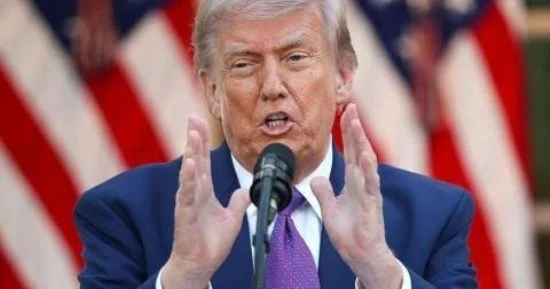
President Donald Trump signed legislation on Friday expanding economic sanctions and restrictions on Russia and extending existing measures against Iran. The bill, designated H.R. 5334 and titled the Lindsey Graham Act to Impose Sanctions on Russia and Iran for 2026, received bipartisan support in both the House of Representatives and the Senate.
The new law targets Russia’s energy and defense sectors, as well as the so-called shadow fleet of tankers used by Moscow to export oil and circumvent Western sanctions. A key provision grants the U.S. president the authority to impose tariffs of up to 100 percent on goods from countries, including China and India, that continue to purchase Russian oil and gas or assist Moscow in evading sanctions. According to Reuters, this represents the first new congressional authorization for a president to impose tariffs in approximately 40 years.
The legislation includes a waiver provision that allows the president to exempt countries from these measures if he determines that enforcement does not serve U.S. national interests. This clause has drawn criticism from some lawmakers, who expressed concern that the sanctions might not be fully implemented or that the tariff authority could be used as leverage in unrelated trade negotiations.
Ukrainian President Volodymyr Zelenskyy welcomed the signing of the law, thanking President Trump and members of Congress for their support. Zelenskyy stated that the full and rapid implementation of the law would be the most effective way to honor the memory of the late Senator Lindsey Graham.
The bill passed the House of Representatives on Wednesday with a vote of 262 to 159, following its approval by the Senate last month with an 86 to 11 vote. While the legislation is the most significant Ukraine-related measure passed since the Republican party gained control of both chambers of Congress in January 2025, it faced opposition from some Democrats. House Minority Leader Hakeem Jeffries warned that the bill grants the president broad authority and contains potential loopholes that could undermine the effectiveness of the sanctions.
International reactions have been critical. A spokesperson for the Chinese Ministry of Foreign Affairs stated that Beijing opposes the use of extraterritorial jurisdiction that lacks a basis in international law or a UN Security Council mandate. Similarly, Indian officials indicated that the imposition of U.S. tariffs could negatively impact relations with Washington, emphasizing that India intends to continue prioritizing its energy security.
Article source: www.alnilin.com | Image credit: www.alnilin.com