The key points are temporarily unavailable. You can still read the full Story below.
Main Points
Stuart Young says ‘1%’ criminals will leave closed areas while 99% law-abiding residents face restrictions
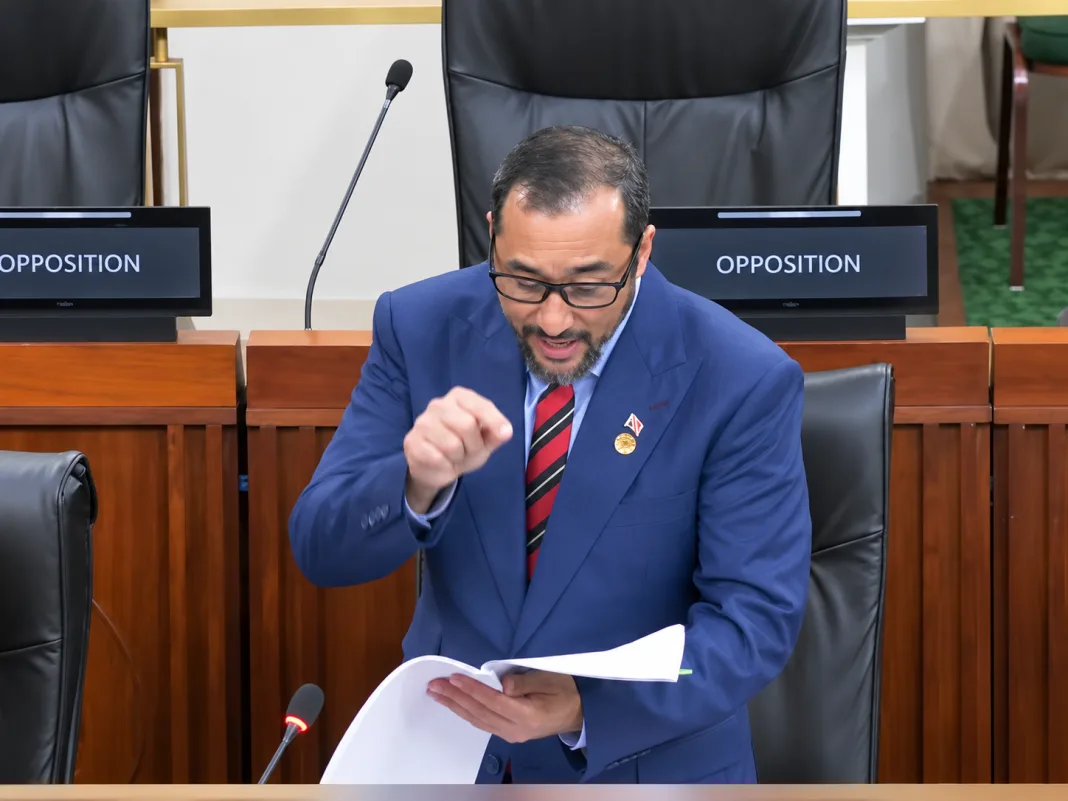
Opposition MP Stuart Young SC has argued that criminals targeted by the Special Operations Bill 2026 will simply leave communities designated as closed areas, while the overwhelming majority of law-abiding residents remain behind to face restrictions.
Young argued that less than one per cent of people in a community may be responsible for criminal activity, questioning why the entire community should face restrictions because of the actions of such a small minority. His position is that while the criminal element can simply move to another community when heightened police operations begin, law-abiding residents are left behind to deal with permits, restricted movement and other measures imposed on the closed area.
Young, the Member of Parliament for Port-of-Spain North/St. Ann’s West, made the argument during debate on the Special Operations Bill in the House of Representatives on Friday. Parliament records confirm Young was among the Opposition members who contributed to the Bill’s second reading on September 18. ([Parliament of Trinidad and Tobago][1])
Young used a 99-to-one comparison to illustrate his concern, describing 99 per cent of people in a hypothetical closed area as law-abiding residents and the remaining one per cent as the criminal element authorities are attempting to target.
He argued that once an area is declared closed and subjected to heightened security measures, criminals would have little reason to remain there.
“The criminal element will just pick up and move,” Young said during his contribution, adding that “the 1% will leave the closed area.”
According to Young, criminals would simply relocate their activities rather than remain inside an area where police operations and movement restrictions are being enforced.
The people left behind, he argued, would be the 99 per cent of law-abiding residents who have homes, families and responsibilities in the community.
Young said those residents could then be required to comply with restrictions associated with a closed area, including obtaining permits to enter or leave, while the people the measures were intended to target had already moved elsewhere.
He questioned the effectiveness of restricting an entire geographical area if criminals can respond by shifting their activities into another community.
Young also raised practical concerns about residents needing to travel to and from their homes and relatives or caregivers attempting to enter a closed area during an emergency.
His central argument was that ordinary residents cannot simply abandon their homes when restrictions are imposed, while criminals have an incentive to relocate when increased police activity begins.
The Special Operations Bill seeks to establish policing districts across Trinidad and Tobago and provide for special police operations, with or without Defence Force assistance, to combat criminality. It also provides a framework under which specific locations within those districts may be declared closed areas. ([Parliament of Trinidad and Tobago][1]