The key points are temporarily unavailable. You can still read the full Story below.
Main Points
Chihab Din Ahmad ibn Qasim Al-Hajari Al-Andalusi, a scholar and diplomat who served the Saadian dynasty in Morocco, played a significant role in the early 17th century by advocating for the rights of Moriscos, Spanish Muslims who had been forcibly converted to Catholicism. Born around 1570 near Granada, Al-Hajari was himself a Morisco who eventually relocated to Marrakech, where he served as a secretary and translator for Sultan Moulay Zaydan between 1598 and 1636.
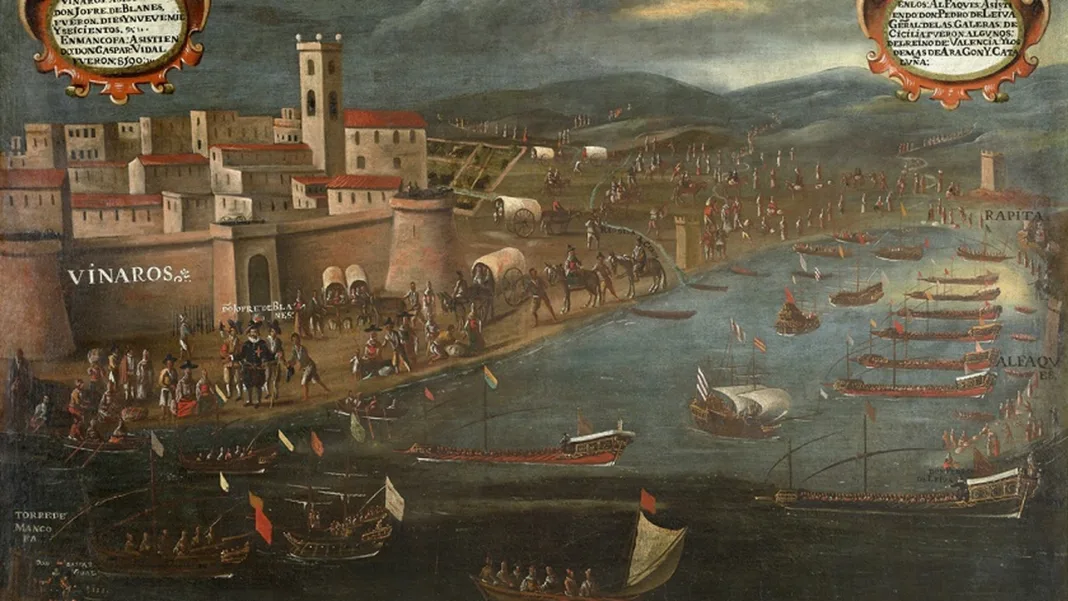
Between 1609 and 1611, Al-Hajari undertook diplomatic missions to France and the Netherlands on behalf of the Saadian sultanate. According to research by Abdelmajid Kaddouri, dean of the Faculty of Letters of Ben Msik, the primary objective of these travels was to secure the assets and wealth that had been confiscated from Moriscos during their expulsion from Spain. Al-Hajari sought to address the plight of those who had been stripped of their property, including instances where Moriscos were robbed by French ship captains during their forced migration.
Al-Hajari documented his experiences in a travelogue titled Al-Din ‘ala al-Qawm al-Kafirin. The text provides detailed observations of European society, including theological debates with Christian and Jewish scholars. He expressed particular fascination with the urban organization and architecture of Amsterdam, noting the city’s extensive maritime infrastructure and the aesthetic quality of its housing. His writings also reflected on the religious landscape of the era, documenting his observations regarding the influence of Martin Luther and John Calvin on European religious thought.
Mohamad Ballan, a doctoral candidate at the University of Chicago specializing in Islamic and medieval history, notes that Al-Hajari’s work serves as an important historical record of the Morisco expulsion. While the final years of his life remain partially obscured by a lack of historical documentation, it is believed that Al-Hajari died around 1638 or 1639 while working in the production of gunpowder.
Article and image source: yabiladi.com