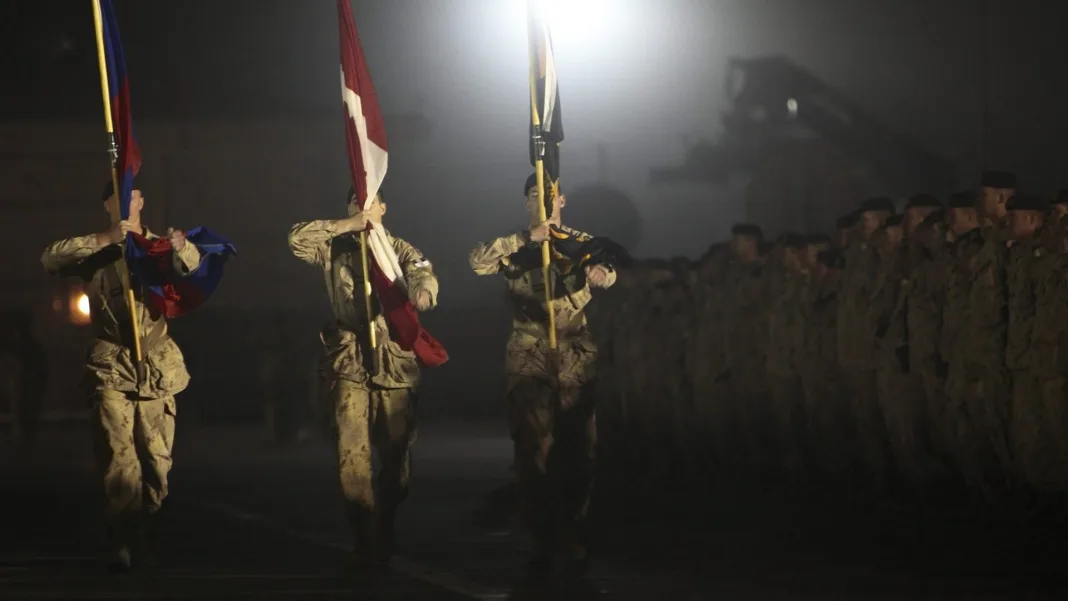
The terrorist attacks of September 11, 2001, marked a significant turning point for Canada, signaling the end of a post-Cold War period of relative isolation and the beginning of the country’s longest armed conflict in Afghanistan.
Retired general Rick Hillier, who led a multinational NATO force in Kabul and later served as Canada’s chief of defence staff, described the shift as a dramatic change in how the country understood its place in the world. Following the attacks, Canada supported the United States in its efforts to overthrow the Taliban regime, which had harbored the al-Qaeda terror group responsible for the 9/11 attacks. Canada’s ambassador to NATO was instrumental in invoking Article Five of the North Atlantic Treaty, which established that an attack on one member constitutes an attack on all.
Over the course of the 12-year war, more than 40,000 Canadian military personnel served in Afghanistan, with 159 members losing their lives. Eugene Lang, a former chief of staff to two defence ministers, noted that Ottawa initially anticipated a short-term conflict and was largely unprepared for the severity, complexity, and duration of the mission.
Military experts and veterans have highlighted significant challenges faced by the Canadian Armed Forces at the onset of the war. Following budget cuts throughout the 1990s, the military was under-strength and lacked essential equipment, including suitable helicopters and armored vehicles. Hillier noted that the military had to rebuild its operational capacity while simultaneously preparing for combat.
Justin Massie, a political science professor at the Université du Québec à Montréal, observed that Canada’s experience in Afghanistan mirrored its entry into the Korean War, characterized by a lack of preparation and a subsequent scramble to mobilize. He argued that the lack of proper equipment, such as armored vehicles and specialized gear, left soldiers vulnerable to improvised explosive devices.
The legacy of the conflict remains a subject of reflection for veterans. Bruce Moncur, a retired corporal who served in the 2006 Operation Medusa, emphasized the personal toll of the war and expressed distress over recent political rhetoric questioning the contributions of NATO allies. Moncur, who was wounded during his service, has since become an advocate for veterans, including efforts to have the government review the awarding of the Victoria Cross.
As Canada reflects on the conflict, Lang suggested that the country must ensure the war is not forgotten, despite the lack of a successful outcome. He noted that while the Canadian Armed Forces are currently on a better footing due to increased defence spending and recapitalized fleets, the lessons regarding the necessity of military readiness remain critical.
Article and image source: lakelandtoday.ca