The key points are temporarily unavailable. You can still read the full Story below.
Main Points
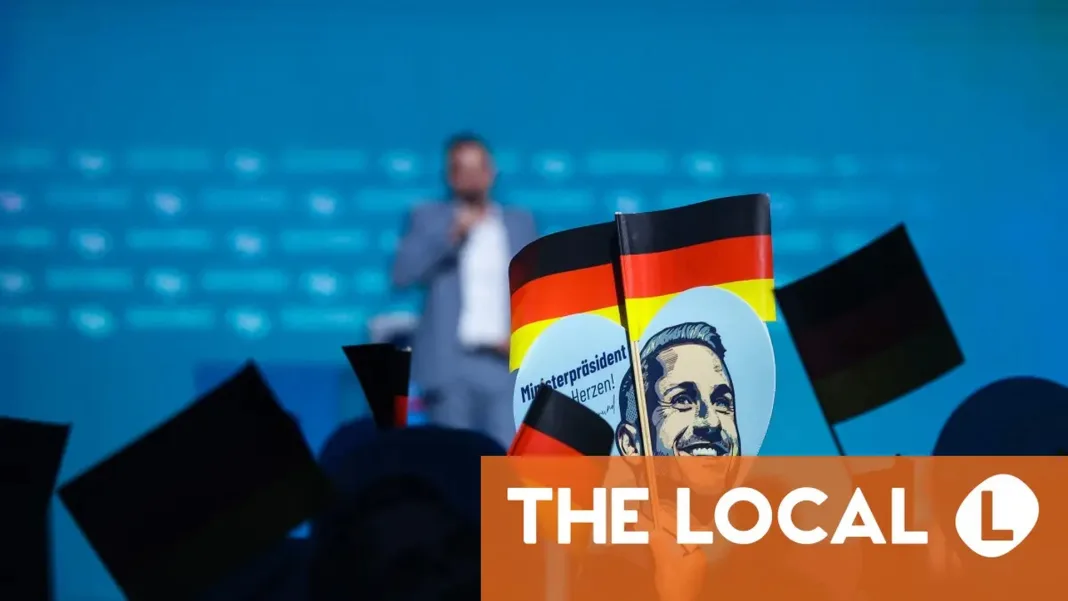
**AfD Leads Polls in Saxony-Anhalt Regional Election** Voters in the German state of Saxony-Anhalt headed to the polls on Sunday for a regional election in which the far-right Alternative for Germany (AfD) party is positioned as the clear frontrunner. Approximately 1.7 million eligible voters were invited to cast ballots between 8:00 a.m. and 6:00 p.m. local time. The election is viewed as a significant test for the national political landscape, with the AfD—which has been categorized as "right-wing extremist" by Germany’s domestic intelligence agency—polling at over 40 percent in the state for several months. The state is currently governed by a coalition led by the centre-right Christian Democratic Union (CDU), headed by state premier Sven Schulze. While the AfD’s top candidate, 35-year-old Ulrich Siegmund, has expressed confidence in securing an absolute majority, all other major political parties have maintained a "firewall" policy, refusing to enter into governing coalitions with the AfD. Siegmund has campaigned on a platform that includes a "remigration and deportation offensive," a ban on LGBTQ pride flags in public schools, and a moratorium on new wind farm construction. The party has also leveraged voter sentiment regarding the economic disparity between eastern and western Germany. Political analysts suggest that a decisive AfD victory could increase pressure on Chancellor Friedrich Merz, whose CDU has also faced challenges in national polling. Wolfgang Schroeder, a political scientist at Kassel University, noted that while a strong AfD showing would likely intensify criticism of Merz’s leadership, the current lack of a clear rival candidate makes his removal from the chancellorship unlikely. The prospect of an AfD-led government has drawn criticism from mainstream parties and various organizations. The German Economic Institute has warned that the party’s immigration policies could negatively impact the state’s economy, which relies on foreign-born labor to address an aging and shrinking population. Additionally, some officials have expressed concerns regarding the party’s stance on Russia; Thuringia state interior minister Georg Maier told the *Handelsblatt* daily that the AfD serves as a tool for the Kremlin to destabilize Germany. In the final days of the campaign, tensions rose following a social media video that alleged potential mail-in ballot fraud at an elderly care home. State authorities denied the claims, and Julia Kloeckner, Germany’s parliamentary speaker, criticized the speculation. "Questioning elections without concrete evidence appears to have one goal: to sow distrust in our rules and to accept the results only if the outcome suits," Kloeckner told *Der Spiegel*. A recent poll released by public broadcaster ZDF indicated the AfD leading with 41 percent, followed by the CDU at 23 percent, the far-left Die Linke at 11.5 percent, the SPD at 8.5 percent, and the Greens at 6 percent. Depending on the final results, observers suggest a potential scenario involving a minority government formed by the CDU with ad hoc support from other parties. Article and image source: thelocal.de
**AfD Leads Polls in Saxony-Anhalt Regional Election**
Voters in the German state of Saxony-Anhalt headed to the polls on Sunday for a regional election in which the far-right Alternative for Germany (AfD) party is positioned as the clear frontrunner.
Approximately 1.7 million eligible voters were invited to cast ballots between 8:00 a.m. and 6:00 p.m. local time. The election is viewed as a significant test for the national political landscape, with the AfD—which has been categorized as “right-wing extremist” by Germany’s domestic intelligence agency—polling at over 40 percent in the state for several months.
The state is currently governed by a coalition led by the centre-right Christian Democratic Union (CDU), headed by state premier Sven Schulze. While the AfD’s top candidate, 35-year-old Ulrich Siegmund, has expressed confidence in securing an absolute majority, all other major political parties have maintained a “firewall” policy, refusing to enter into governing coalitions with the AfD.
Siegmund has campaigned on a platform that includes a “remigration and deportation offensive,” a ban on LGBTQ pride flags in public schools, and a moratorium on new wind farm construction. The party has also leveraged voter sentiment regarding the economic disparity between eastern and western Germany.
Political analysts suggest that a decisive AfD victory could increase pressure on Chancellor Friedrich Merz, whose CDU has also faced challenges in national polling. Wolfgang Schroeder, a political scientist at Kassel University, noted that while a strong AfD showing would likely intensify criticism of Merz’s leadership, the current lack of a clear rival candidate makes his removal from the chancellorship unlikely.
The prospect of an AfD-led government has drawn criticism from mainstream parties and various organizations. The German Economic Institute has warned that the party’s immigration policies could negatively impact the state’s economy, which relies on foreign-born labor to address an aging and shrinking population. Additionally, some officials have expressed concerns regarding the party’s stance on Russia; Thuringia state interior minister Georg Maier told the *Handelsblatt* daily that the AfD serves as a tool for the Kremlin to destabilize Germany.
In the final days of the campaign, tensions rose following a social media video that alleged potential mail-in ballot fraud at an elderly care home. State authorities denied the claims, and Julia Kloeckner, Germany’s parliamentary speaker, criticized the speculation. “Questioning elections without concrete evidence appears to have one goal: to sow distrust in our rules and to accept the results only if the outcome suits,” Kloeckner told *Der Spiegel*.
A recent poll released by public broadcaster ZDF indicated the AfD leading with 41 percent, followed by the CDU at 23 percent, the far-left Die Linke at 11.5 percent, the SPD at 8.5 percent, and the Greens at 6 percent. Depending on the final results, observers suggest a potential scenario involving a minority government formed by the CDU with ad hoc support from other parties.
News Desk is the editorial publishing account for Tringlobe Media News, covering breaking news, public affairs, entertainment, community developments and regional stories across Trinidad and Tobago, the Caribbean and internationally.