The key points are temporarily unavailable. You can still read the full Story below.
Main Points
Rescue efforts continue on both sides of the border following the floods in Nepal and Tibet, leading to a growing debate on social media regarding the coverage of the disaster. The discussion has intensified following a report by the BBC’s China correspondent, Laura Bicker, which claimed that China is censoring videos of the floods. Bicker reported that videos depicting the landslide and flood surge at Gyirong Port were removed from the internet, citing concerns from Beijing about potential instability in the politically sensitive region of Tibet.In response to Bicker's claims, some social media users have shared screenshots of the footage featured in the BBC report, asserting that it had been shown in Chinese media. One Chinese journalist remarked, "Never seen the BBC spread rumors so blatantly," while another user noted that the “middle ground often gets lost” in heated discussions about Chinese censorship.The Chinese government has consistently expressed concerns about what it perceives as bias from Western media in their reporting on Tibet. Supporters of this narrative have increased their focus on the BBC in recent discussions. However, users of Chinese social media, both within and outside of China, have long experienced government control over information, a situation that has persisted in the aftermath of the floods.Bicker highlighted the deletion of videos showing the significant wave of mud and water engulfing Gyirong Port as a clear example of this control. Initially, the footage circulated on platforms like Weixin and RedNote, but users later found it inaccessible. Additionally, access for independent and foreign journalists has been restricted. Allyson Horn from the Australian Broadcasting Corporation reported that her requests to travel to Tibet were repeatedly denied, a situation echoed by other foreign journalists. This lack of access complicates the ability of foreign media to independently verify the Chinese government’s narrative regarding the disaster.The dominance of state media in shaping the narrative is further exacerbated by the absence of independent reporting and the removal of footage from social media. Chinese media coverage of the floods has largely concentrated on the rescue operations led by the People’s Liberation Army, the leadership of President Xi Jinping during the crisis, and Premier Li Qiang’s visit to the affected areas. Reports have also included efforts to reopen roads and deliver disaster-relief supplies to residents. However, there has been comparatively little coverage regarding the impact of the disaster on local villagers and their communities.In contrast, foreign journalists on the Nepali side of the border have been able to interview survivors without restrictions. Critics have raised concerns that the Chinese government is concealing the true number of casualties. The challenge in verifying these claims arises from the restricted access to the disaster site, leaving no opportunity for outsiders to confirm the reported death toll.Historically, China’s media environment has experienced periods of less control. For instance, following the 2008 Sichuan earthquake, state media provided extensive live coverage, including updates on the death toll and rescue efforts. However, as the situation evolved, the government began to restrict information, particularly regarding criticisms of local government actions.In general, Chinese state media are directed to focus on “positive reporting” during crises, while criticisms of government responses are often censored. This pattern has been evident in the media coverage of various incidents, including a train accident in Wenzhou in 2011, where the government maintained strict control over reporting and discouraged investigations into the causes of the accident.Since Xi Jinping assumed power in 2012, there has been an increase in restrictions on media and social media, particularly concerning issues that could challenge the government's authority. The handling of the Tibet floods reflects this trend, emphasizing positive news while limiting critical coverage. The disaster has occurred amid rising tensions between China and the West, contributing to perceptions of biased reporting. Logistical challenges in accessing the disaster site and obtaining firsthand information further complicate the situation, leading to suspicions and criticism of censorship in Chinese media. This dynamic may reinforce Beijing’s belief in the inherent bias of Western reporting on Tibet, providing further justification for information restrictions. Source: asiatimes.com
Rescue efforts continue on both sides of the border following the floods in Nepal and Tibet, leading to a growing debate on social media regarding the coverage of the disaster. The discussion has intensified following a report by the BBC’s China correspondent, Laura Bicker, which claimed that China is censoring videos of the floods. Bicker reported that videos depicting the landslide and flood surge at Gyirong Port were removed from the internet, citing concerns from Beijing about potential instability in the politically sensitive region of Tibet.
In response to Bicker’s claims, some social media users have shared screenshots of the footage featured in the BBC report, asserting that it had been shown in Chinese media. One Chinese journalist remarked, “Never seen the BBC spread rumors so blatantly,” while another user noted that the “middle ground often gets lost” in heated discussions about Chinese censorship.
The Chinese government has consistently expressed concerns about what it perceives as bias from Western media in their reporting on Tibet. Supporters of this narrative have increased their focus on the BBC in recent discussions. However, users of Chinese social media, both within and outside of China, have long experienced government control over information, a situation that has persisted in the aftermath of the floods.
Bicker highlighted the deletion of videos showing the significant wave of mud and water engulfing Gyirong Port as a clear example of this control. Initially, the footage circulated on platforms like Weixin and RedNote, but users later found it inaccessible. Additionally, access for independent and foreign journalists has been restricted. Allyson Horn from the Australian Broadcasting Corporation reported that her requests to travel to Tibet were repeatedly denied, a situation echoed by other foreign journalists. This lack of access complicates the ability of foreign media to independently verify the Chinese government’s narrative regarding the disaster.
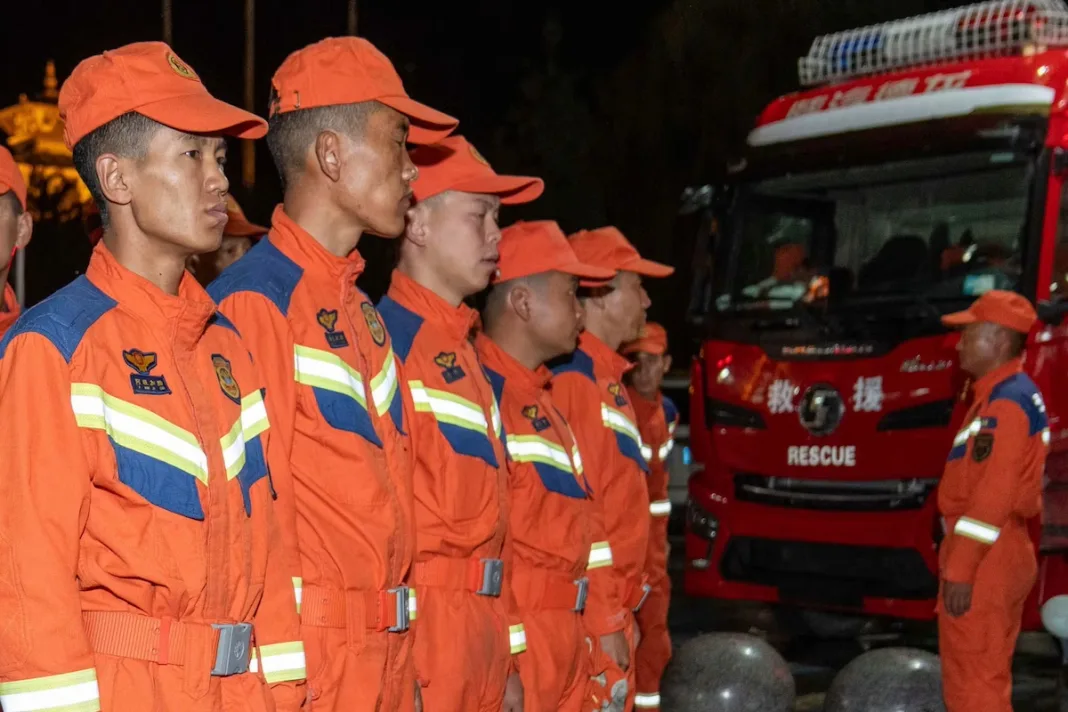
The dominance of state media in shaping the narrative is further exacerbated by the absence of independent reporting and the removal of footage from social media. Chinese media coverage of the floods has largely concentrated on the rescue operations led by the People’s Liberation Army, the leadership of President Xi Jinping during the crisis, and Premier Li Qiang’s visit to the affected areas. Reports have also included efforts to reopen roads and deliver disaster-relief supplies to residents. However, there has been comparatively little coverage regarding the impact of the disaster on local villagers and their communities.
In contrast, foreign journalists on the Nepali side of the border have been able to interview survivors without restrictions. Critics have raised concerns that the Chinese government is concealing the true number of casualties. The challenge in verifying these claims arises from the restricted access to the disaster site, leaving no opportunity for outsiders to confirm the reported death toll.
Historically, China’s media environment has experienced periods of less control. For instance, following the 2008 Sichuan earthquake, state media provided extensive live coverage, including updates on the death toll and rescue efforts. However, as the situation evolved, the government began to restrict information, particularly regarding criticisms of local government actions.
In general, Chinese state media are directed to focus on “positive reporting” during crises, while criticisms of government responses are often censored. This pattern has been evident in the media coverage of various incidents, including a train accident in Wenzhou in 2011, where the government maintained strict control over reporting and discouraged investigations into the causes of the accident.
Since Xi Jinping assumed power in 2012, there has been an increase in restrictions on media and social media, particularly concerning issues that could challenge the government’s authority. The handling of the Tibet floods reflects this trend, emphasizing positive news while limiting critical coverage. The disaster has occurred amid rising tensions between China and the West, contributing to perceptions of biased reporting. Logistical challenges in accessing the disaster site and obtaining firsthand information further complicate the situation, leading to suspicions and criticism of censorship in Chinese media. This dynamic may reinforce Beijing’s belief in the inherent bias of Western reporting on Tibet, providing further justification for information restrictions.
News Desk is the editorial publishing account for Tringlobe Media News, covering breaking news, public affairs, entertainment, community developments and regional stories across Trinidad and Tobago, the Caribbean and internationally.