The key points are temporarily unavailable. You can still read the full Story below.
Main Points
**Chinese President Xi Jinping Reaffirms Vision of a “Shared Future” for Asia** *Beijing, 27 August 2026* – In a statement published on the website of Vietnam’s *Nhan Dan* newspaper, Chinese President Xi Jinping reiterated that “Asia is our common home” and called for the continent to lead the construction of a “community with a shared future for humanity.” The remarks, originally written for a 2023 article ahead of Xi’s visit to Vietnam, were highlighted in a Xinhua news release on Thursday. The president’s vision has been reflected in recent diplomatic initiatives. In April 2025, Xi convened a central conference on work related to neighboring countries in Beijing, where participants identified building a community with a shared future as a priority. The conference emphasized three key objectives: 1. Consolidating strategic mutual trust with neighboring states. 2. Supporting each country’s pursuit of development paths suited to its own conditions. 3. Managing differences in a constructive manner. Following the conference, Xi embarked on a tour of Southeast Asia that included visits to Vietnam, Malaysia and Cambodia. During the trip, China and the three host nations signed a total of 108 cooperation agreements covering traditional infrastructure, connectivity projects, and emerging sectors such as the digital economy. Xi stated that China would “extend the benefits of Chinese modernization to its neighbors, promote the building of a community with a shared future with neighboring countries, and work together to advance modernization in Asia.” The concept of a shared future has been incorporated into a broader network of bilateral and regional arrangements. According to Chinese officials, China has reached “common understandings” on building such communities with 17 neighboring countries. At the sub‑regional level, agreements have been signed with the five Mekong nations to develop a “Lancang‑Mekong community with a shared future,” and with the five Central Asian states to create a “China‑Central Asia community with a shared future.” Infrastructure connectivity has been a central component of the strategy. Xi has described the Belt and Road Initiative (BRI) as “the two wings of a soaring Asia,” with connectivity acting as its “arteries and veins.” China has signed BRI cooperation documents with 25 neighboring states across Asia, and a network of six corridors and six routes linking multiple countries and ports is now largely operational. Roads, railways, ports and trade routes are intended to bring markets and communities closer together. Commentators have noted that the vision extends beyond physical infrastructure. Wirun Phichaiwongphakdee, director of the Thailand‑China Research Center of the Belt and Road Initiative, said that China’s modernization has enabled neighboring countries to achieve technological advances and industrial upgrading through collaboration. He added that concrete projects are translating Xi’s “neighborhood vision” into “a platform for cooperation and shared prosperity” in Asia. When asked about the broader implications of the initiative, Xi has used the metaphor, “Countries across Asia are like individual lamps. Only when they are connected can they illuminate the night sky of Asia in all its brilliance.” The Xinhua release concluded with a reminder that the shared‑future concept is intended to promote equality, mutual benefit, and cooperation among Asian nations of varying sizes and development levels. No new policy measures were announced beyond the existing agreements and infrastructure projects. Article and image source: vietnamtribune.com
**Chinese President Xi Jinping Reaffirms Vision of a “Shared Future” for Asia**
*Beijing, 27 August 2026* – In a statement published on the website of Vietnam’s *Nhan Dan* newspaper, Chinese President Xi Jinping reiterated that “Asia is our common home” and called for the continent to lead the construction of a “community with a shared future for humanity.” The remarks, originally written for a 2023 article ahead of Xi’s visit to Vietnam, were highlighted in a Xinhua news release on Thursday.
The president’s vision has been reflected in recent diplomatic initiatives. In April 2025, Xi convened a central conference on work related to neighboring countries in Beijing, where participants identified building a community with a shared future as a priority. The conference emphasized three key objectives:
1. Consolidating strategic mutual trust with neighboring states.
2. Supporting each country’s pursuit of development paths suited to its own conditions.
3. Managing differences in a constructive manner.
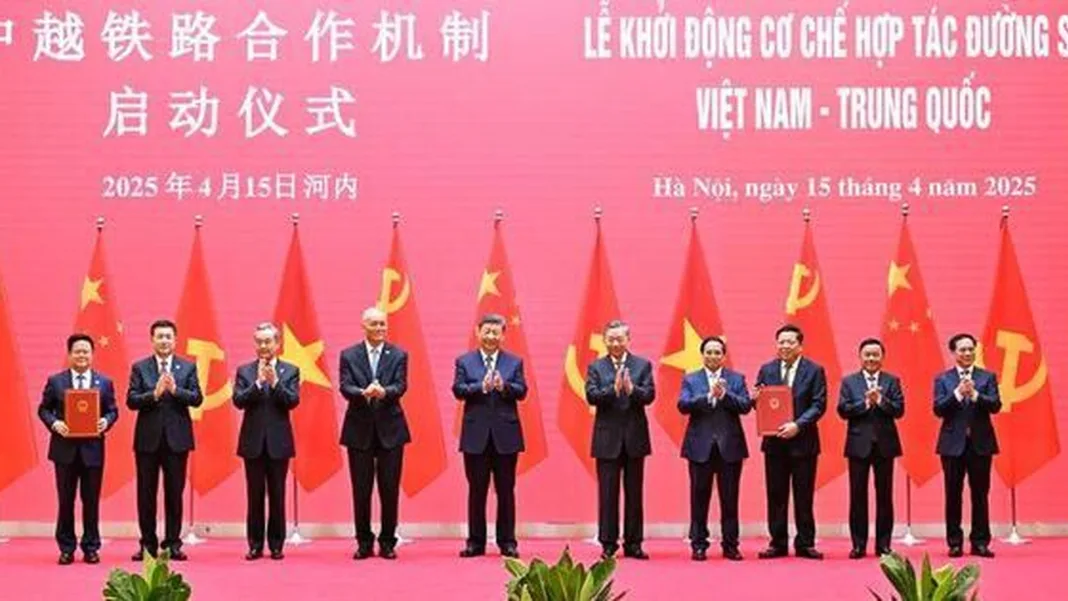
Following the conference, Xi embarked on a tour of Southeast Asia that included visits to Vietnam, Malaysia and Cambodia. During the trip, China and the three host nations signed a total of 108 cooperation agreements covering traditional infrastructure, connectivity projects, and emerging sectors such as the digital economy. Xi stated that China would “extend the benefits of Chinese modernization to its neighbors, promote the building of a community with a shared future with neighboring countries, and work together to advance modernization in Asia.”
The concept of a shared future has been incorporated into a broader network of bilateral and regional arrangements. According to Chinese officials, China has reached “common understandings” on building such communities with 17 neighboring countries. At the sub‑regional level, agreements have been signed with the five Mekong nations to develop a “Lancang‑Mekong community with a shared future,” and with the five Central Asian states to create a “China‑Central Asia community with a shared future.”
Infrastructure connectivity has been a central component of the strategy. Xi has described the Belt and Road Initiative (BRI) as “the two wings of a soaring Asia,” with connectivity acting as its “arteries and veins.” China has signed BRI cooperation documents with 25 neighboring states across Asia, and a network of six corridors and six routes linking multiple countries and ports is now largely operational. Roads, railways, ports and trade routes are intended to bring markets and communities closer together.
Commentators have noted that the vision extends beyond physical infrastructure. Wirun Phichaiwongphakdee, director of the Thailand‑China Research Center of the Belt and Road Initiative, said that China’s modernization has enabled neighboring countries to achieve technological advances and industrial upgrading through collaboration. He added that concrete projects are translating Xi’s “neighborhood vision” into “a platform for cooperation and shared prosperity” in Asia.
When asked about the broader implications of the initiative, Xi has used the metaphor, “Countries across Asia are like individual lamps. Only when they are connected can they illuminate the night sky of Asia in all its brilliance.”
The Xinhua release concluded with a reminder that the shared‑future concept is intended to promote equality, mutual benefit, and cooperation among Asian nations of varying sizes and development levels. No new policy measures were announced beyond the existing agreements and infrastructure projects.
News Desk is the editorial publishing account for Tringlobe Media News, covering breaking news, public affairs, entertainment, community developments and regional stories across Trinidad and Tobago, the Caribbean and internationally.