The key points are temporarily unavailable. You can still read the full Story below.
Main Points
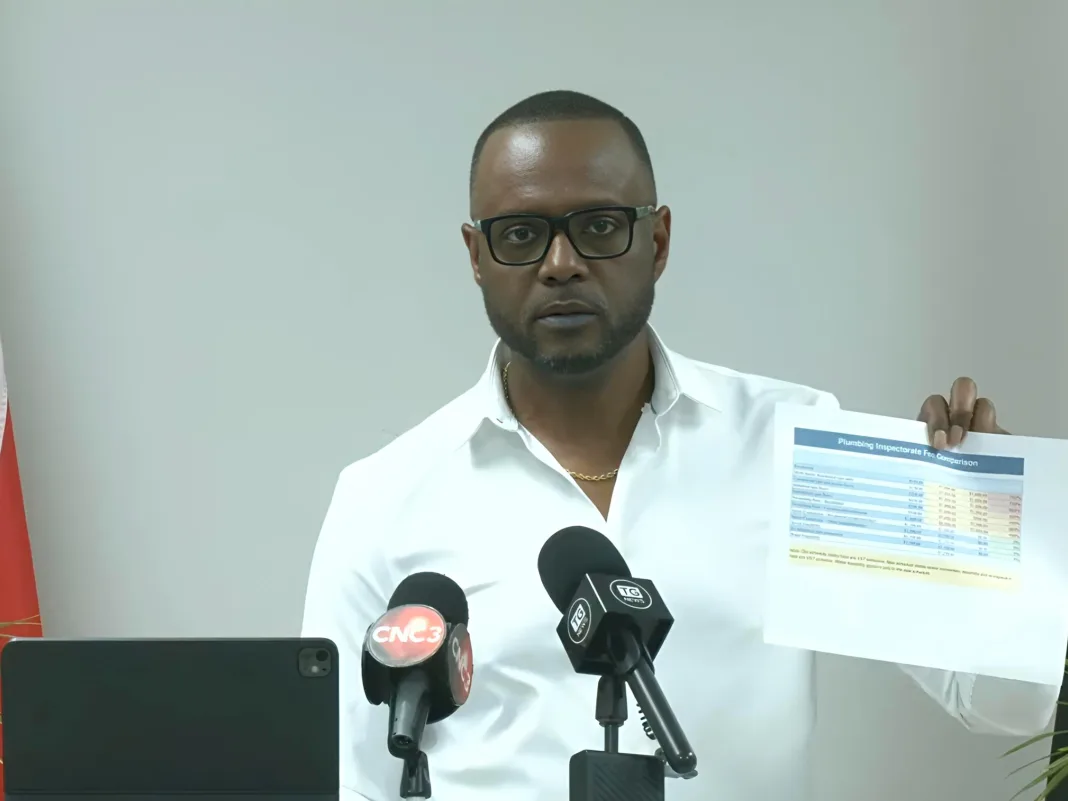
Opposition MP and former Public Utilities Minister Marvin Gonzales has accused the Water and Sewerage Authority of introducing major increases to several plumbing inspection and development-related fees without adequately informing the public. Speaking during an Opposition press briefing, Gonzales said the revised charges took effect on July 1, 2026, and affect services handled by WASA’s Infrastructure and Compliance Department. According to figures presented by Gonzales, a residential unit inspection fee increased from $150 to $1,200, while the fee for a multi-family residential unit also moved from $150 to $1,200. Commercial unit fees reportedly increased from $200 to $1,500, while industrial charges moved from $450 per floor to $1,800. Residential swimming pool fees increased from $500 to $1,800, while commercial swimming pool fees moved from $1,000 to $2,000. The figures represent increases ranging from 100 per cent to as much as 700 per cent. The revised amounts reported by Gonzales have also been confirmed in reporting by Guardian Media. Gonzales alleged that customers and industry stakeholders were not properly notified before the new charges were implemented. He also claimed older fees continued to appear through some of WASA’s online information, leaving customers to discover the higher charges when attempting to access services. He called for the removal of Public Utilities Minister Barry Padarath, WASA's board and the authority's executive management, arguing that increases of this magnitude should have been clearly communicated to the public. Padarath, however, has defended the revised fees. The minister told Guardian Media that the charges had not been reviewed since the 1980s and no longer reflected WASA's actual cost of providing plumbing inspection services. He said the increases were recommended by management earlier this year and subsequently approved by WASA's board. Padarath also stressed that the charges are one-time payments rather than recurring fees. The minister rejected suggestions that the increases were introduced secretly, saying the revised fee structure has appeared on the relevant WASA forms since July. The dispute has now shifted the focus from whether the fees were increased — which the minister has confirmed — to whether customers and industry stakeholders were adequately informed and whether increases of up to 700 per cent are justified. The issue is likely to attract further scrutiny as developers, homeowners and businesses requiring plumbing and infrastructure approvals face significantly higher upfront costs.
Opposition MP and former Public Utilities Minister Marvin Gonzales has accused the Water and Sewerage Authority of introducing major increases to several plumbing inspection and development-related fees without adequately informing the public.
Speaking during an Opposition press briefing, Gonzales said the revised charges took effect on July 1, 2026, and affect services handled by WASA’s Infrastructure and Compliance Department.
According to figures presented by Gonzales, a residential unit inspection fee increased from $150 to $1,200, while the fee for a multi-family residential unit also moved from $150 to $1,200.
Commercial unit fees reportedly increased from $200 to $1,500, while industrial charges moved from $450 per floor to $1,800.
Residential swimming pool fees increased from $500 to $1,800, while commercial swimming pool fees moved from $1,000 to $2,000.
The figures represent increases ranging from 100 per cent to as much as 700 per cent. The revised amounts reported by Gonzales have also been confirmed in reporting by Guardian Media.
Gonzales alleged that customers and industry stakeholders were not properly notified before the new charges were implemented. He also claimed older fees continued to appear through some of WASA’s online information, leaving customers to discover the higher charges when attempting to access services.
He called for the removal of Public Utilities Minister Barry Padarath, WASA’s board and the authority’s executive management, arguing that increases of this magnitude should have been clearly communicated to the public.
Padarath, however, has defended the revised fees.
The minister told Guardian Media that the charges had not been reviewed since the 1980s and no longer reflected WASA’s actual cost of providing plumbing inspection services.
He said the increases were recommended by management earlier this year and subsequently approved by WASA’s board. Padarath also stressed that the charges are one-time payments rather than recurring fees.
The minister rejected suggestions that the increases were introduced secretly, saying the revised fee structure has appeared on the relevant WASA forms since July.
The dispute has now shifted the focus from whether the fees were increased — which the minister has confirmed — to whether customers and industry stakeholders were adequately informed and whether increases of up to 700 per cent are justified.
The issue is likely to attract further scrutiny as developers, homeowners and businesses requiring plumbing and infrastructure approvals face significantly higher upfront costs.
News Desk is the editorial publishing account for Tringlobe Media News, covering breaking news, public affairs, entertainment, community developments and regional stories across Trinidad and Tobago, the Caribbean and internationally.