The key points are temporarily unavailable. You can still read the full Story below.
Main Points
Researchers at City University of Hong Kong (CityUHK) have achieved a major scientific breakthrough, proving that mechanical vibrations can be harnessed to produce clean fuels and valuable chemicals from water. Led by Professor Sai Kishore Ravi from the School of Energy and Environment, the team has pioneered 'piezosynthesis', a process that uses piezoelectric materials to convert physical deformation into chemical energy. In two recent studies published in Nature Communications and Advanced Energy Materials, the researchers demonstrated the production of hydrogen and hydrogen peroxide from water under ultrasonic vibrations. By fine-tuning the crystal structure of piezoelectric materials, they achieved a sixteen-fold increase in hydrogen generation and a hydrogen peroxide production rate of 5,890 mmol per gram per hour, without the need for sacrificial chemicals. The generated hydrogen peroxide was also shown to be effective in degrading pollutants and inactivating bacteria, highlighting its dual potential for energy production and water treatment. 'Our current studies use controlled ultrasonic vibrations to deepen our understanding of the underlying science,' explained Professor Ravi. 'The next challenge is to move beyond the laboratory reactor and explore systems that can operate using vibrations present in the environment.' For coastal cities like Hong Kong, this prospect is particularly compelling. The team is already developing floating catalytic platforms designed to harness vibrations from ocean waves, potentially enabling large-scale, sustainable production of clean fuels and chemicals. Media enquiries: Steven Lee, Communications and Institutional Research Office, CityUHK (Tel: 3442 9945). Article and image source: hongkongherald.com
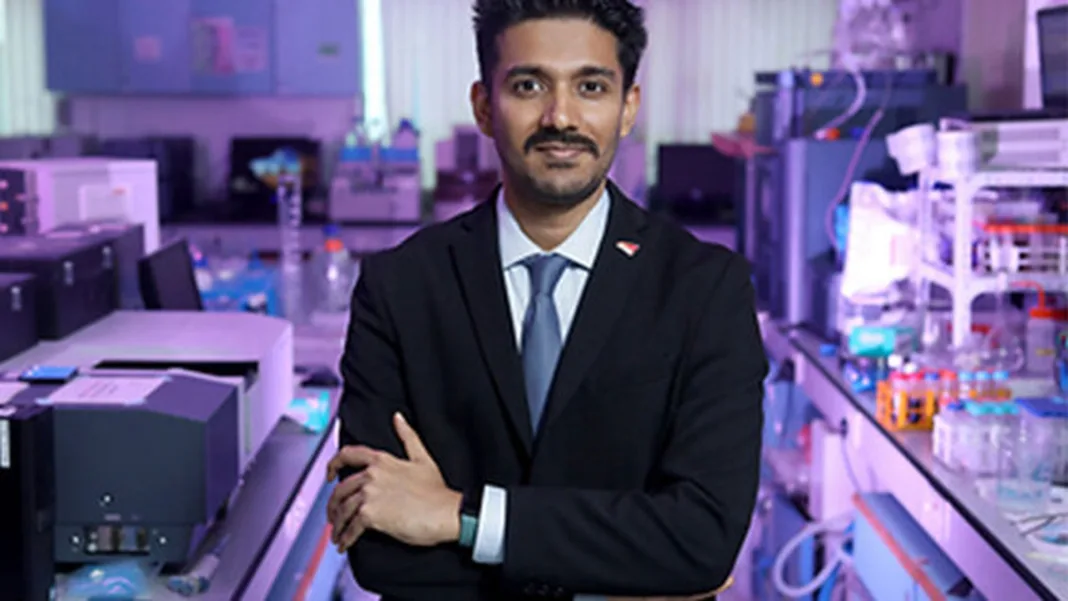
Researchers at City University of Hong Kong (CityUHK) have achieved a major scientific breakthrough, proving that mechanical vibrations can be harnessed to produce clean fuels and valuable chemicals from water. Led by Professor Sai Kishore Ravi from the School of Energy and Environment, the team has pioneered ‘piezosynthesis’, a process that uses piezoelectric materials to convert physical deformation into chemical energy.
In two recent studies published in Nature Communications and Advanced Energy Materials, the researchers demonstrated the production of hydrogen and hydrogen peroxide from water under ultrasonic vibrations. By fine-tuning the crystal structure of piezoelectric materials, they achieved a sixteen-fold increase in hydrogen generation and a hydrogen peroxide production rate of 5,890 mmol per gram per hour, without the need for sacrificial chemicals.
The generated hydrogen peroxide was also shown to be effective in degrading pollutants and inactivating bacteria, highlighting its dual potential for energy production and water treatment. ‘Our current studies use controlled ultrasonic vibrations to deepen our understanding of the underlying science,’ explained Professor Ravi. ‘The next challenge is to move beyond the laboratory reactor and explore systems that can operate using vibrations present in the environment.’
For coastal cities like Hong Kong, this prospect is particularly compelling. The team is already developing floating catalytic platforms designed to harness vibrations from ocean waves, potentially enabling large-scale, sustainable production of clean fuels and chemicals. Media enquiries: Steven Lee, Communications and Institutional Research Office, CityUHK (Tel: 3442 9945).
News Desk is the editorial publishing account for Tringlobe Media News, covering breaking news, public affairs, entertainment, community developments and regional stories across Trinidad and Tobago, the Caribbean and internationally.