Guyana is currently exploring new export markets for its rice production, which is projected to reach 820,000 tonnes this year. This initiative comes in response to low world rice prices that have necessitated government subsidies for the industry. Agriculture Minister Zulfikar Mustapha announced that the government is focusing on securing markets in Mexico, Haiti, and Cuba, while also increasing sales to Caribbean Community (CARICOM) member states such as Jamaica and St. Lucia.
Minister Mustapha indicated that discussions with the Mexican Ambassador to Guyana are in an advanced stage, and a small quantity of paddy has already been sent to Haiti, with expectations for increased exports from the second crop of 2026. Although rice exports to Europe continue, the prices there remain lower compared to other markets. So far, Guyana has produced 414,000 tonnes of rice in 2026, and the minister expressed optimism about meeting the annual target.
Due to an oversupply in the rice market, the state-run Guyana Rice Development Board has been waiving the GY$650 million to GY$700 million in annual commissions that millers typically pay for exports. Consequently, the government is covering this revenue shortfall, having transferred GY$430 million of GY$807 million to the GRDB this year.
The government is also providing financial support to farmers, including a subsidy of GY$300 per bag of paddy sold to millers and one bag of fertilizer per cultivated acre. Currently, millers are paying farmers GY$2,500 per bag of paddy, a decrease from GY$4,000 per bag in 2023, attributed to increased global rice production by major producers like India, Indonesia, and Malaysia.
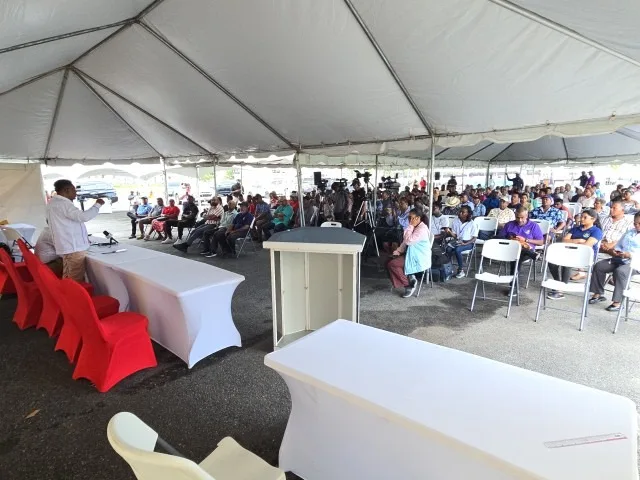
In Region Three, 560 farmers who cultivated 15,636 acres in the last rice crop will receive GY$401,696,055, with the total cost of the paddy price support amounting to GY$2.763 billion. The payment structure is GY$15,000 for farmers with 50 acres or less, and GY$10,000 for those with more than 50 acres.
Minister Mustapha urged private landowners to lower rental prices for farmers, as current rates can reach as high as GY$30,000, while the Mahaica-Mahaicony Abary Agricultural Development Authority charges GY$3,500 for land rental and irrigation services. The government is also enhancing infrastructure in Region Three, including the installation of seven new pumps and plans for a large drainage canal.
Additional support measures include drone spraying of fertilizer and promoting the integration of paddy cultivation with livestock and high-yielding crops. Minister Mustapha emphasized the importance of diversifying agricultural production beyond rice.
Despite the growth in rice production from 550,000 tonnes in 2020 to 825,000 tonnes in 2025, the minister clarified that no paddy or rice is being dumped, as the government continues to purchase and store paddy for milling. A new storage facility is being constructed in Onderneeming, Essequibo, alongside existing private facilities.
Source: demerarawaves.com