The key points are temporarily unavailable. You can still read the full Story below.
Main Points
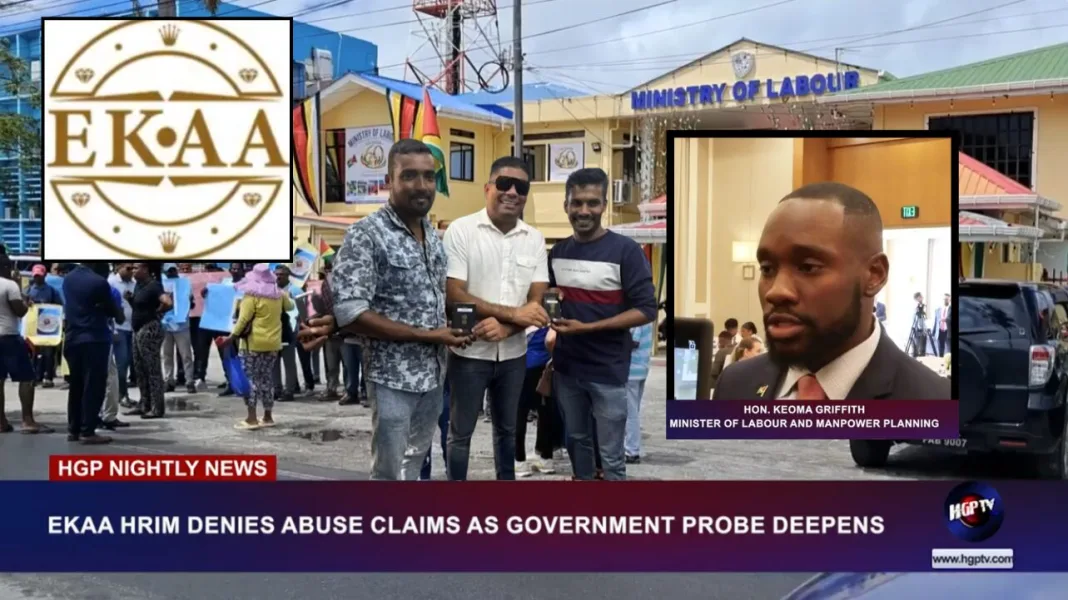
Ekaa Hrim Earth Resources Management has denied allegations of labor exploitation, human rights abuse, and conditions amounting to forced labor made by 38 Indian nationals employed at its quarrying operations in Batavia, Region Seven (Cuyuni-Mazaruni). This denial comes as a multi-agency government investigation into these allegations remains active and is expanding.The Ministry of Labour and Manpower Planning issued a 24-hour ultimatum requiring Ekaa Hrim to formally account for its operational practices. Minister of Labour Keoma Griffith confirmed that the company complied with the paperwork deadline and denied any criminal culpability, but stated that the investigation will continue regardless.The investigation now involves the Guyana Police Force and the specialized Trafficking in Persons (TIP) Unit, in addition to the Ministry of Labour. The Ministry is also examining the circumstances surrounding the death of Indian national Sekhar Chhetri at the Batavia site and a separate incident where a worker lost four fingers.The workers’ allegations include:Excessively long shifts without overtime pay or adequate safety equipment.Unhygienic living accommodations and inadequate food facilities, failing to meet the dietary needs of vegetarian workers.Arbitrary deductions from their monthly wages without itemization, at pay levels close to the national minimum wage.Confiscation of their passports by management upon arrival in Guyana, effectively confining them to the remote site.These allegations are currently under formal investigation and have not been established as fact by a court or formal determination.The allegations gained national attention following a visit to the Batavia site by Opposition Leader Azruddin Mohamed and Shadow Labour Minister Nandranie Singh, MP, who raised concerns about the workers’ conditions. In response, the company’s consultant, Yoganand Persaud, filed a formal complaint alleging that the Opposition Leader unlawfully removed the workers from the site.Minister Griffith confirmed that the workers’ passports were returned after his intervention. He stated, "I met with the representatives of the company and demanded in no uncertain terms that their passports be returned to them by 1:00 PM on that day." The confiscation of passports from migrant workers is regarded under international law as an indicator of forced labor or trafficking, which is why the TIP Unit is involved in the investigation.State legal officers are examining the employment agreements signed by the workers in India, particularly a clause requiring workers who resign or are terminated for “poor performance” to pay a fee of between US$3,000 and US$5,000, described as a “management fee.” Persaud defended this clause as a legally valid, mutually agreed contract, but questions remain about its enforceability under Guyanese labor law and whether the workers fully understood it.Persaud also noted that some workers scheduled for hearings at the Ministry chose not to enter the building. The company’s broader written denial of the exploitation allegations has not been made public in full. The Indian High Commission is coordinating with Guyanese authorities regarding the welfare of its nationals.The joint task force continues to investigate whether local labor laws or international human rights conventions have been breached. There have been public calls for the temporary suspension of operations at the Batavia quarry, which represents a US$10 million investment, while the investigation proceeds. Minister Griffith has indicated that the Government’s approach will be thorough and evidence-based. Source: hgptv.com
Ekaa Hrim Earth Resources Management has denied allegations of labor exploitation, human rights abuse, and conditions amounting to forced labor made by 38 Indian nationals employed at its quarrying operations in Batavia, Region Seven (Cuyuni-Mazaruni). This denial comes as a multi-agency government investigation into these allegations remains active and is expanding.
The Ministry of Labour and Manpower Planning issued a 24-hour ultimatum requiring Ekaa Hrim to formally account for its operational practices. Minister of Labour Keoma Griffith confirmed that the company complied with the paperwork deadline and denied any criminal culpability, but stated that the investigation will continue regardless.
The investigation now involves the Guyana Police Force and the specialized Trafficking in Persons (TIP) Unit, in addition to the Ministry of Labour. The Ministry is also examining the circumstances surrounding the death of Indian national Sekhar Chhetri at the Batavia site and a separate incident where a worker lost four fingers.
The workers’ allegations include:
Excessively long shifts without overtime pay or adequate safety equipment.
Unhygienic living accommodations and inadequate food facilities, failing to meet the dietary needs of vegetarian workers.
Arbitrary deductions from their monthly wages without itemization, at pay levels close to the national minimum wage.
Confiscation of their passports by management upon arrival in Guyana, effectively confining them to the remote site.
These allegations are currently under formal investigation and have not been established as fact by a court or formal determination.
The allegations gained national attention following a visit to the Batavia site by Opposition Leader Azruddin Mohamed and Shadow Labour Minister Nandranie Singh, MP, who raised concerns about the workers’ conditions. In response, the company’s consultant, Yoganand Persaud, filed a formal complaint alleging that the Opposition Leader unlawfully removed the workers from the site.
Minister Griffith confirmed that the workers’ passports were returned after his intervention. He stated, “I met with the representatives of the company and demanded in no uncertain terms that their passports be returned to them by 1:00 PM on that day.” The confiscation of passports from migrant workers is regarded under international law as an indicator of forced labor or trafficking, which is why the TIP Unit is involved in the investigation.
State legal officers are examining the employment agreements signed by the workers in India, particularly a clause requiring workers who resign or are terminated for “poor performance” to pay a fee of between US$3,000 and US$5,000, described as a “management fee.” Persaud defended this clause as a legally valid, mutually agreed contract, but questions remain about its enforceability under Guyanese labor law and whether the workers fully understood it.
Persaud also noted that some workers scheduled for hearings at the Ministry chose not to enter the building. The company’s broader written denial of the exploitation allegations has not been made public in full. The Indian High Commission is coordinating with Guyanese authorities regarding the welfare of its nationals.
The joint task force continues to investigate whether local labor laws or international human rights conventions have been breached. There have been public calls for the temporary suspension of operations at the Batavia quarry, which represents a US$10 million investment, while the investigation proceeds. Minister Griffith has indicated that the Government’s approach will be thorough and evidence-based.
News Desk is the editorial publishing account for Tringlobe Media News, covering breaking news, public affairs, entertainment, community developments and regional stories across Trinidad and Tobago, the Caribbean and internationally.