The key points are temporarily unavailable. You can still read the full Story below.
Main Points
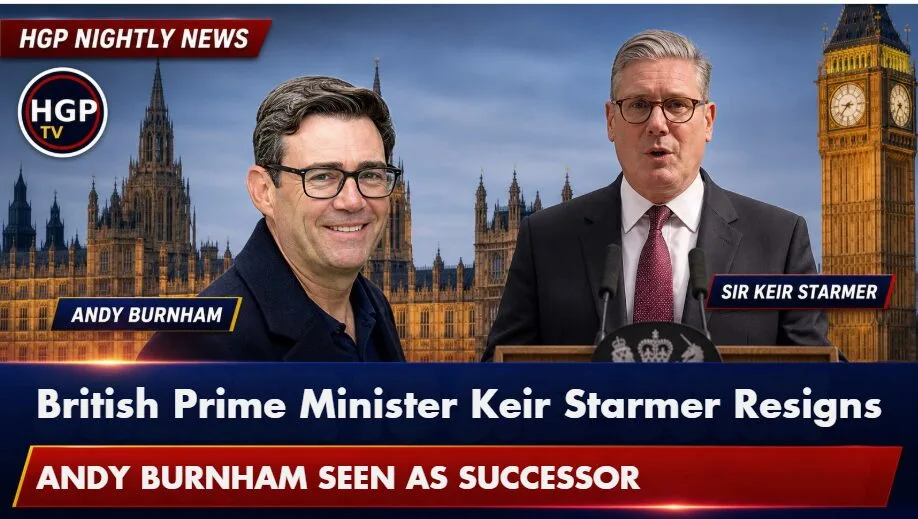
British Prime Minister Keir Starmer has announced his resignation as both Prime Minister and leader of the Labour Party, concluding a tenure of approximately two years in Downing Street and six years leading the party. Starmer made the announcement on Monday morning outside Number 10 Downing Street, stating that he no longer had the confidence of his cabinet and parliamentary party, and believed he was not the best person to lead Labour into the next general election.In his address, Starmer highlighted what he considered significant achievements during his time in office, including advancements in workers’ rights, reductions in hospital waiting lists, cuts in illegal migration, and improvements in child poverty figures. However, he acknowledged that political circumstances had rendered his position untenable.Following Starmer’s announcement, attention quickly shifted to Andy Burnham, the Mayor of Greater Manchester and a former senior Labour minister, as the likely successor. Burnham had recently won a parliamentary by-election in the Makerfield constituency, which many in the party had anticipated would position him for a leadership bid. His main potential rival, former Health Secretary Wes Streeting, confirmed he would not contest the leadership, effectively paving the way for Burnham to be confirmed without a contested election.Burnham expressed his appreciation for Starmer’s service and committed to an orderly transition of power. He emphasized that his leadership would focus on the public’s priorities, including economic growth, cost of living, public services, housing, and opportunities for young people.Under the timetable announced by Starmer, nominations for the new Labour leader will open on July 9 and close on July 16. If no other candidates enter the contest, Burnham could be confirmed as Prime Minister as early as July 17 or 18, potentially making him Britain’s seventh Prime Minister in a decade.Starmer’s authority had been declining for several months, following various policy reversals that attracted criticism from both within his party and the public. A decision to reduce winter fuel payments for pensioners was particularly damaging. Labour’s performance in local elections across England, Scotland, and Wales was poor, leading many parliamentary members to conclude that a change of leadership was necessary before the next general election. The party has also faced challenges from Nigel Farage’s Reform UK movement, which has made significant inroads into Labour’s traditional voter base.The change in leadership may impact a planned United Kingdom-European Union summit scheduled for July 22, which Starmer had intended to be a key part of his legacy aimed at rebuilding economic ties with Europe post-Brexit. EU officials are currently reassessing the summit in light of the political transition, and discussions are ongoing about the possibility of postponing the meeting until Burnham is in place. For Commonwealth nations, including Guyana, a change of British prime minister often leads to a reset of bilateral engagement, and Burnham’s focus on domestic issues is likely to influence his early foreign policy priorities. Source: hgptv.com
British Prime Minister Keir Starmer has announced his resignation as both Prime Minister and leader of the Labour Party, concluding a tenure of approximately two years in Downing Street and six years leading the party. Starmer made the announcement on Monday morning outside Number 10 Downing Street, stating that he no longer had the confidence of his cabinet and parliamentary party, and believed he was not the best person to lead Labour into the next general election.
In his address, Starmer highlighted what he considered significant achievements during his time in office, including advancements in workers’ rights, reductions in hospital waiting lists, cuts in illegal migration, and improvements in child poverty figures. However, he acknowledged that political circumstances had rendered his position untenable.
Following Starmer’s announcement, attention quickly shifted to Andy Burnham, the Mayor of Greater Manchester and a former senior Labour minister, as the likely successor. Burnham had recently won a parliamentary by-election in the Makerfield constituency, which many in the party had anticipated would position him for a leadership bid. His main potential rival, former Health Secretary Wes Streeting, confirmed he would not contest the leadership, effectively paving the way for Burnham to be confirmed without a contested election.
Burnham expressed his appreciation for Starmer’s service and committed to an orderly transition of power. He emphasized that his leadership would focus on the public’s priorities, including economic growth, cost of living, public services, housing, and opportunities for young people.
Under the timetable announced by Starmer, nominations for the new Labour leader will open on July 9 and close on July 16. If no other candidates enter the contest, Burnham could be confirmed as Prime Minister as early as July 17 or 18, potentially making him Britain’s seventh Prime Minister in a decade.
Starmer’s authority had been declining for several months, following various policy reversals that attracted criticism from both within his party and the public. A decision to reduce winter fuel payments for pensioners was particularly damaging. Labour’s performance in local elections across England, Scotland, and Wales was poor, leading many parliamentary members to conclude that a change of leadership was necessary before the next general election. The party has also faced challenges from Nigel Farage’s Reform UK movement, which has made significant inroads into Labour’s traditional voter base.
The change in leadership may impact a planned United Kingdom-European Union summit scheduled for July 22, which Starmer had intended to be a key part of his legacy aimed at rebuilding economic ties with Europe post-Brexit. EU officials are currently reassessing the summit in light of the political transition, and discussions are ongoing about the possibility of postponing the meeting until Burnham is in place. For Commonwealth nations, including Guyana, a change of British prime minister often leads to a reset of bilateral engagement, and Burnham’s focus on domestic issues is likely to influence his early foreign policy priorities.
News Desk is the editorial publishing account for Tringlobe Media News, covering breaking news, public affairs, entertainment, community developments and regional stories across Trinidad and Tobago, the Caribbean and internationally.