The key points are temporarily unavailable. You can still read the full Story below.
Main Points
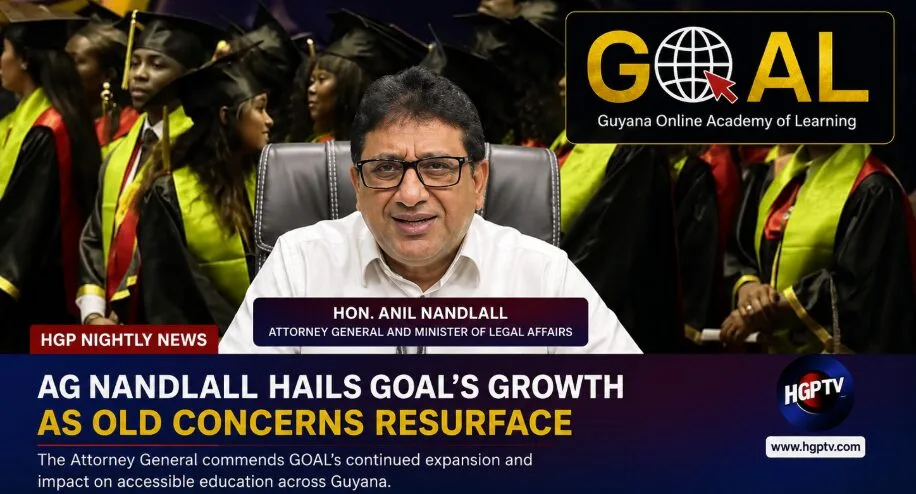
Attorney General and Minister of Legal Affairs Mohabir Anil Nandlall has praised the Guyana Online Academy of Learning (GOAL) scholarship program, describing it as a significant success. The program has reportedly reached historic enrollment levels, distributing a total of 54,793 scholarships over its five-year existence, resulting in 14,017 graduates and an additional 35,000 students currently enrolled in online classes across the country.During a recent episode of his weekly program, Issues in the News, Nandlall shared these statistics to counter criticism from opposition parties, which had previously dismissed the initiative as a political gimmick. He noted that some political leaders had even discouraged their supporters from participating in the program, which he characterized as detrimental to community development.Despite the program's achievements, concerns remain regarding its international accreditation and the quality of education provided by overseas academic partners. Critics have raised questions about the recognition of degrees from lesser-known institutions in Asia, Africa, and Central America, suggesting that the National Accreditation Council (NAC) may not be adequately vetting these credentials.Additionally, there are ongoing issues related to digital equity. While students in urban areas benefit from reliable internet access, those in rural and indigenous communities face challenges such as power outages and limited access to technology. This disparity raises concerns about the inclusivity of the program.The program's credibility was further tested earlier this year due to an administrative issue involving its European network, particularly concerning degree programs linked to Staffordshire University in the UK. This situation led to confusion about the legitimacy of the courses offered and prompted the Ministry of Education to clarify the status of these programs.While Nandlall argues that the increasing number of graduates demonstrates the program's value, the ongoing debates highlight the need for careful oversight to ensure that the pursuit of educational targets does not compromise the quality and recognition of the degrees funded by public resources. Source: hgptv.com
Attorney General and Minister of Legal Affairs Mohabir Anil Nandlall has praised the Guyana Online Academy of Learning (GOAL) scholarship program, describing it as a significant success. The program has reportedly reached historic enrollment levels, distributing a total of 54,793 scholarships over its five-year existence, resulting in 14,017 graduates and an additional 35,000 students currently enrolled in online classes across the country.
During a recent episode of his weekly program, Issues in the News, Nandlall shared these statistics to counter criticism from opposition parties, which had previously dismissed the initiative as a political gimmick. He noted that some political leaders had even discouraged their supporters from participating in the program, which he characterized as detrimental to community development.
Despite the program’s achievements, concerns remain regarding its international accreditation and the quality of education provided by overseas academic partners. Critics have raised questions about the recognition of degrees from lesser-known institutions in Asia, Africa, and Central America, suggesting that the National Accreditation Council (NAC) may not be adequately vetting these credentials.
Additionally, there are ongoing issues related to digital equity. While students in urban areas benefit from reliable internet access, those in rural and indigenous communities face challenges such as power outages and limited access to technology. This disparity raises concerns about the inclusivity of the program.
The program’s credibility was further tested earlier this year due to an administrative issue involving its European network, particularly concerning degree programs linked to Staffordshire University in the UK. This situation led to confusion about the legitimacy of the courses offered and prompted the Ministry of Education to clarify the status of these programs.
While Nandlall argues that the increasing number of graduates demonstrates the program’s value, the ongoing debates highlight the need for careful oversight to ensure that the pursuit of educational targets does not compromise the quality and recognition of the degrees funded by public resources.
News Desk is the editorial publishing account for Tringlobe Media News, covering breaking news, public affairs, entertainment, community developments and regional stories across Trinidad and Tobago, the Caribbean and internationally.